





I almost chickened out at the entrance. There I was, standing in the pitch-black stairwell under the main hall of Zenkoji Temple in Nagano, one hand pressed flat against a cold stone wall, and I genuinely could not see my own fingers in front of my face. Somewhere ahead of me, a Japanese grandmother was humming to herself like this was the most normal thing in the world. I’d lived in Japan for five years at that point and thought I’d seen most of what temple visits had to offer. I was wrong. Zenkoji had one more trick up its sleeve, and it involved feeling my way through total darkness in search of a key.
Let me back up.
A Temple Built Around a Buddha No One Has Seen
Zenkoji sits at the top of a long shopping street in the middle of Nagano City, and it has been there, in one form or another, since the 600s. The story goes that a local official named Honda Yoshimitsu rescued a Buddhist statue that had been thrown into a canal during a political and religious dispute in the capital, brought it back to Shinano province, and eventually the temple grew up around it. That statue, known as the Ikko Sanzon, is said to be one of the very first Buddhist images to ever reach Japan from the Asian mainland, centuries before most of Japan had converted to Buddhism at all.
Here’s the part that got me, though: nobody alive today has actually seen it. It’s a hibutsu, a “hidden Buddha,” and it’s kept permanently out of sight inside the inner sanctuary. Every six or seven years the temple unveils a stand-in copy, the Maedachi Honzon, for a few months so pilgrims can get something closer to the real experience — the most recent one drew enormous crowds back in 2022. But the original statue itself hasn’t been displayed in living memory. There’s something I find strangely moving about that: an entire temple complex, a whole pilgrimage culture, built around an object that is, for all practical purposes, invisible. You’re not there to see something. You’re there because of what you can’t see.
Crawling Through the Dark for a Key to Paradise
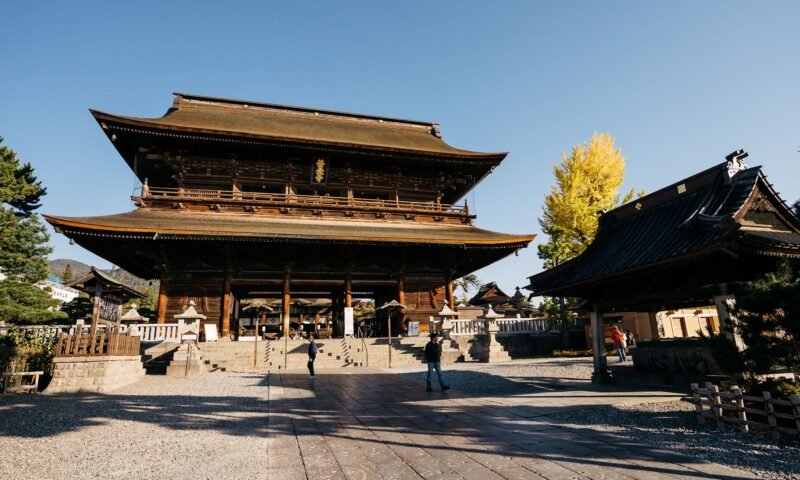
Which brings me back to the tunnel. Beneath the main hall, the Hondo — a soaring, dark wooden structure rebuilt in 1707 and one of the largest wooden buildings in Japan — there’s a pilgrimage ritual called Okaidan Meguri. You pay a small fee at the ticket counter, take off your shoes, and descend a staircase into a passage that runs directly underneath where the hidden Buddha is enshrined. And I mean actual darkness. Not “dim lighting for atmosphere” darkness. Darkness where you lose all sense of which way is up.
The idea is that somewhere along the wall, on the right-hand side, hangs a metal key — the “key to paradise,” a physical link to Amida Buddha’s western paradise. You’re supposed to keep one hand on the wall and walk until you find it. Touch it, and legend has it you’re guaranteed rebirth in paradise. I shuffled forward with my palm flat against cool stone, heart pounding in a way that felt a little ridiculous for a tourist activity, genuinely unsure how long the passage was or when it would end. Then, under my fingers: metal, cold and unmistakably key-shaped. I actually gasped out loud. The woman behind me laughed kindly. A minute later I emerged blinking into daylight feeling like I’d done something that mattered, even though I couldn’t entirely explain what.
Gates, Stones, and a Temple That Belongs to No One Sect
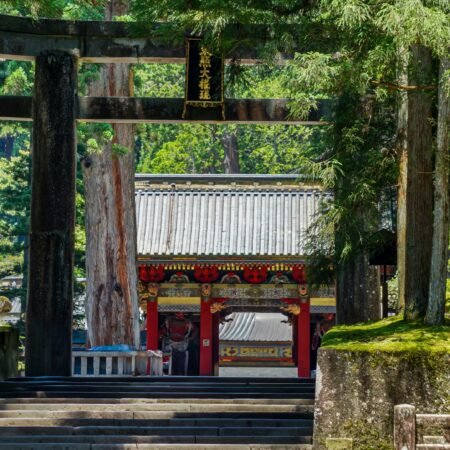
Before you ever get to the tunnel, the approach itself is worth slowing down for. You pass through the Niomon gate, flanked by fierce wooden guardian statues, then walk a long stone path toward the Sanmon, a two-story gate from the 1700s that you can climb up into on certain days for a view over the temple grounds. Locals tell me the approach path is laid with 7,777 individual stones, placed back in 1714, though I’ll admit I didn’t count them myself.
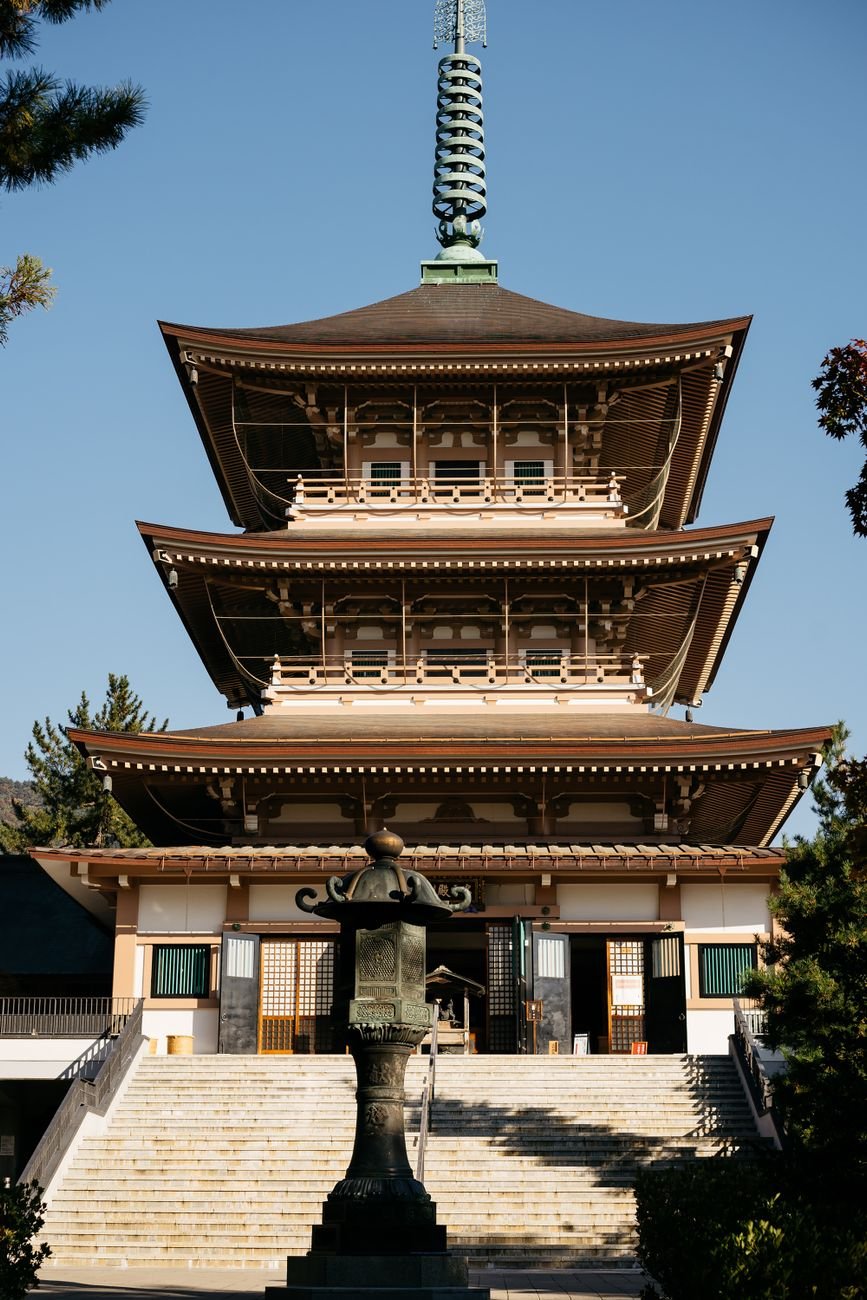
One thing that genuinely surprised me: Zenkoji isn’t run by a single Buddhist sect. Priests from both the Tendai and Jodo schools jointly manage the temple, which is unusual in Japan, where temples are almost always affiliated with one tradition. That nonsectarian openness is baked into the local culture, too — there’s an old saying about being “pulled to Zenkoji by a cow,” referencing a folktale about a nonbeliever chasing a runaway cow who ends up at the temple and has a change of heart. Basically: everyone ends up at Zenkoji eventually, believer or not. Inside the main hall, don’t skip rubbing the worn wooden statue of Binzuru near the entrance — tradition says touching the part of his body that matches your own ailment brings healing. His nose is shiny for a reason.
Oyaki, Incense Smoke, and the Walk Up Nakamise
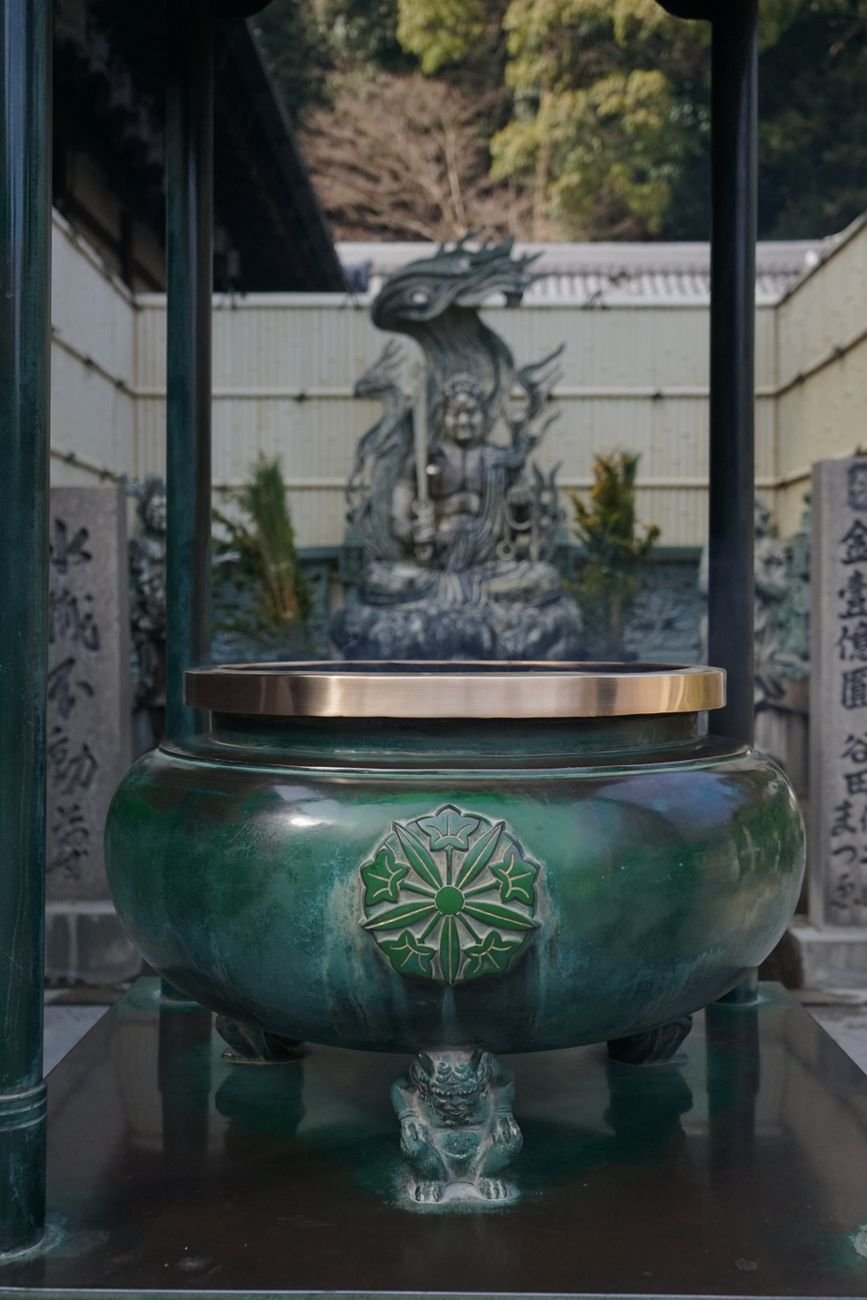
Getting to Zenkoji from Nagano Station couldn’t be easier. It’s about a two-kilometer walk straight up Chuo-dori, or you can hop a bus to the Zenkoji-Daimon stop and walk the last stretch, which is honestly my favorite part of the whole visit. The approach street is lined with wooden storefronts selling oyaki (stuffed dumplings, usually with vegetables or sweet bean paste), rice crackers, and — a local specialty I wasn’t expecting — shichimi, a seven-spice blend from a shop that’s reportedly been in business for over 270 years. I bought a tin on a whim and now put it on basically everything. Right before the Hondo, there’s a large bronze incense burner where visitors wave the smoke over themselves, often toward whichever part of the body they want healed. I did the classic tourist move of wafting it toward my head, hoping for either wisdom or a better sense of direction before I went looking for that key in the dark.
Worth the Trip, Darkness and All
I’ve visited a lot of temples in five years here, and most of them ask you to look at something: a garden, a statue, a view. Zenkoji asked me to stop looking and just feel my way forward instead, which turned out to be a far stranger and more memorable kind of reverence. If you’re heading through Nagano — maybe on your way to the Japan Alps or the snow monkeys at Jigokudani — give yourself a couple of unhurried hours here. Go in the morning if you can, when the air along Nakamise still smells like fresh oyaki and the crowds haven’t caught up yet. And when you get to that staircase under the main hall, just go for it. Keep one hand on the wall, trust the dark, and see what you find.
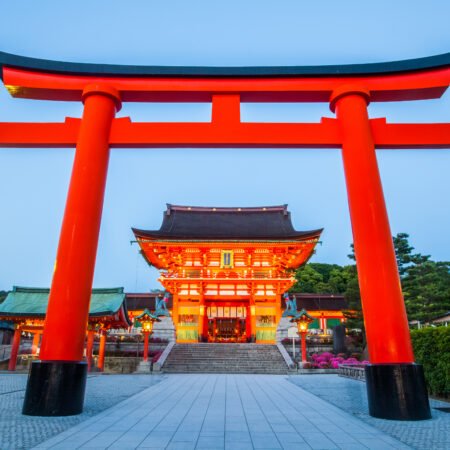
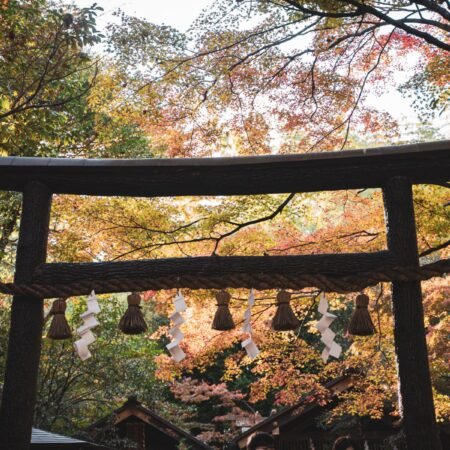
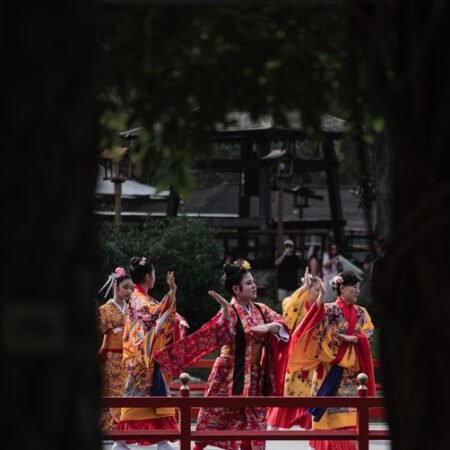
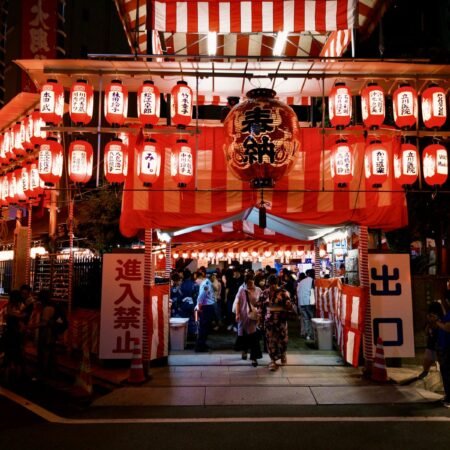
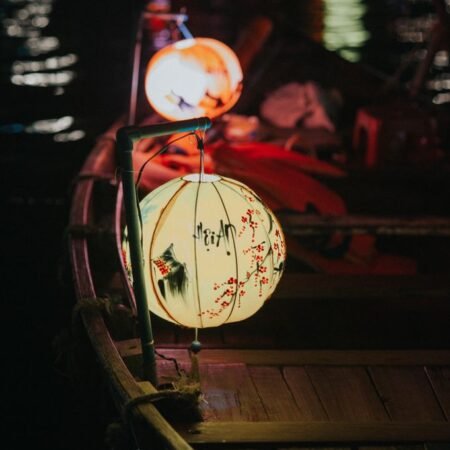
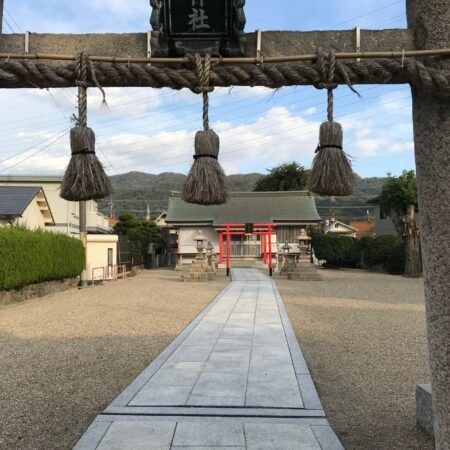
A quick note on photos: some of the images here are stock photos I’ve used to set the mood — they may not be the exact spot or moment I’m describing, just close in spirit.
コメント