







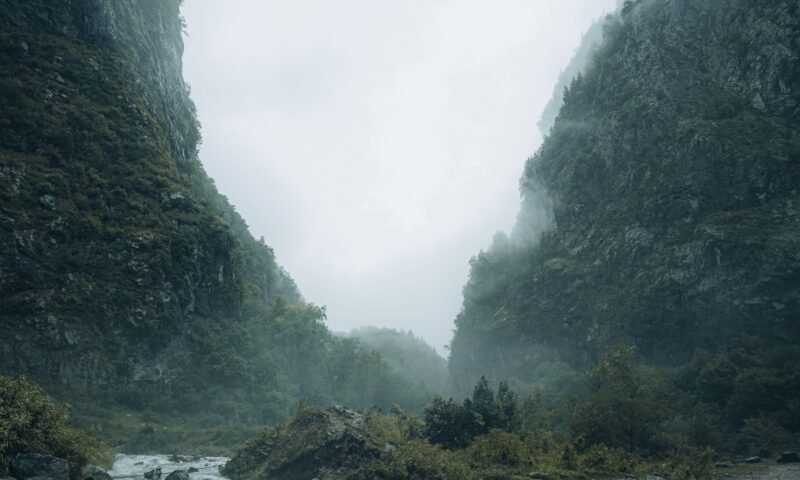
The road simply stopped. I had driven up from Kōshū City on a grey October morning, following the old Route 411 as it climbed alongside the Tabayama River into the mountains of northern Yamanashi, and where my map insisted the road continued, there was instead a barrier, a faded sign, and a tunnel entrance sealed with a steel gate. I sat in the car for a while with the engine off, listening to the river below, and found it oddly fitting. I had come looking for Oiran Buchi, one of the most talked-about “shinrei supotto” in the Kantō region, and the mountain had simply declined to let me any closer.
That, it turns out, is exactly the point of this story now. Oiran Buchi — literally “the courtesans’ abyss,” though it is also written 花魁淵 and sometimes rendered in English as the Courtesan’s Gorge — sits on the old road along the border between Kōshū City and the tiny village of Tabayama, at a bend in the river also known locally as Chōshi Falls. For decades it was reachable, if you didn’t mind a narrow mountain road and your nerve. Since a bypass tunnel opened in November 2011, the old stretch of road has been closed off entirely, and the gorge itself is no longer something the public can walk up to. What’s left is the legend, a modest memorial hall down in the valley, and the story of why anyone started calling this place haunted in the first place.
A Gold Mine, a Warlord, and a Secret Worth Keeping
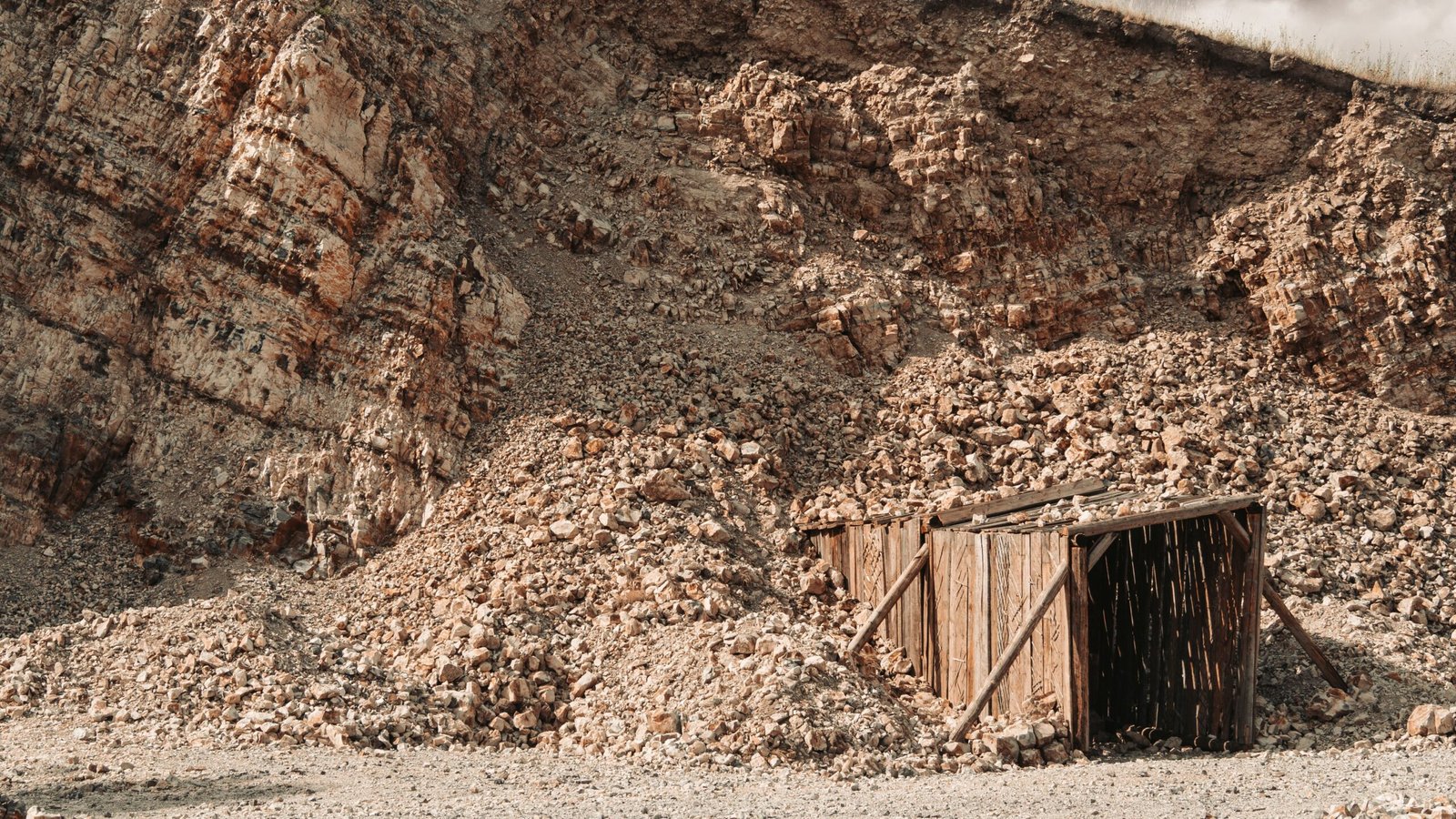
The history behind the legend is real enough to be documented in local histories, even if the details softened into folklore long ago. Across the ridge from the gorge lay the Kurokawa gold mine, once known as Kurokawa Senken — “the thousand houses of Kurokawa” — a mining settlement that, at its peak, is said to have supported a genuine boomtown in these mountains. It operated as a closely guarded resource for the Takeda clan, and by most local accounts reached its greatest productivity under Takeda Shingen, the Sengoku-period warlord whose armies it helped fund.
Gold mines of that era were not just industrial sites; they were military secrets. The Takeda are said to have kept the location and output of Kurokawa tightly controlled, reportedly even employing female operatives as part of their intelligence network. When the Takeda clan collapsed after Shingen’s death and the disastrous defeat of his son Katsuyori, the mine’s usefulness — and, according to the story, its need for secrecy — came to an abrupt end.
The Legend of the Dancing Platform
This is where the story shifts from documented history into denshō — oral legend passed down through the village, never quite pinned to a single contemporary record. According to the tale, a mine official ordered the miners’ entertainers, a group of women numbering somewhere around fifty-five, to perform one final celebration on a platform built out over the gorge and lashed together with vines. As they danced, the story goes, the supports were deliberately cut, and the women fell into the water below. The killing, as the legend explains it, was meant to ensure that no one who knew the mine’s secrets would live to tell them.
I want to be careful here, in the way I try to be with every story like this: nobody I’ve found can point to a contemporaneous document naming a date, an official, or a verified death toll. What survives is village memory — the kind of story a community tells for generations, shaping and reshaping it, until the emotional truth of a tragedy long overshadows whatever the historical particulars once were. Some versions of the tale add that monks who tended to the dead were also killed at a separate spot nearby, to close the circle of silence completely. Whether that detail is centuries old or a later embellishment, I couldn’t say.
What isn’t in dispute is that people have been telling this story, and reporting strange experiences at the site, for a very long time — enough that Oiran Buchi shows up again and again in Japanese yōkai and ghost-story compilations as one of the archetypal tragic-death locations, the kind of place where a community’s grief seems to have curdled, over centuries, into something people go looking for on purpose.
A Site You Can No Longer Reach
This is the part of my visit that didn’t go as planned, and I think it’s worth dwelling on rather than glossing over. The old road past the gorge — the one countless “haunted spot” videos and blog posts describe driving down at night — has been closed to traffic and pedestrians since the bypass tunnels opened in 2011, and Yamanashi Prefecture has treated the closure as permanent, with the disused stretch eventually slated for full decommissioning. Whatever concrete viewing platform or memorial marker still exists near the old site sits behind that barrier now, not in a legal grey area but simply off-limits. I’m not going to pretend otherwise, and I’d gently push back on anyone framing a trespass onto a closed prefectural road as part of the “authentic” experience. It isn’t required, and it isn’t worth the risk or the disrespect to a site that, whatever you believe about ghosts, marks a real, if unverified, mass death.
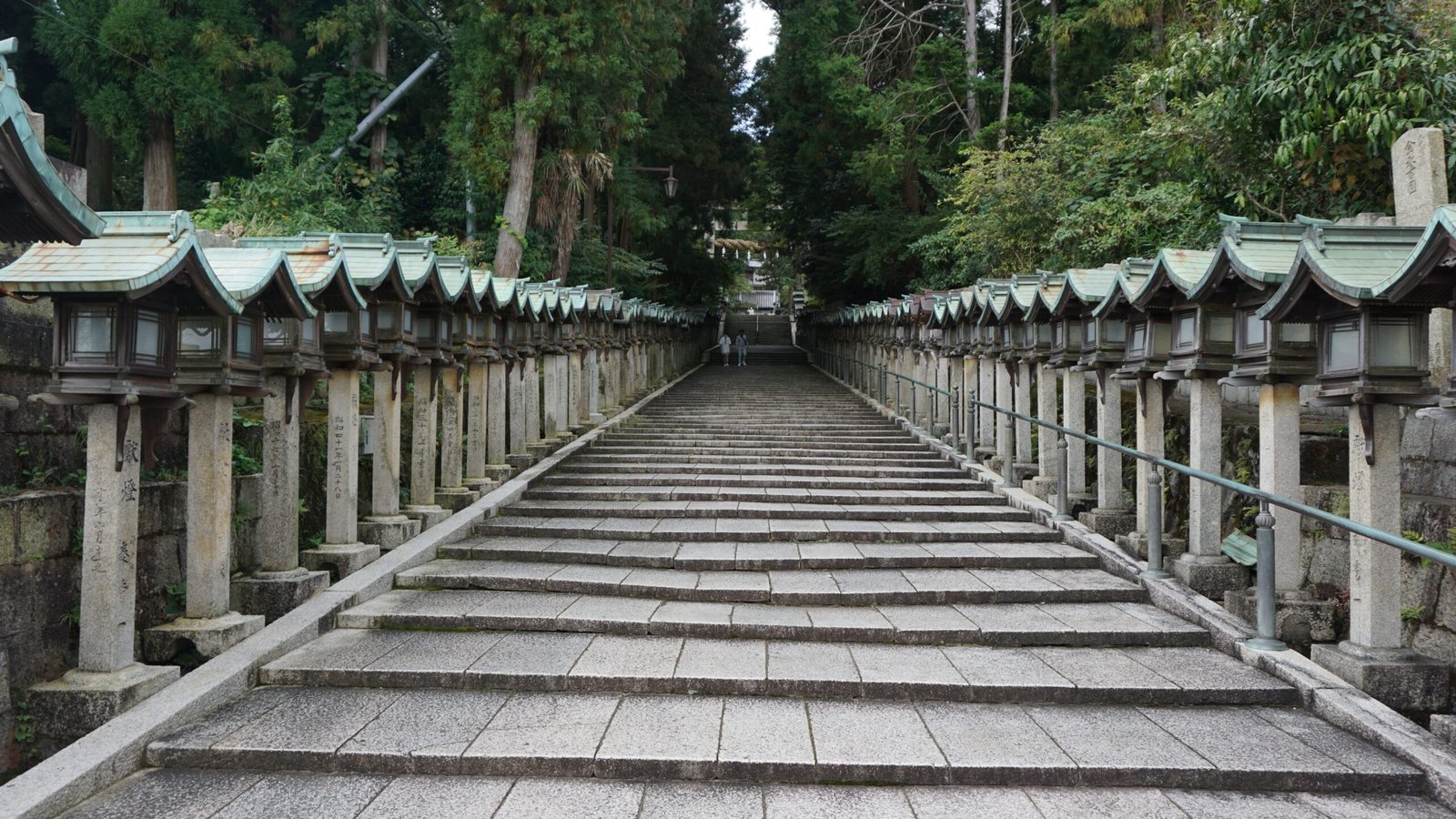
What you can still do, and what I’d recommend instead, is visit Oiran-dō, a small memorial hall down in a Tabayama Village settlement along the way to the Okiaki campground, just off Route 411. It was rebuilt in its current simple form in 1988, but it stands on a much older tradition of memorializing the women said to have died at the gorge — inside are memorial tablets and carved wooden figures kept for Buddhist services held in their memory. It’s an unassuming little building, easy to miss, and on the afternoon I found it, a handful of dried flowers had been left at the step. It felt like a far more honest way to engage with the story than staring through a chain-link gate at a road nobody’s meant to walk down anymore.
Visiting Responsibly
If you’re drawn to this story the way I was, treat it as a lesson in the limits of “spot hunting.” The closed section of old Route 411 is not accessible, and no ghost story is worth ignoring a prefectural safety closure on a mountain road with a genuine history of landslides and subsidence. Visit Oiran-dō itself respectfully and quietly — it remains, after all, a place of memorial rather than a tourist attraction, and the families of Tabayama Village still regard it as such. If you’re travelling in the area for the autumn colours along the Tama River valley, it’s an easy, legal stop that tells you everything the sealed road can’t. Whatever really happened at that bend in the river centuries ago, the least we can do now is let the dead keep the quiet the mountain has already given them.
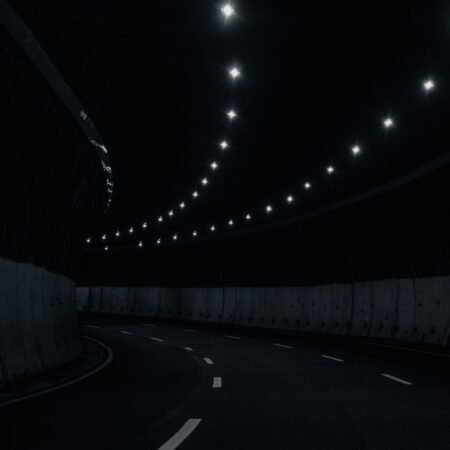
Note: images accompanying this article are illustrative stock photos and do not necessarily show the specific site discussed.


コメント