





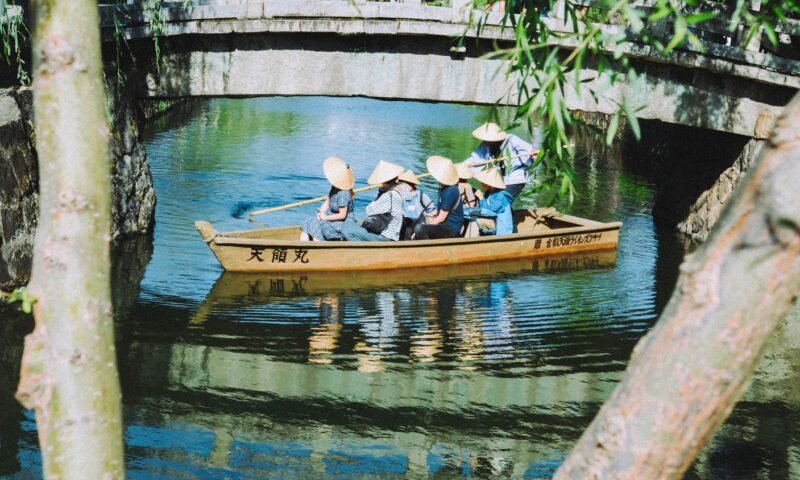
The first time I went to Kurashiki, I got the train station completely wrong. I got off, followed my phone’s blue dot for ten minutes through a very normal, very modern shopping street, and started to wonder if I’d been sold a fantasy by some overenthusiastic travel blog. Then I turned a corner, and it was like someone had quietly swapped out the twenty-first century for the nineteenth. Willow trees trailing over a narrow canal. Black-tiled, white-walled storehouses standing shoulder to shoulder. A wooden boat gliding past with a boatman in a straw hat singing something I couldn’t quite catch. I just stood there for a second, completely disoriented in the best possible way.
That’s the Bikan Historical Quarter in Kurashiki, Okayama Prefecture, and five years into living in Japan, it’s still one of the places I recommend most to visitors who tell me they’ve “already done Kyoto.” Kurashiki isn’t trying to be Kyoto. It’s smaller, quieter, and built around a single canal that used to move rice instead of tourists, and honestly, that focus is what makes it work.
A Canal Town Built on Rice, Not Romance
“Kurashiki” literally means “storehouse village,” and the name isn’t poetic branding — it’s just accurate. During the Edo period, this area was designated tenryo, meaning it was placed under direct control of the shogunate rather than a local feudal lord, specifically because it had become such an important rice-trading hub. Merchants built kura, the thick-walled storehouses you see lining the canal today, to keep their rice (and later, cotton and other goods) safe and dry while it waited to be shipped out by boat.
What I find genuinely moving about the Bikan district is that it survived. A huge amount of historic Japan was flattened in the twentieth century, whether by earthquakes, wartime bombing, or simple postwar redevelopment. Kurashiki largely escaped that fate, and locals in the 1970s made a deliberate push to preserve the quarter as a protected townscape rather than tear it down for something newer. Walking along the canal now, past the same storehouses that once held Edo-period rice shipments, feels like walking through a decision someone made on purpose to keep this place intact.
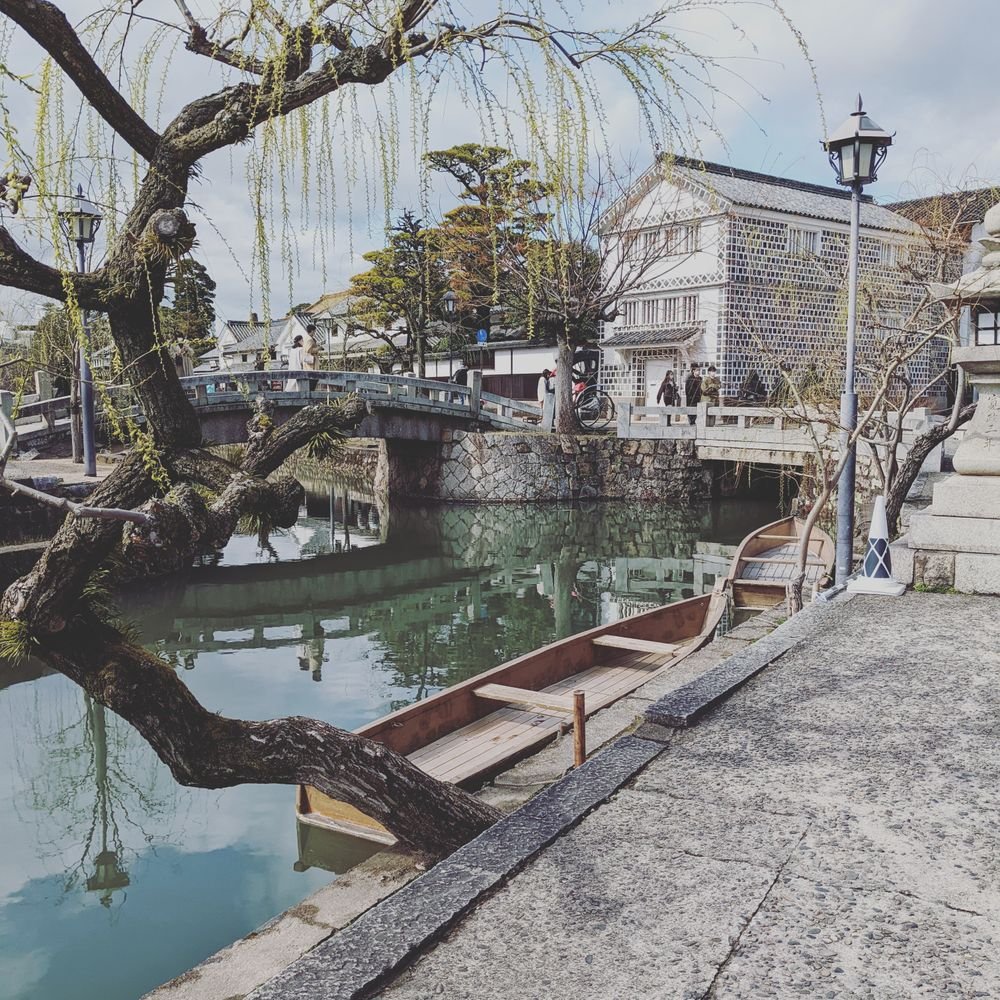
You can actually ride the canal yourself. Small wooden boats, poled along by a boatman, run short loops through the district for a modest fee (I want to say it was somewhere around 500 yen when I did it, though it’s worth checking current prices before you go, and note the boats don’t run in the coldest winter months). It’s touristy, sure. I don’t care. Sitting at water level, looking up at the storehouses instead of down at them from a bridge, changes how the whole street reads. Do it at least once.
The Ohara Museum of Art: Japan’s Unlikely Monet
Here’s the thing that genuinely surprised me on my first visit: right in the middle of this Edo-period canal town sits one of Japan’s most important Western art museums, and it has a Monet water lily painting hanging in it.
The Ohara Museum of Art opened in 1930, funded by local textile magnate Magosaburo Ohara, making it — depending on who you ask — the first museum in Japan dedicated to Western art. The building itself looks almost Greco-Roman from the outside, with columns that feel deliberately, almost defiantly, out of place next to the wooden storehouses around it. Inside, the collection includes El Greco, Gauguin, Matisse, and Monet, alongside strong holdings of modern Japanese art in separate annex buildings.
I’ll admit I went in expecting a small regional collection and a polite hour of looking at competent but unremarkable paintings. I was wrong. The El Greco alone (Annunciation, if you’re curious what to look for) is the kind of piece you don’t expect to just be hanging in a provincial Japanese canal town, no crowds, no roped-off viewing distance. Plan for at least ninety minutes if art is even mildly your thing, and check their site for current hours, because Japanese museums love a surprise closed Monday.
Wandering the Backstreets (Where the Real Charm Lives)
If I’m honest, my favorite part of Kurashiki isn’t the postcard canal shot at all. It’s the backstreets one block off it, where the crowds thin out fast and the town starts to feel lived-in again.
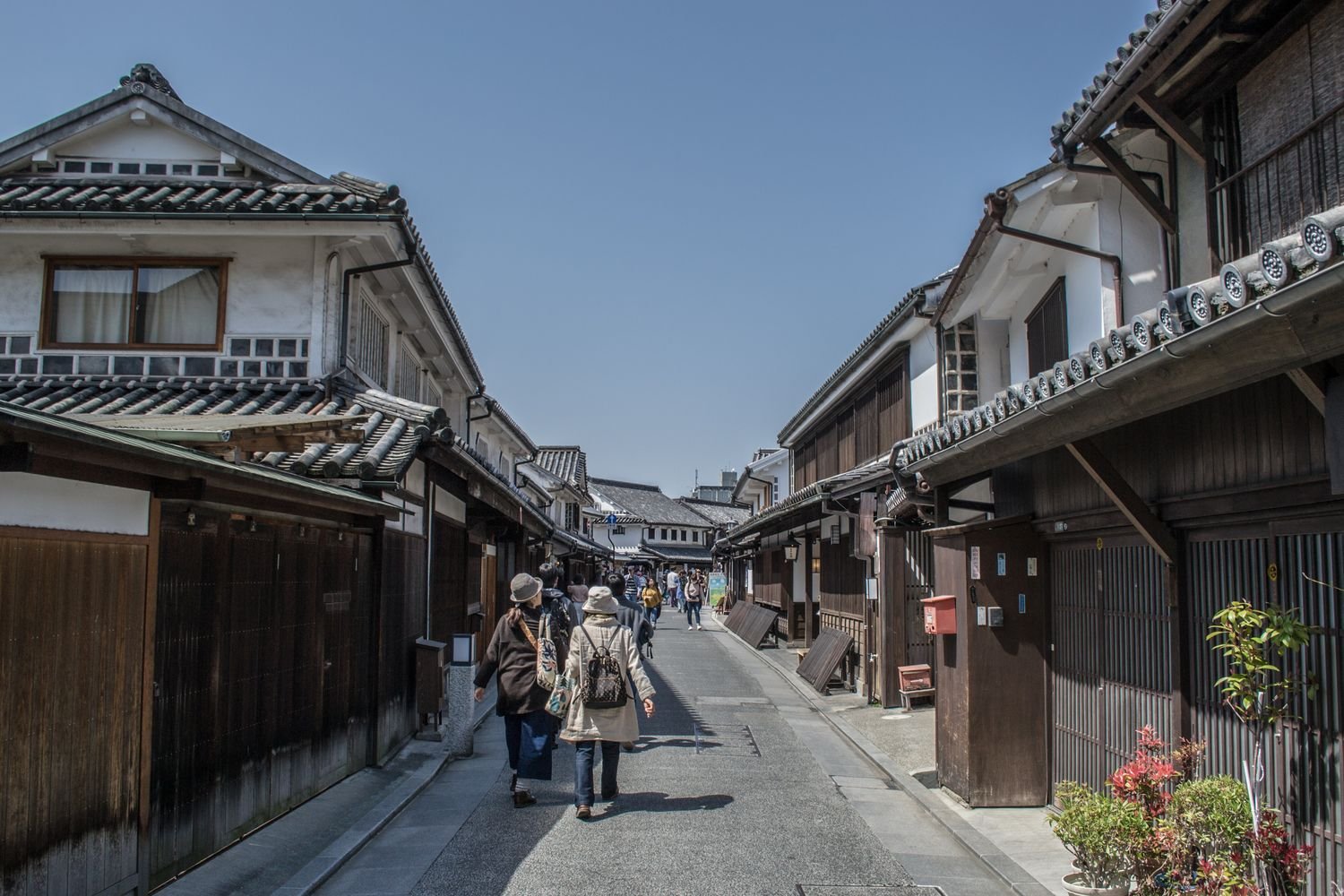
This is where you’ll find small craft shops selling Bizen ware pottery (a stoneware tradition from this same region of Okayama, unglazed and fired at extremely high heat, so every piece comes out looking slightly different), tiny cafes tucked into converted storehouses, and shops selling denim — genuinely, Kurashiki and the neighboring town of Kojima are considered the birthplace of domestic Japanese denim manufacturing, which is a fun fact almost nobody expects. If you’re into jeans at all, it’s worth a short detour to see shops built entirely around that history.
I also always make a point of eating somewhere that isn’t obviously aimed at tour groups. Okayama Prefecture is known for its barazushi, a scattered sushi dish piled with a colorful mix of seafood, vegetables, and thin egg, and I’ve had genuinely great versions of it at small, unfussy places just off the main canal street. Ask wherever you’re staying for a recommendation rather than walking into the first restaurant with an English menu taped to the window; it’s a small effort that almost always pays off in Japan.
Practical Notes From Someone Who’s Made the Mistakes
Kurashiki is roughly a fifteen-minute walk from Kurashiki Station, which sits on the JR Sanyo Line and is a short shinkansen-adjacent hop from Okayama Station (about seventeen minutes on a local JR line, or you can connect via Shin-Kurashiki Station if you’re coming straight off the Sanyo Shinkansen). That makes it a very doable day trip if you’re already routing between Osaka and Hiroshima, which a lot of first-time visitors are.
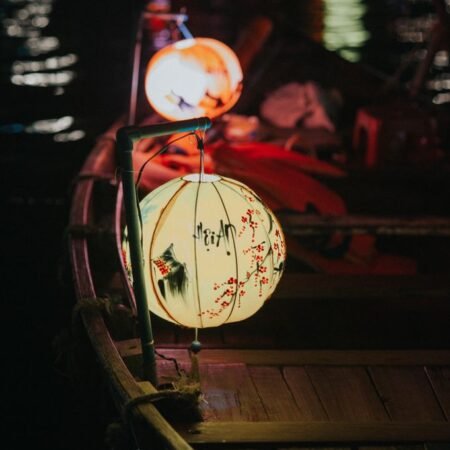
That said, I’d push back gently on treating it as just a day trip if your schedule allows even one night. The canal empties out dramatically after the last tour buses leave in the late afternoon, and the district at dusk, when the lanterns start coming on and it’s quiet enough to hear the water again, is a completely different experience from the same street at 1pm in August. Go in the early morning or the evening if you possibly can. Summer in Okayama also gets seriously hot and humid, so if you’re heat-sensitive like I am, aim for spring or autumn when the willow trees and the light are doing their best work anyway.
Kurashiki isn’t going to blow you away with scale. It’s one canal, a handful of museums, and some very good storehouses. But there’s something about a small, specific place that clearly knows exactly what it is that I find more memorable, five years in, than a lot of the bigger-name stops I rushed through early on. Take the slow train, get off at the wrong exit like I did if you have to, and give yourself the time to just stand there for a second when the modern street finally opens up into the old one.
コメント