





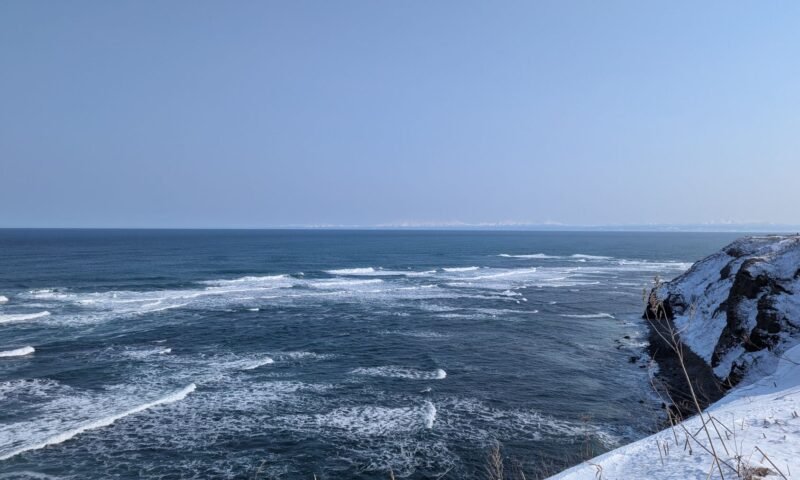
I almost missed the jetfoil. I’d given myself what I thought was a generous cushion to get from my hotel to Niigata port, and then I spent ten minutes wandering the wrong terminal looking for a ticket counter that, it turns out, was one floor up the whole time. I made it aboard with about ninety seconds to spare, out of breath, laughing at myself, and then an hour and seven minutes later the boat eased into Ryotsu Harbor on an island I’d been meaning to visit for two years: Sado.
Sado sits in the Sea of Japan off the coast of Niigata, and it’s the kind of place that doesn’t announce itself. There’s no bullet train, no single must-see landmark people back home have heard of. What there is, instead, is gold that built an empire, a harbor full of wooden washtubs you can actually ride in, and more surviving Noh stages than almost anywhere else in the country. I spent a long weekend there and came home with a phone full of photos and no idea why more people don’t go.
A Mountain Split in Half by Gold Fever
The first stop on everyone’s Sado itinerary, including mine, is Aikawa, up on the island’s west side, where the old Sado gold and silver mine still sits cut into the hillside. Mining here ran at serious scale from the 17th century all the way through to the mid-19th century, under the Tokugawa shogunate’s direct control, and then continued in various forms right up until the mine finally closed in 1989. In July 2024, UNESCO added the Sado Island Gold Mines to the World Heritage list — Japan’s 26th site overall — recognizing the site for preserving centuries of hand-worked, unmechanized mining technology that elsewhere in the world had already given way to machines.
Walking up toward the site, you can’t miss Dōyū no Warito, a V-shaped gash cut straight through the top of a mountain where miners, centuries ago, just kept digging a vein of ore until they’d split the whole peak open. It’s a strange, almost violent thing to see in an otherwise quiet, green landscape, and it’s the image that’s stayed with me most from the trip. Inside the tunnels, mechanical mannequins reenact the brutal, cramped labor generations of miners did by lamplight, which is sobering in a way that balances out how pretty the rest of the island is.
Riding in a Washtub Across Ogi Harbor
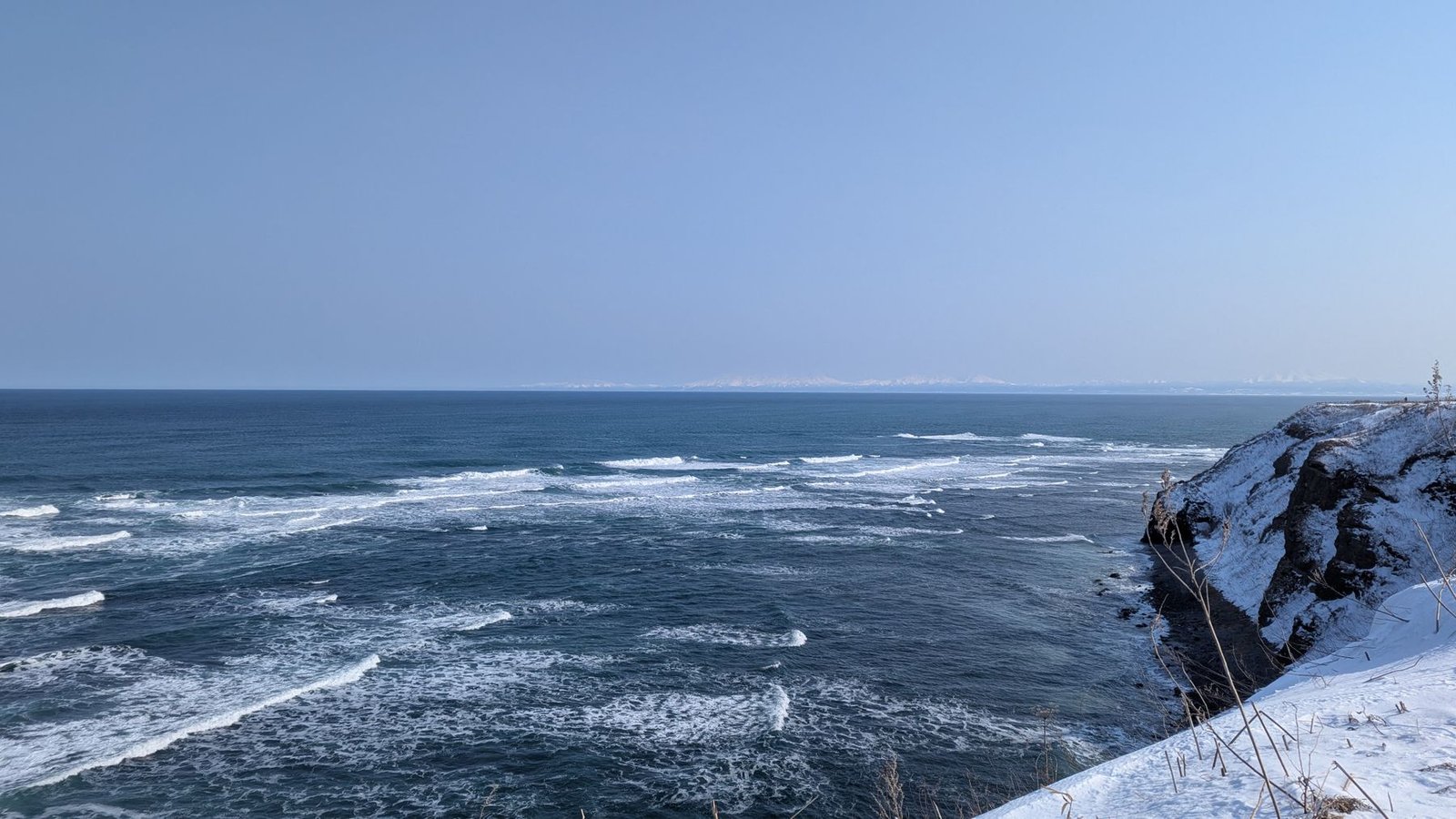
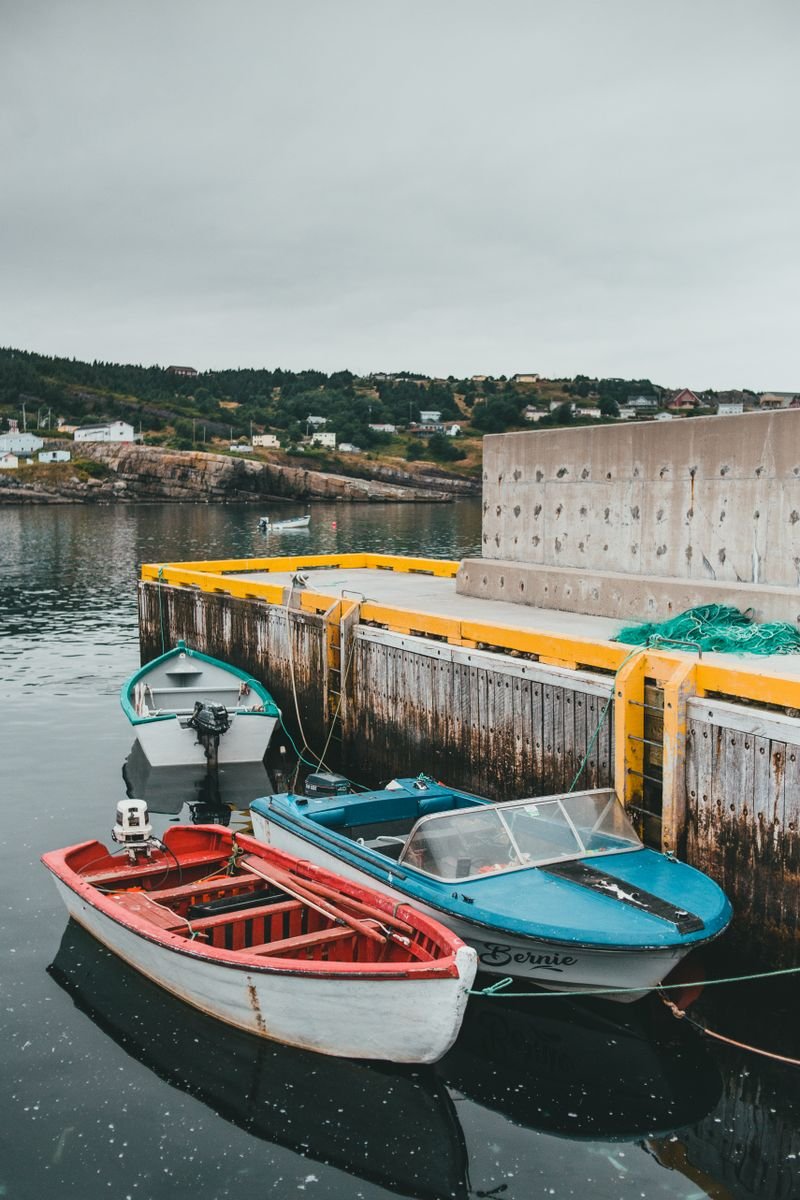
Down on the southern tip of the island, in a fishing town called Ogi, I did something I still can’t quite explain to people without them laughing: I paid five hundred yen to be paddled around a harbor in what is, structurally speaking, a large wooden tub.
These are called tarai-bune, and they’re not a tourist gimmick invented for photos, even though they absolutely photograph well. Women on this stretch of coast used them for generations to get into the narrow, rocky coves around Ogi to harvest seaweed and abalone — spots a normal keeled boat couldn’t squeeze into, but a round, shallow tub could. These days it’s mostly a visitor experience, and the women who steer them (because it’s still, charmingly, mostly women doing the rowing) make it look effortless, spinning the tub in slow, lazy circles with a single oar while you sit there gripping the sides, absolutely delighted with yourself. The prettiest spot to do it is over by Yajima and Kyojima, two small islands connected by a little red bridge, where the water goes clear enough that you can see straight down past the tub’s edge.
An Island With More Noh Stages Than Tokyo
This is the fact that convinced me to book the trip: more than thirty Noh theater stages still stand on Sado, a number of them still in active use, on an island with a population of roughly 64,000 people. Per capita, it’s almost certainly the highest concentration anywhere in Japan.
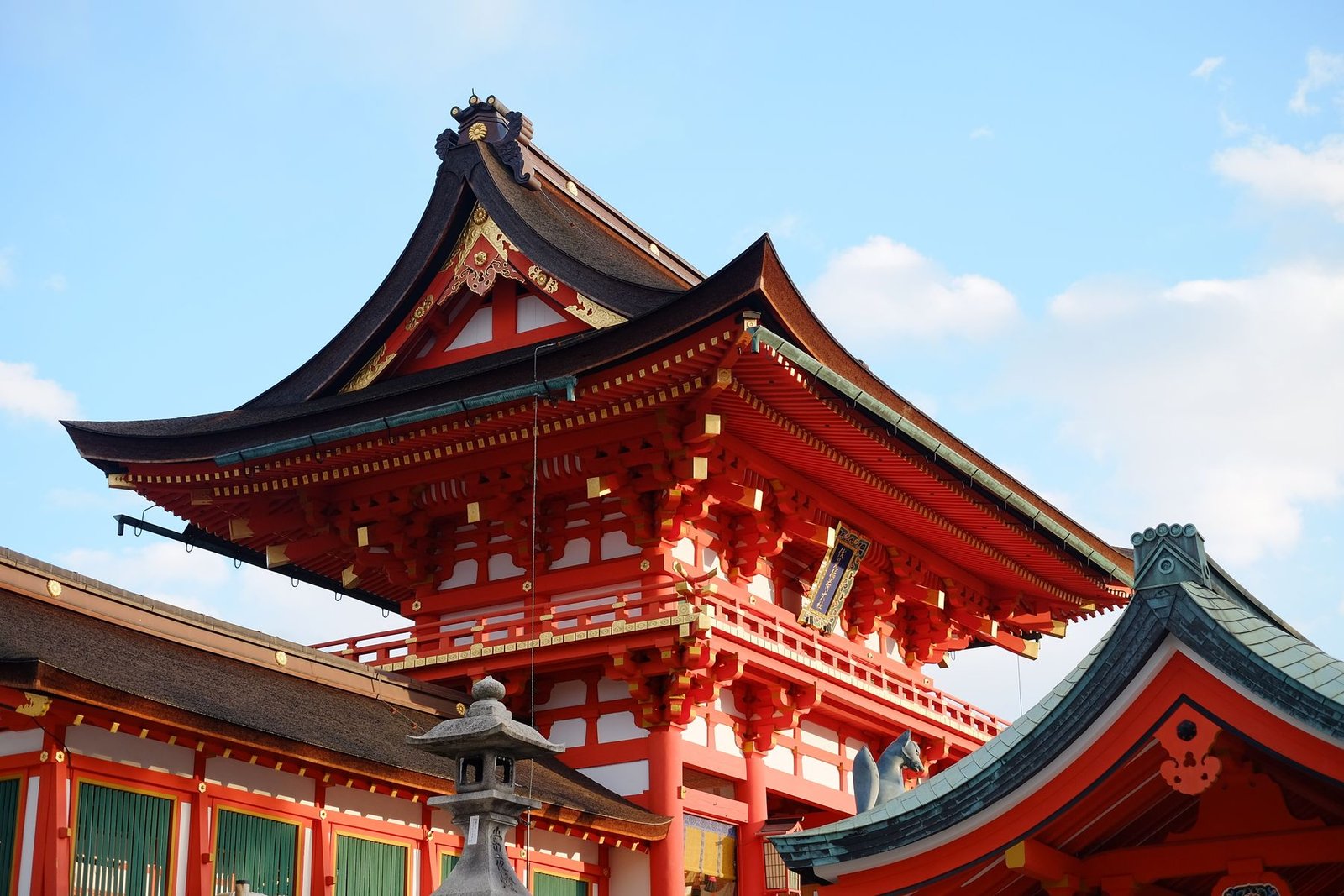
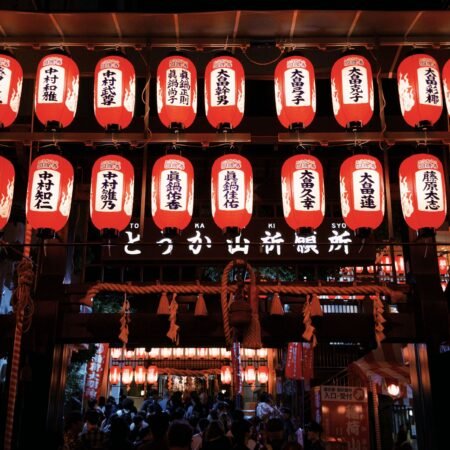
The story behind it goes back a long way. The playwright and performer Zeami, one of the founding figures of Noh itself, was exiled to Sado in the 1400s, and some of the island’s oldest Noh masks are still said to have come from him. Later, once the shogunate took direct control of the island for its gold, the magistrates sent out from Edo to oversee the mines brought their own troupes and taste for Noh with them, and performances spread out of the mining towns and into shrine grounds across the island, open to ordinary islanders rather than kept for samurai alone. By the start of the Meiji era, Sado reportedly had over two hundred stages — there’s an old account of even a hamlet of ten houses having its own. A good number have since disappeared, but the ones left standing, with their thatched roofs and weathered wood, still host performances by lantern and firelight in summer, and watching one under the stars, with frogs going off somewhere in the dark behind the shrine, is unlike any theater experience I’ve had in Japan.
Getting There and Making It Work
Sado is reachable by ferry from Niigata port to Ryotsu: the jetfoil takes a little over an hour, while the slower car ferry takes about two and a half hours and is the better option if you’re bringing a rental car, which I’d recommend, since the island is bigger than people expect and buses between Aikawa, Ogi, and everywhere in between aren’t exactly frequent. Niigata city is about two hours from Tokyo by Shinkansen, which makes the whole trip doable as a long weekend.
I’d budget at least two full days — one for the Aikawa side with the gold mine, one for Ogi and the tarai-bune, with the Noh stages and smaller shrines filled in wherever your route happens to pass them. Sado Okesa, the island’s famous folk song and dance, is also worth catching if your dates line up with a summer festival; it apparently started life as a sailors’ drinking song from Kyushu that sailors on the old Sea of Japan trade routes carried north, and by the late Meiji period it had become a favorite among the gold mine workers themselves. There’s something fitting about an island built on gold ending up with a soundtrack that came in on cargo ships.
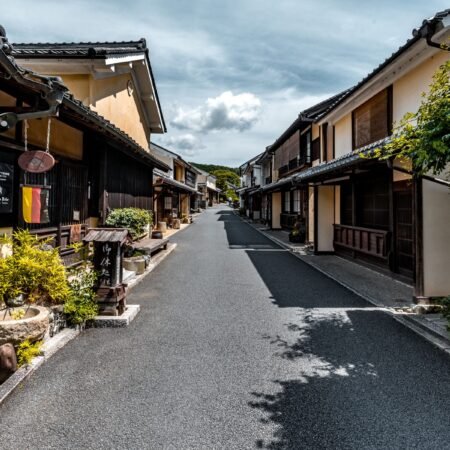
What struck me most, walking around Aikawa and Ogi, wasn’t any single sight so much as the pacing of the place. Nobody was rushing. The mine tour guide took his time explaining the mannequins. The tarai-bune women chatted with each other between rides. Nothing about Sado felt built for a quick photo and a dash to the next stop, and after a few days there I found myself slowing down too, which is maybe the real reason to go.
A quick note on photos: some of the images here are stock photos I’ve used to set the mood — they may not be the exact spot or moment I’m describing, just close in spirit.
コメント