





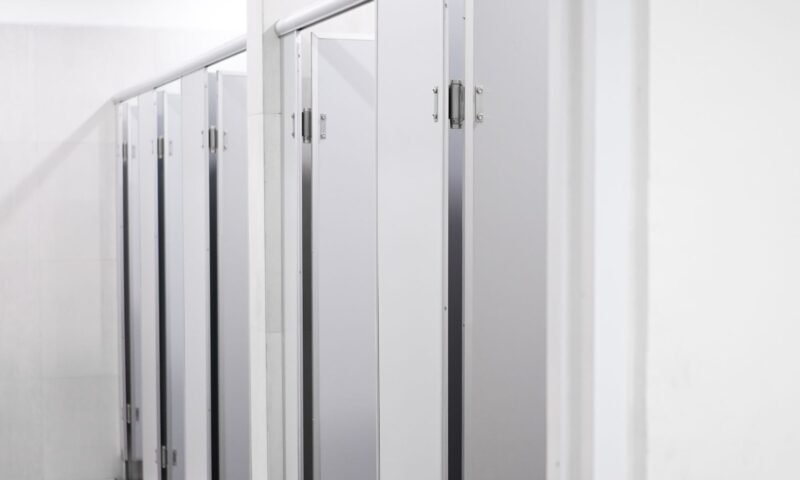
The first time I heard about Aka Manto, I was crouched in a stall in a near-empty train station toilet somewhere in Gifu, waiting out a sudden downpour, when a university student I’d been chatting with on the platform mentioned, almost as an aside, that this was the kind of bathroom “where you’re supposed to hear him.” She wasn’t talking about a specific haunted building. She meant any public toilet, anywhere in Japan, late enough at night and quiet enough that you start listening to the silence a little too closely.
That’s the strange thing about Aka Manto — the Red Cloak — compared to most of the haunted places I’ve gone looking for over the past seven years. There’s no castle ruin to visit, no shrine with a plaque, no mountain pass to drive up. The haunting isn’t pinned to a map. It lives in the most mundane room in the country: the public restroom stall, the kind every single person in Japan uses several times a day without a second thought. According to the story, that’s exactly the point.
A Voice From the Last Stall
The legend, as it’s told today, goes something like this. You’re alone in a public toilet — a school bathroom, a park restroom, sometimes a department store washroom late in the day — and you take the last stall, or the one at the very end of the row. A voice, often said to come from above the door or from nowhere in particular, asks if you’d like a red cloak or a blue cloak. Answer red, and according to local legend you’re flayed or slashed until your own blood soaks your clothes like a crimson cape. Answer blue, and you’re drained pale, sometimes strangled, until you look as though you’re wearing a cloak of that colour instead. In some versions there’s a third way out: naming a completely different colour, like yellow, is said to spare you, though what happens next varies depending on who’s telling it, and a few tellings have you dunked head-first into the toilet bowl for your cleverness rather than let off entirely.
There’s also a closely related strand of the same story, sometimes treated as a separate legend and sometimes folded into this one, where the question is about paper rather than a cloak — red paper or blue paper, offered while you’re using the toilet. Folklore researchers generally treat “akai kami, aoi kami” (red paper, blue paper) and Aka Manto as branches of the same root rumour, which makes sense given how school playgrounds pass stories along: a little garbled, a little remixed, told differently in every town.
Where a Toilet Ghost Actually Comes From
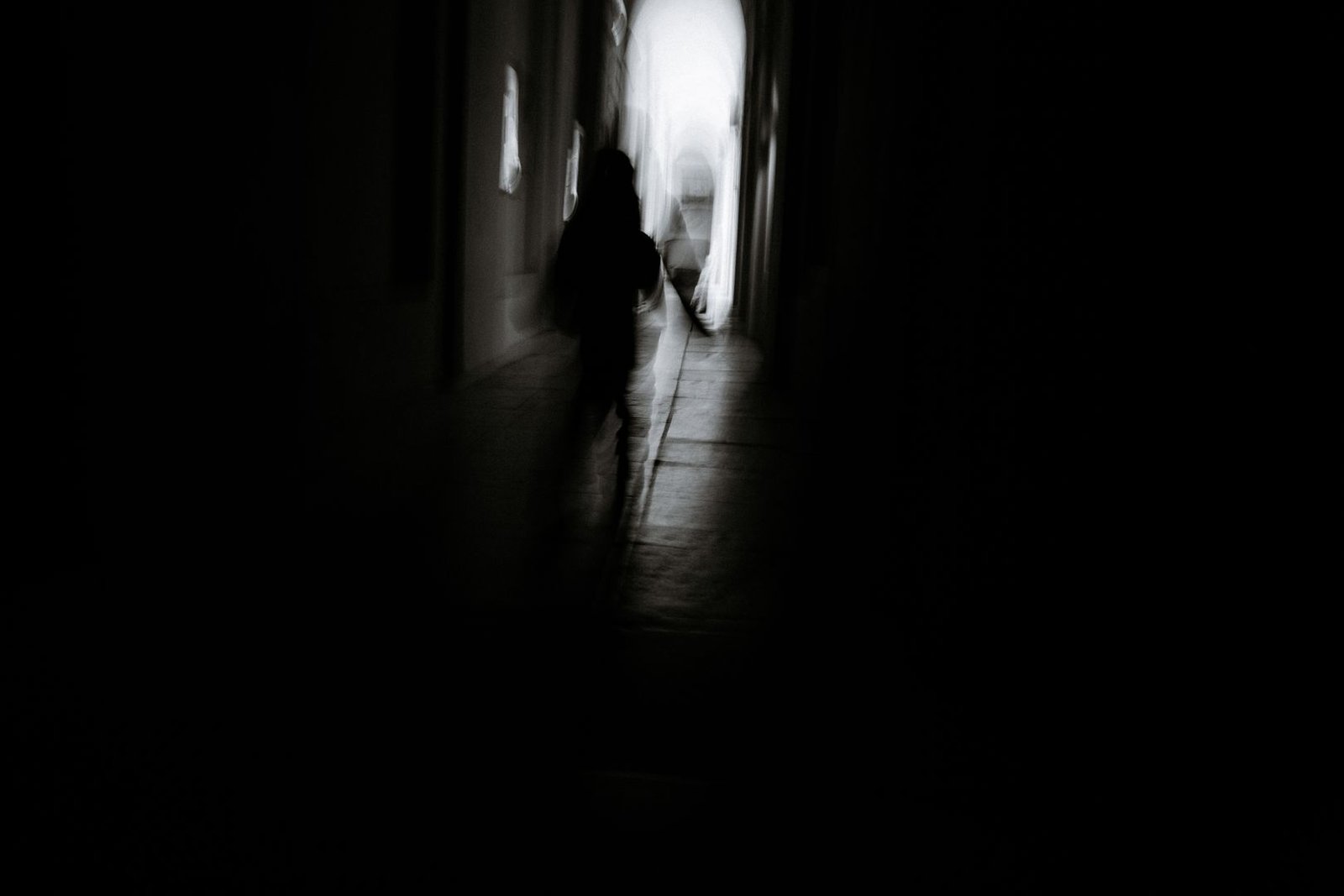
Writers and folklore enthusiasts who’ve tried to track Aka Manto back to its origins generally point toward the Taisho era or the early Showa years, with several citing Gifu Prefecture as an early centre of the rumour before it spread nationally the way these things usually do: children repeating it at school, camp counsellors telling it around a fire, and eventually, decades later, internet forums and yokai encyclopaedias giving it a more fixed shape than it probably ever had in any single town. Unlike Hanako-san in the school toilet on the third floor, or the slit-mouthed woman asking “am I pretty?” on a dark road, Aka Manto was never really about one haunted building. It was about an entire category of space: the public toilet, which in prewar and early postwar Japan was very often a separate, sometimes outdoor structure, poorly lit and physically detached from the house or school it served. You had to walk to it, often at night, often alone — a setting that does half the work of a ghost story by itself, before anyone adds a voice asking about cloaks.
There’s an argument, made by several people who study these urban legends, that stories like this one functioned as a kind of folk safety warning dressed up as horror: a way of telling children, without ever lecturing them directly, not to dawdle in isolated restrooms after dark, not to answer strange men who speak to them from the other side of a door, and not to assume every stranger’s question deserves an answer. I find that reading more convincing than any literal one, and it’s a pattern I’ve come across again and again chasing these stories around the country — the kappa who punishes children for swimming alone in dangerous rivers, the vengeful spirits who haunt unlit mountain roads. The fright is doing a job.
A Story With No Address

What I find genuinely unsettling about Aka Manto, in a way that’s different from the castles and cemeteries I usually write about, is precisely that it has no address. I can’t tell you which stall to avoid, because the story was never really about a specific stall. It’s about the category of “the last toilet in the building, at the hour when you’re the only one there,” which describes thousands of rooms across the country on any given night. A friend who grew up outside Nagoya told me she and her classmates used to specifically avoid the end stall in the school gymnasium bathroom, not because anyone claimed something had actually happened there, but because it fit the shape of the story so neatly that nobody wanted to test it. That’s the legend’s real trick: it doesn’t need a haunted building, because it recruits whichever ordinary building you happen to be standing in.
This is also, I think, why Aka Manto has had such a long life compared to other playground rumours that burn through a single generation and vanish. It costs nothing to retell, requires no travel, and refreshes itself every time a kid is sent alone to the bathroom at the far end of a quiet hallway. I’ve seen it referenced in manga, in horror anthologies aimed at children, and in the kind of late-night variety television segment that trots out urban legends every summer. It has outlasted plenty of ghosts who at least had the dignity of a specific well or bridge to call home.
Visiting Manners and Safety
Because this is a story rather than a single physical location, there’s no gate to approach respectfully or ruin to avoid trespassing on, which makes it an easier one than most to enjoy without doing anyone any harm. Still, a few things are worth keeping in mind if the subject comes up with Japanese friends or colleagues. Treat it as the folklore it is rather than as fact, the way it’s told here — nobody is claiming a real person actually died this way in a real bathroom, and it does nobody any good to insist otherwise. If you’re ever telling this story to children, remember that it exists partly as a gentle piece of safety folklore, not an excuse to genuinely terrify a kid alone in an unfamiliar public toilet at night; keep it playful rather than cruel. And if you do find yourself in the last stall of a quiet public restroom late at night anywhere in Japan, you don’t need me to tell you that answering a disembodied voice is a bad idea for entirely ordinary reasons, ghosts or no ghosts.
Note: images accompanying this article are illustrative stock photos and do not necessarily show the specific site discussed.

コメント