






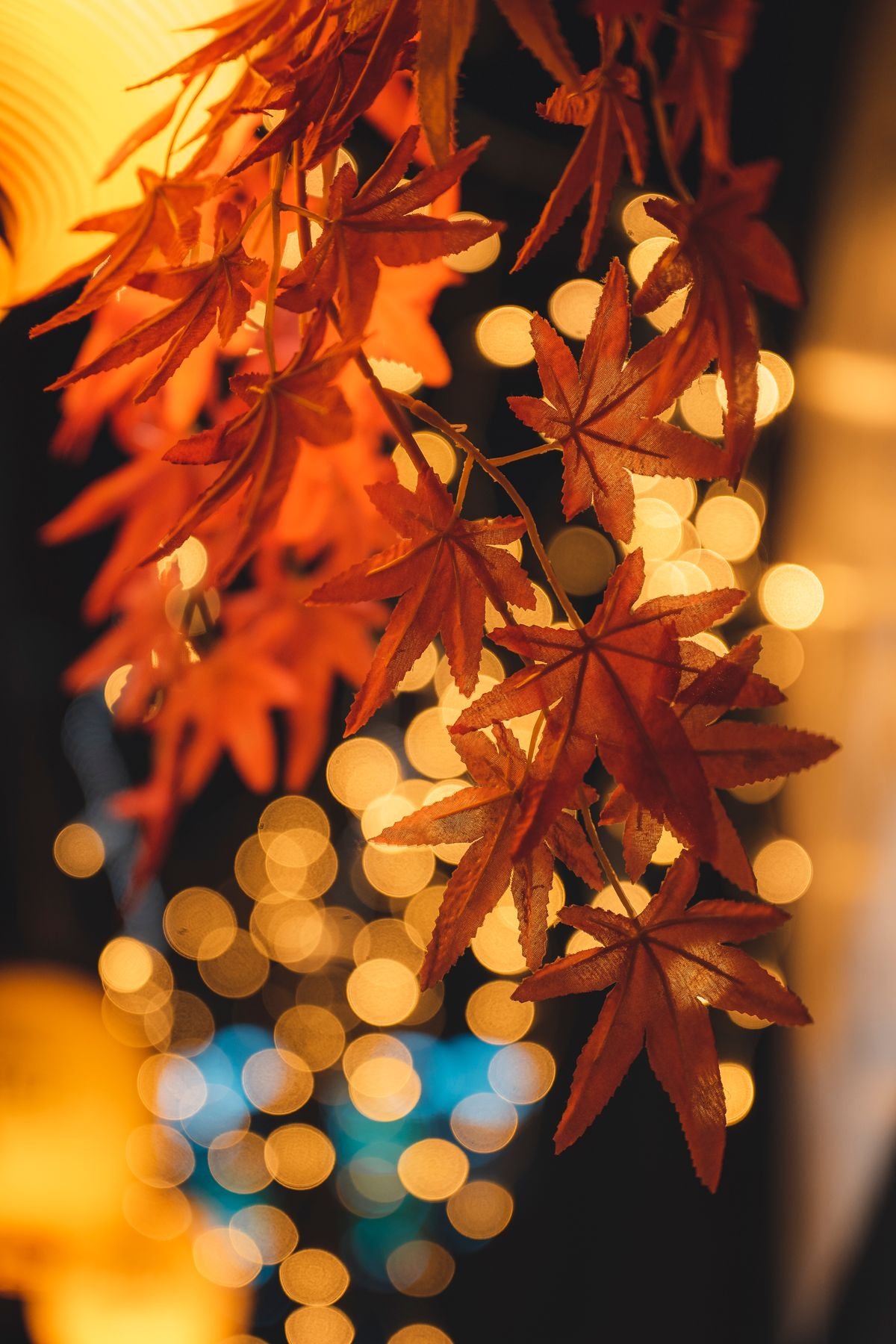
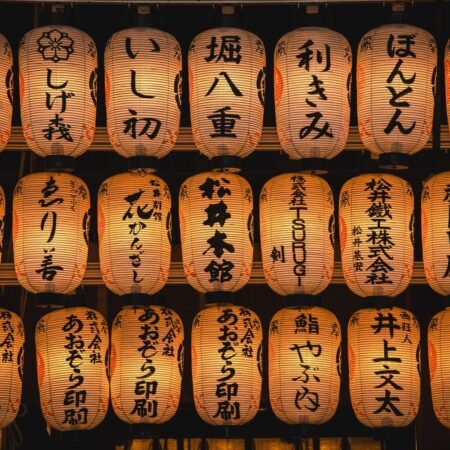
I almost turned back at the bus stop. It was already getting dark, the wind off Lake Kawaguchi had that first real bite of late autumn, and I’d spent the whole train ride from Shinjuku convinced I was going to stand in a crowd of strangers staring at clouds where a mountain should be. Five years in Japan and I still haven’t learned to trust the forecast. But then I came around a bend in the path along the Nashigawa Canal, and the whole corridor lit up in front of me — red and gold maple leaves glowing orange from the lanterns strung overhead — and I forgot all about the mountain for a minute.
That’s the thing about the Fuji-Kawaguchiko Autumn Leaves Festival, held every November on the northern shore of Lake Kawaguchi in Yamanashi Prefecture: it doesn’t actually need Mt. Fuji to be worth the trip. It helps, obviously. But the maples alone are doing some heavy lifting.
Walking the Maple Corridor
The heart of the festival is a short, dense stretch of maples arching over the Nashigawa Canal — locals call it the “momiji kairo,” or maple corridor. There are something like sixty large, old maple trees packed into that one stretch, with several hundred more scattered along the surrounding lakeshore, so depending on which way you walk you can go from a tight, glowing tunnel of leaves to a wide-open view of the water in about five minutes.
During the day the colors are more about contrast — that almost cartoonish red against Yamanashi’s clear autumn sky. But I went at dusk, right as the nightly illumination kicked in, and that’s when the place earns its reputation. The lights run from sunset until around 9 p.m. for most of the festival’s run, which usually stretches from early November into the last week of the month, so there’s a decent window to time it around the actual peak foliage, which shifts a little every year depending on how cold the autumn has been.
The Mountain That May or May Not Show Up
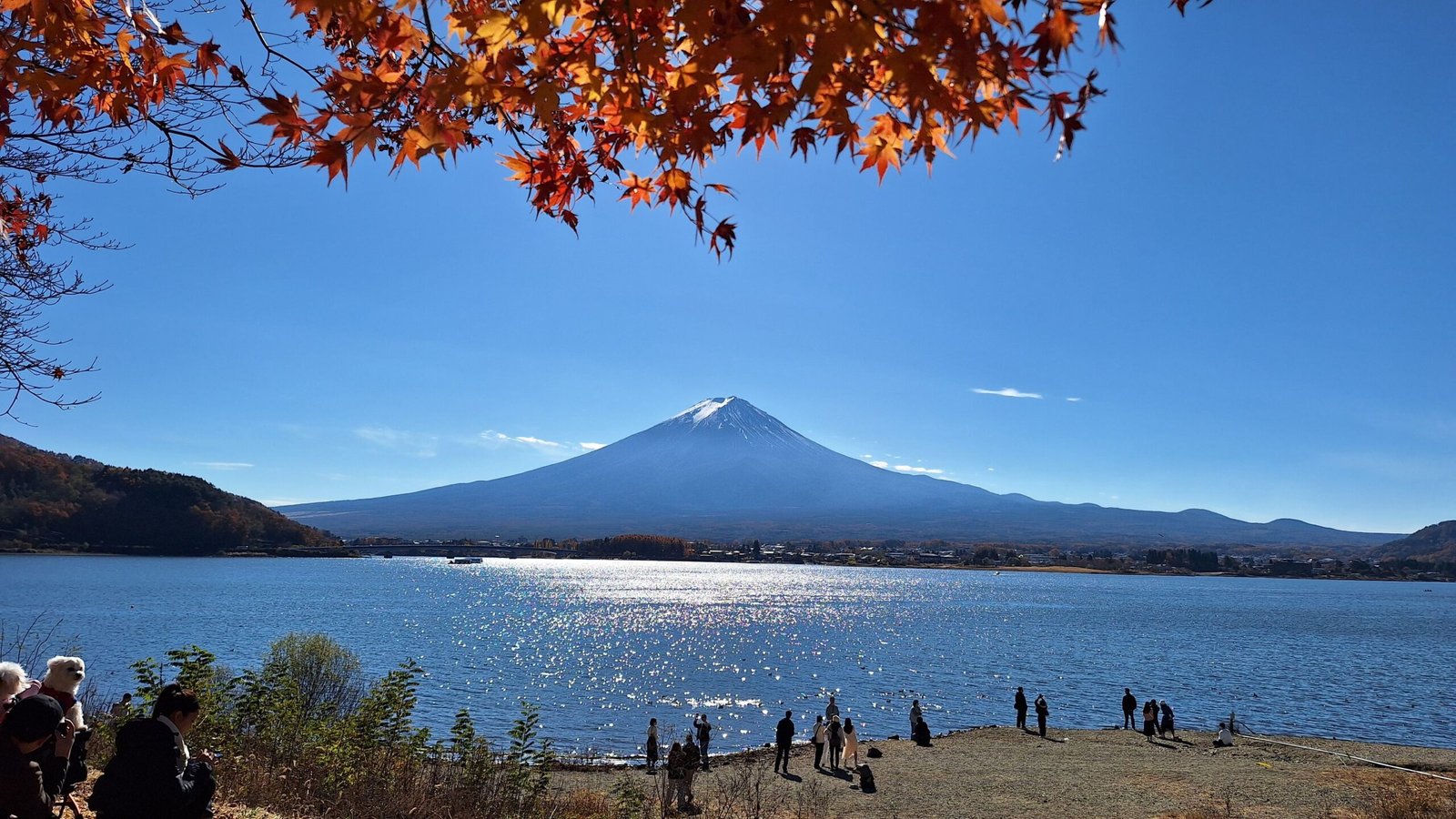
Here’s my honest advice: don’t build your whole trip around photographing Fuji through the leaves. The framed shots you see online, with the snow-capped peak sitting right above a wall of red maples, are real, but they’re also a matter of luck. Clouds roll in off the lake constantly in November, and plenty of visitors — myself included, on my first attempt here two years ago — go home having seen nothing but gray sky where the mountain is supposed to be.
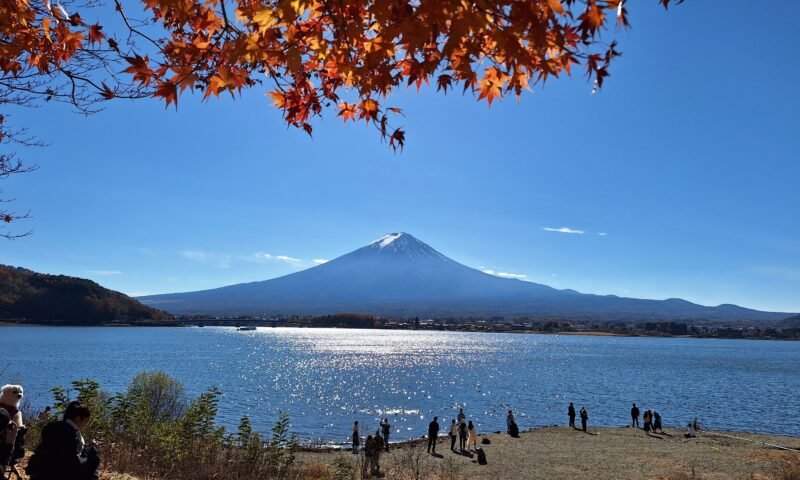
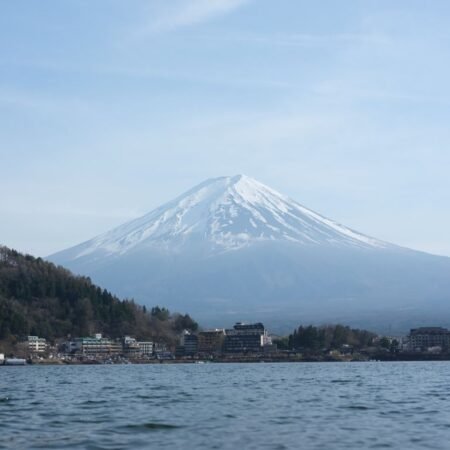
This time I got lucky. About twenty minutes before the lights came on, the clouds thinned out just enough that Fuji’s silhouette appeared over the far shore, dark blue against a fading pink sky, with the maples glowing in the foreground. I’m not going to pretend I didn’t audibly gasp. An older man next to me, clearly a regular, just nodded like he’d seen it a hundred times and said, “today’s a good day.” If you do get a clear view, the open lawns near the water give you the widest, least obstructed sightline — better than standing right under the canopy, where the leaves block the horizon.
Tornado Potatoes and Other Reasons to Linger
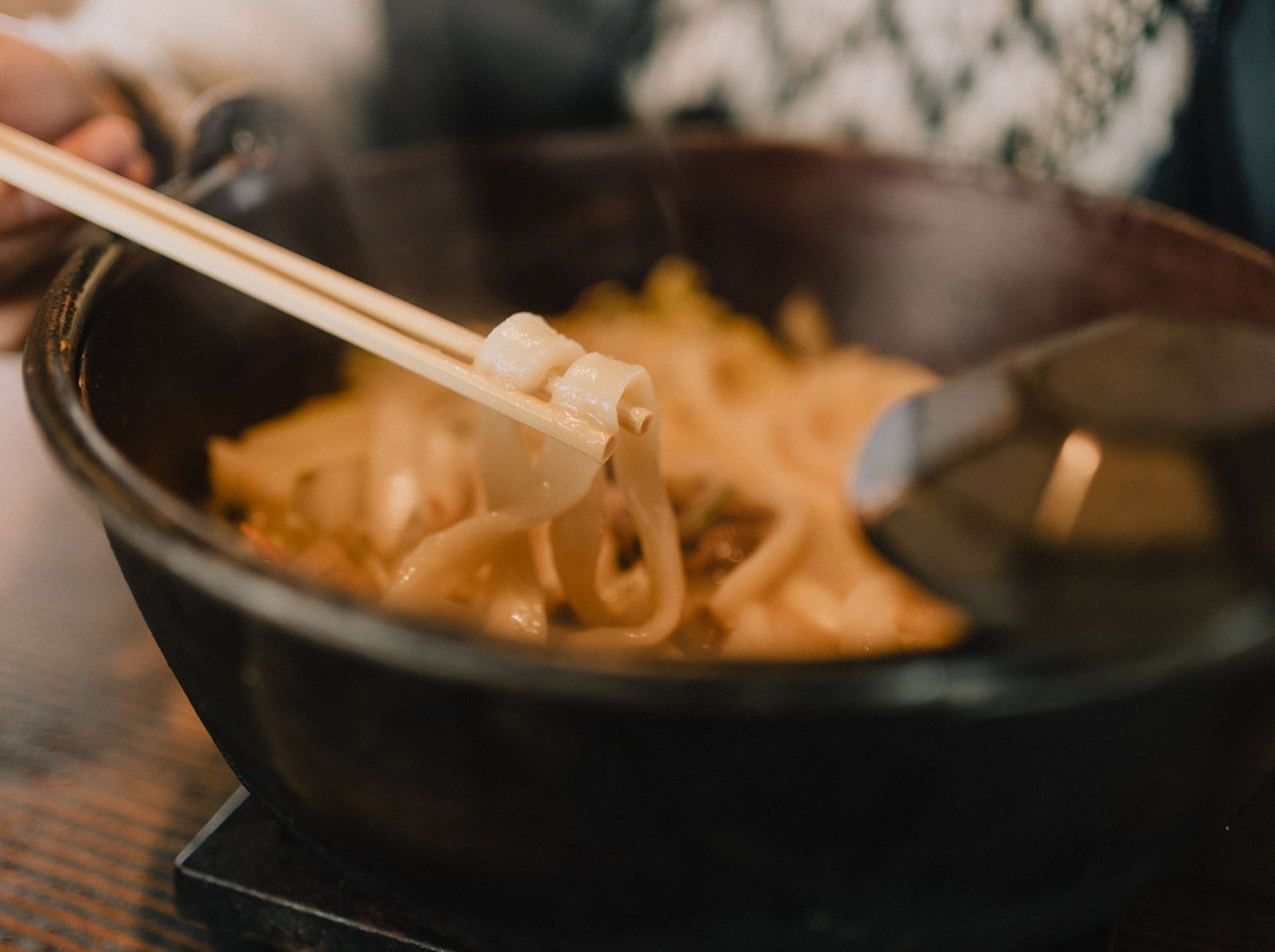
I’ll admit part of why I stayed as long as I did was the food stalls. There are more than a dozen set up along the walkway, all licensed and inspected, which sounds like a strange detail to mention except that it tells you how seriously this festival takes its own food safety reputation — Yamanashi isn’t shy about regulating its matsuri stalls. I had a bowl of hoto, the thick, flat, hand-cut noodles in a miso broth with pumpkin and root vegetables that’s practically the prefecture’s signature dish, and it was exactly what my cold hands needed. I also watched approximately a dozen teenagers in a row order the “Mt. Fuji Tornado Potato,” a whole potato spiral-cut onto a skewer and deep-fried, which is less a food than a theatrical experience, and I regret not trying one myself. Next time.
If you have an extra hour, the Itchiku Kubota Art Museum is a short walk or quick bus ride from the corridor and makes a nice detour before or after dark — it houses the extraordinary dyed silk kimono work of the textile artist Itchiku Kubota, displayed in a building that’s as much a piece of art as what’s inside it. I ducked in on my way back to the bus stop and was glad I did; it’s a quiet contrast to the crowds and string lights outside.
Getting There and Making It Work
From Tokyo, the easiest route is the Fuji Excursion limited express, which runs directly from Shinjuku to Kawaguchiko Station in under two hours with reserved seating — worth booking ahead, because autumn is peak season and seats disappear fast. Highway buses from Shinjuku or Tokyo Station take a bit longer, closer to two hours, but run more frequently and are cheaper. From Kawaguchiko Station, the Kawaguchiko Sightseeing Bus (Red Line) gets you close to the corridor; if you’re driving, there’s free parking nearby, though it fills up quickly on weekends, with paid lots as backup.
A few things I wish someone had told me before I went: wear real layers, because once the sun goes down by the water it gets genuinely cold, colder than it feels in central Tokyo the same week. Go on a weekday if your schedule allows it at all — weekend evenings get crowded enough that the narrow canal-side path turns into a slow shuffle. And don’t treat the illuminated hours as the only worthwhile time; if you can swing both a daytime walk and an evening one, the corridor genuinely looks like two different places in each light.
I left without ever fully deciding whether the maples or the mountain had been the real headliner. Probably that’s the honest answer about most of autumn in Japan — you go for one thing and end up remembering all of it.
A quick note on photos: some of the images here are stock photos I’ve used to set the mood — they may not be the exact spot or moment I’m describing, just close in spirit.
コメント