






I used to think Japan’s “no-go zones” were the invented kind — places dreamed up for a video thumbnail. Then a friend who grew up in Fukuoka mentioned, almost as an aside, that there’s a tunnel near her hometown with both ends bricked shut, and that teenagers still climb over the top to get inside. That was a few years ago now, and I’ve been back to the road above Inunaki Pass three times since, always in daylight and always with better boots than the first visit. The Old Inunaki Tunnel is one of the rare stops on my list where the real history is stranger, and sadder, than the ghost story built on top of it.
A Tunnel Built Twice
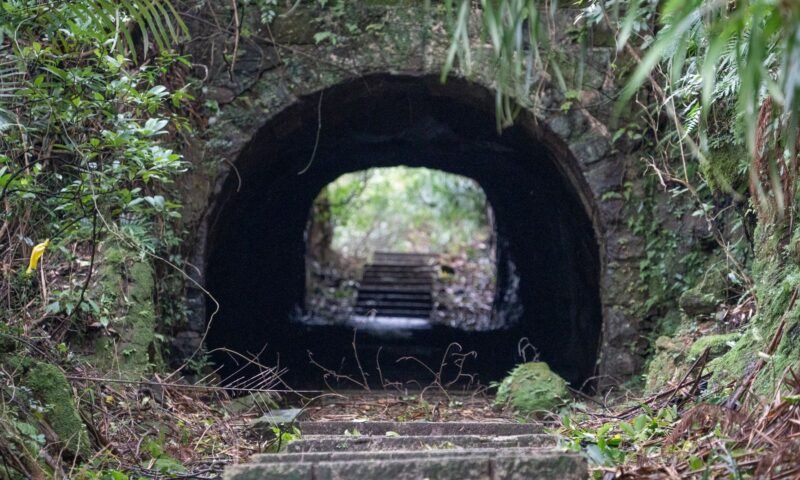
The tunnel sits on the old mountain road through Inunaki Pass, on the border between Miyawaka City and the town of Hisayama in Fukuoka Prefecture, cutting through the hills above what is now Inunaki Dam. It was built in 1949, part of the postwar push to connect communities on either side of the pass by a shorter route than the long way around. For roughly twenty-five years it did exactly that job. Then, in 1975, a newer and straighter tunnel opened close by, and the old one — barely a hundred metres of curved, unlit concrete — was simply left behind. No more maintenance, no more lighting, and before long, no official use at all.
Abandoned infrastructure in Japan tends to decay quietly, and for a while that’s what happened here. Hikers and curious drivers found their way in anyway. Paint peeled, water worked through the lining, and the tunnel picked up the kind of reputation that unlit, disused tunnels usually do — a cold draft that doesn’t match the season, an engine that hesitates on the approach, the sense of being watched on the walk through. None of that is particularly unique to Inunaki; Japan has no shortage of tunnels with that same local reputation. What sets this one apart is what actually happened there.
The Night in 1988
In December 1988, the old tunnel was the scene of a real crime. According to reporting on the case, a group of young men tried to steal a car from a man near the tunnel, then abducted him and set him on fire inside it; he died from his injuries, and those responsible were convicted and given long prison sentences. I’m deliberately not dwelling on the details — he was a real person, not a plot device, and the people who knew him deserve more than having his death repurposed as a thrill for strangers. What matters for this piece is that the case is well documented, that it happened at this specific tunnel, and that it’s the single biggest reason the Old Inunaki Tunnel’s reputation hardened from “spooky local shortcut” into something much heavier. Not long afterward, both entrances were sealed with concrete block walls, ostensibly to stop trespassing in a structure nobody was maintaining — though by then the sealing only fed the legend further. People still find gaps near the top of the barricades and squeeze through; by every account I’ve read, the inside is mostly graffiti and litter rather than anything supernatural.
The Village That Never Was
The story that actually made Inunaki famous outside Fukuoka has almost nothing to do with the tunnel itself. Sometime around 1999, an anonymous letter reportedly sent to a Tokyo television station described a hidden settlement beyond the pass — a village where, according to the legend, a sign at the border announced that the Japanese constitution did not apply past that point. From there the story grew the way these things do: a couple whose car breaks down nearby and who are never seen again, a public phone booth near an old bridge that is said to ring at night with calls from the village, villagers described as faster and stronger than they should be. None of this has ever been substantiated, and no such settlement exists today, however the legend is dressed up.
What’s genuinely interesting is that there was a real village with a similar name nearby, and it has nothing to do with any of this. Inunakidani Village was an actual Edo-period hamlet, established in 1691 under the Fukuoka domain and known locally for small-scale ceramics, ironwork, and later coal mining. It was formally absorbed into a neighbouring village in 1889, long before anyone had heard the modern legend, and what remained of its site was submerged when Inunaki Dam was completed in the 1990s, with the last residents relocated to a new settlement nearby. The pass does have real, documented history of a village being erased from the map — just not in the way the ghost story tells it. The legend borrowed a true name and a true disappearance and built something else on top of them, which is probably part of why it has stuck around as long as it has. It picked up another wave of attention in 2020, when a horror film based loosely on the legend reached Japanese cinemas.
Visiting Inunaki Pass Today
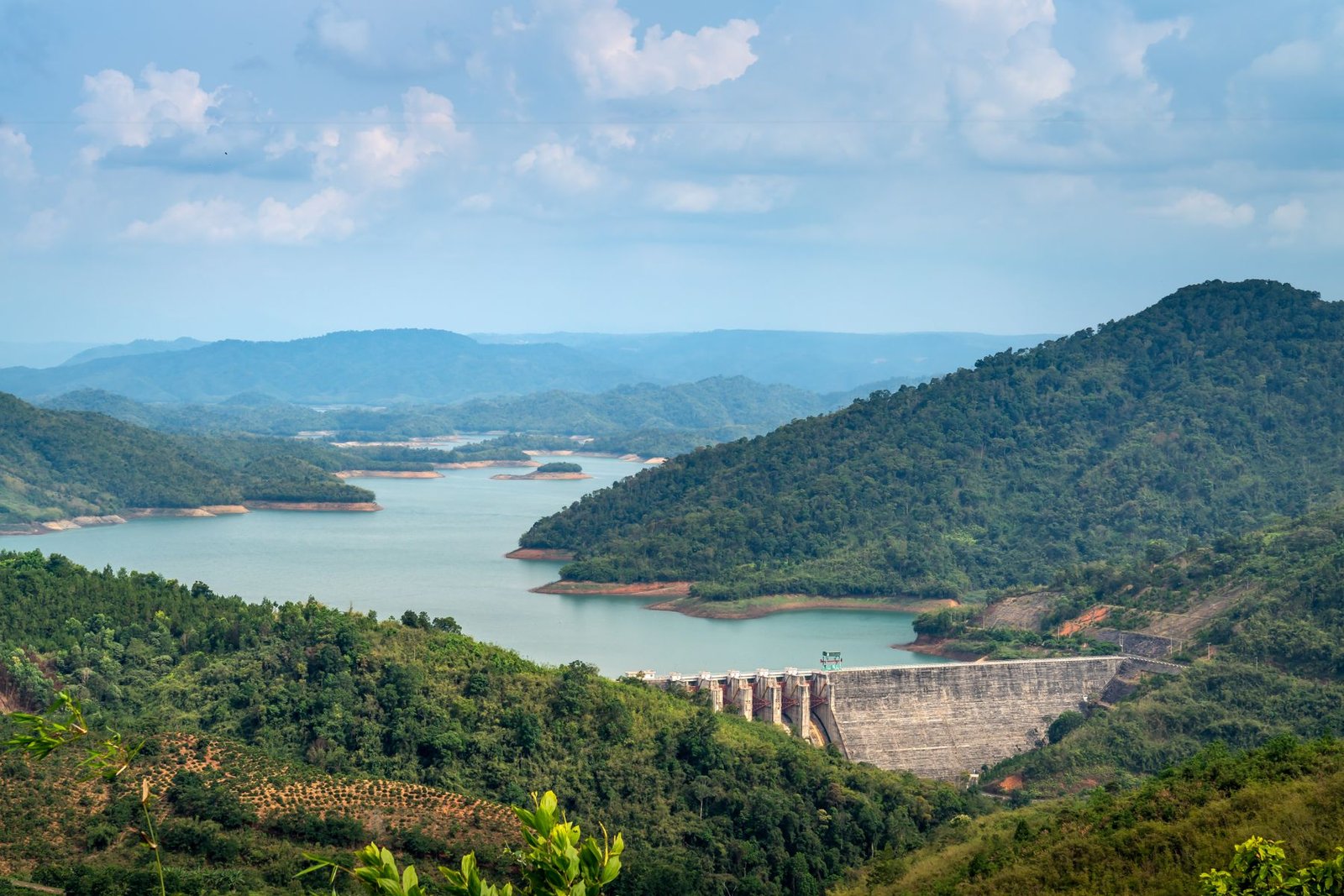
If you want to see this part of Fukuoka for yourself, the honest advice is to stay on the public road and take in the dam and the surrounding hills from there. The scenery around Inunaki Dam is genuinely pleasant on a clear day, and that much costs nothing and breaks no rules. The old tunnel itself is sealed for good reason: the structure hasn’t been inspected or maintained in decades, trespassing onto it is illegal, and climbing through a gap in a concrete barricade in the dark is a reliable way to get hurt long before any ghost gets the chance. There’s a quieter point worth carrying into a trip like this, too — a man really did die at that tunnel, and the people who still live around Miyawaka and Hisayama have to put up with strangers treating their hometown as a haunted attraction every autumn. Keeping to the road, keeping the noise down, and leaving the barricades exactly as they are costs a visitor nothing, and it matters more than it might seem.
Note: images accompanying this article are illustrative stock photos and do not necessarily show the specific site discussed.

コメント