





I almost didn’t go. A friend in Nagoya mentioned, almost as an afterthought, that there was “a shrine thing” happening on the fifth of June — the kind of casual tip that in Japan usually turns out to be a huge understatement. So on a warm Friday evening I hopped off the Meitetsu line at Jingu-mae Station expecting a quiet stroll through some trees. Instead I walked into one of the most important religious ceremonies in the country, happening quietly, almost privately, in the middle of Japan’s fourth-largest city.
That’s Atsuta Jingu for you. Nine million people visit every year, more than some of the famous shrines I’d already written about on this blog, and yet somehow it still feels like Nagoya’s best-kept secret to outsiders. Everyone who actually lives in the Chubu region treats it the way Tokyoites treat Meiji Jingu: as the neighborhood shrine that happens to be enormous, ancient, and arguably hiding one of the three treasures of the Japanese imperial family.
The Sword Nobody Has Seen in Centuries
Here’s the detail that got me hooked before I’d even taken off my shoes at a nearby ryokan weeks earlier researching the trip: Atsuta Jingu is said to be the home of the Kusanagi-no-Tsurugi, one of Japan’s three sacred imperial regalia, along with the mirror at Ise and the jewel kept in the Imperial Palace. According to the old chronicles, it was a gift from the sun goddess Amaterasu, later carried into battle by the legendary prince Yamato Takeru, who is said to have used it to cut through burning grass and escape an ambush — which is where the name “grass-cutting sword” comes from.
After Yamato Takeru died, the sword eventually made its way to this site, and shrine tradition holds it has remained here, with a few dramatic exceptions, ever since. It was reportedly stolen once and later returned, and presumed lost at the bottom of the sea during the naval battle of Dan-no-ura in 1185. Yet the shrine’s own account says a version has stayed safely here the whole time. Nobody outside the priesthood has laid eyes on it in living memory. You can’t see the sword. You can, however, stand in the Kusanagi-kan, a hall built during the current Reiwa era specifically to display related treasures and swords connected to the legend, and feel slightly ridiculous about how much that non-encounter with an invisible sword affected me.
A Forest Hiding in Plain Sight
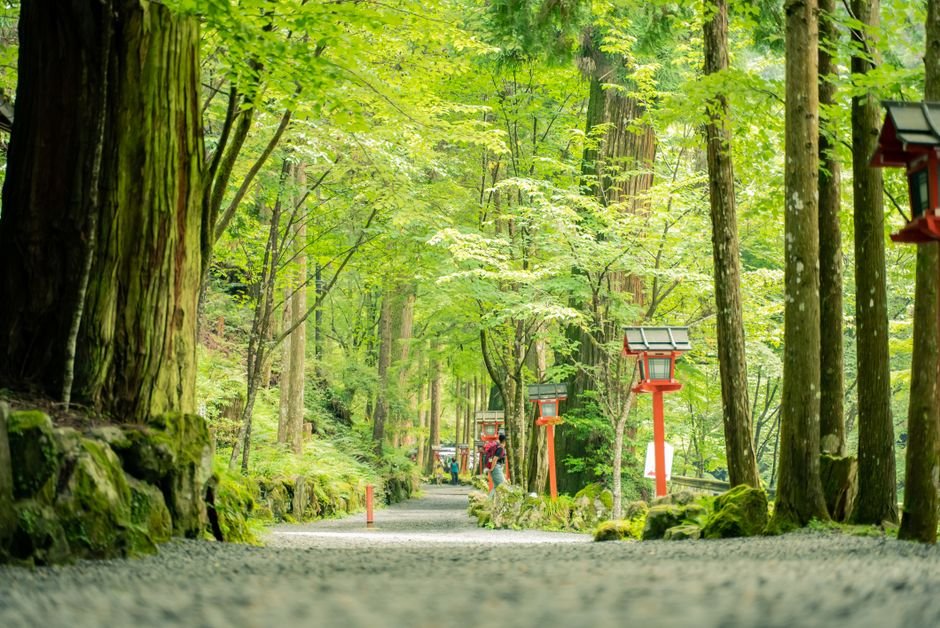
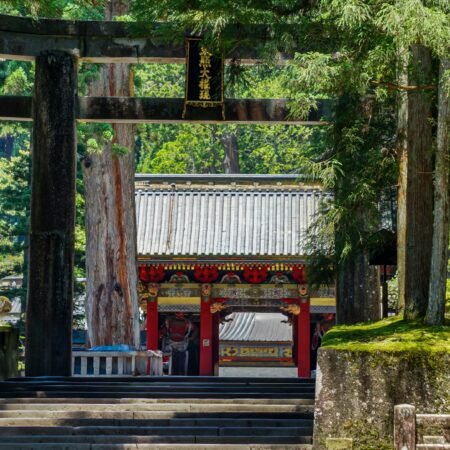
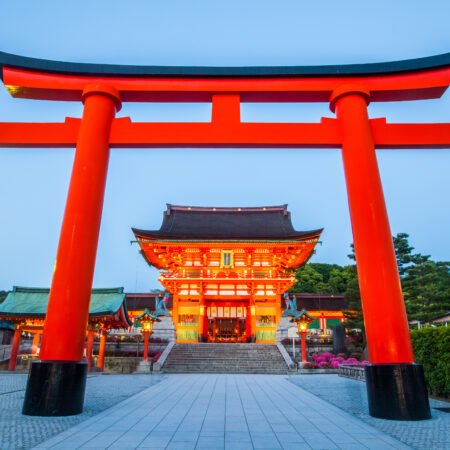
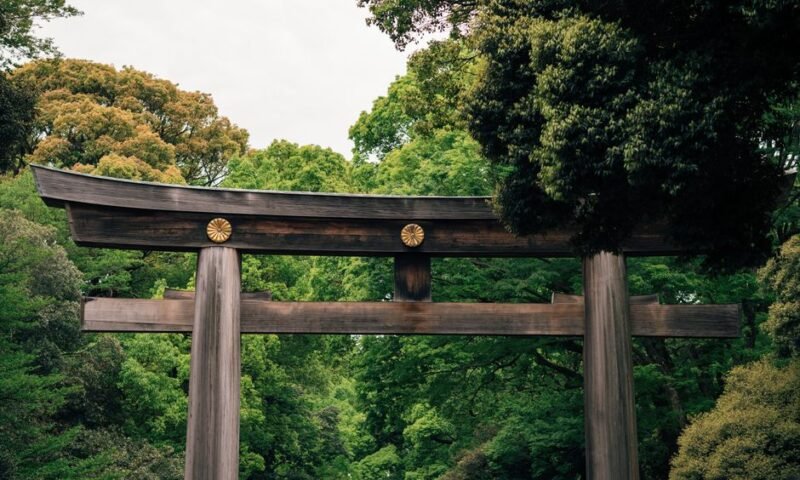
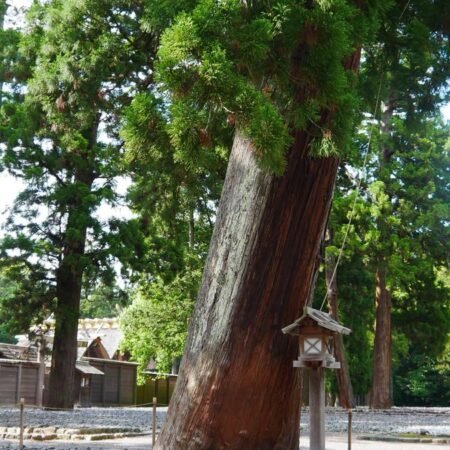
What surprised me most wasn’t the legend, though — it was the forest. Atsuta Jingu’s grounds cover roughly 200,000 square meters, and the second you pass under the main torii, the sound of the city just switches off. Camphor trees that locals say were planted around the time of the shrine’s founding tower over the main approach, and even on a busy festival evening, the gravel paths swallowed up the crowd noise almost completely.
The main shrine building follows the shinmei-zukuri style, the same austere, unpainted-wood architecture used at Ise, which makes sense once you learn Atsuta is considered one of the handful of shrines ranking just below Ise in formal importance. The current honden was rebuilt in 1955, after the original was destroyed in air raids during the Second World War — a detail I didn’t fully appreciate until I noticed how new some of the wood looked compared to shrines I’d visited elsewhere that proudly tout centuries-old buildings.
One structure that did survive the centuries is the Nobunaga-bei, a long mud-and-tile wall donated in 1560 by Oda Nobunaga himself, supposedly in thanks after his unlikely victory at the Battle of Okehazama. I walked past it twice before someone pointed it out — it’s unassuming, low, and exactly the kind of four-hundred-and-sixty-year-old artifact that Japan treats with a shrug because there’s always something older around the next corner.
If you want to see actual objects instead of just hearing about sacred ones you can’t view, the Bunkaden treasure hall holds over four thousand relics connected to the shrine, including more than a hundred items designated as Important Cultural Properties and at least one National Treasure. It’s a short, air-conditioned detour from the main grounds and, unlike the main shrine, doesn’t require you to use your imagination quite so hard.
The Night Nagoya Lights Up for an Imperial Envoy
Back to that Friday evening. June 5 turned out to be the date of the Atsuta Matsuri, also called the Shobu-sai, and it is, without exaggeration, the most important single day on the shrine’s calendar — important enough that an envoy sent by the Emperor himself attends the morning ceremony. I missed that part; it starts at ten in the morning and I am, admittedly, not a ten-in-the-morning kind of tourist.
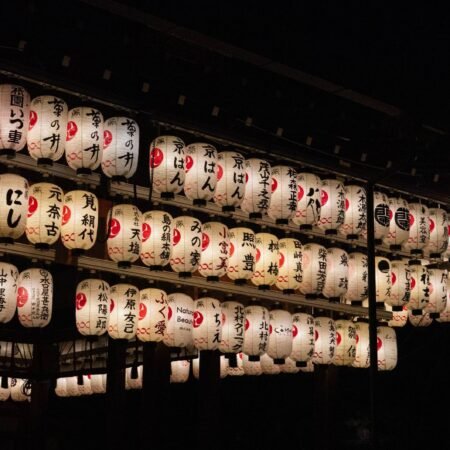
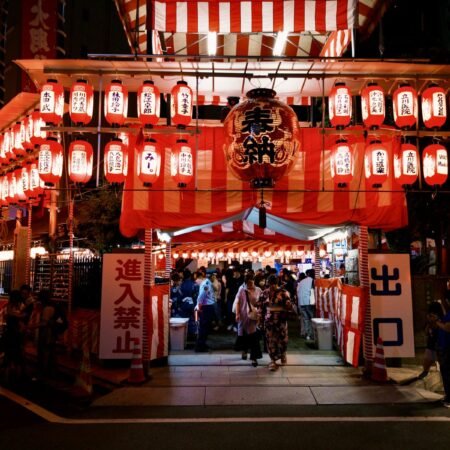
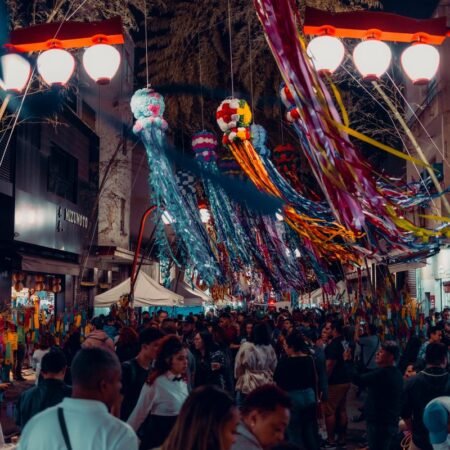
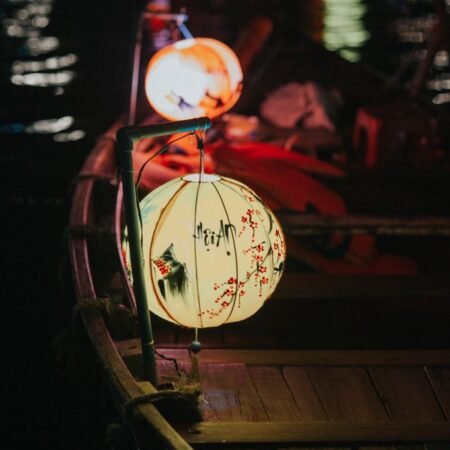
What I did catch was the evening, when roughly 365 bundled lanterns called makiwara are lit along the approach, turning the walk toward the main shrine into a soft, flickering tunnel. Martial arts and performing arts groups dedicate exhibitions to the shrine during the day — the shrine has hosted judo, kendo, and kyudo archery demonstrations here since 1906, which is a wonderfully specific fact to drop into conversation with anyone who assumes shrine festivals are only about food stalls. And then, around 7:40 in the evening, roughly a thousand fireworks go up from nearby Jingu Park, visible right over the shrine’s own forest canopy. Standing under those ancient camphor trees with fireworks reflecting through the branches is the kind of moment that makes you forget you came for a sword you were never going to see anyway.

Getting There and What to Know Before You Go
Atsuta Jingu is almost comically easy to reach for how significant it is. From Nagoya Station, hop on the Meitetsu line and get off at Jingu-mae Station — it’s about a three-minute walk from there to the shrine entrance. You can also reach it via JR Atsuta Station or the Atsuta Jingu Nishi and Atsuta Jingu Temma-cho subway stations if you’re coming from a different direction. The shrine grounds themselves are free to wander any day of the year, and that’s genuinely one of the best parts: you don’t need a festival date circled on your calendar to get something out of a visit here.
If you do want to time a trip around the Atsuta Matsuri, June 5 is fixed every year, so it’s an easy one to plan around compared to some of the lunar-calendar festivals I’ve chased around this country. Just know the evening gets crowded along the main approach as fireworks time approaches, so stake out a spot under the trees a little early if you want to actually see the show rather than someone’s phone held above a sea of other phones.
Whatever time of year you go, budget more time than you think you’ll need. I told myself I’d pop in for half an hour before dinner and ended up staying for three hours, half of which I spent just standing under camphor trees older than most countries, thinking about a sword I was never allowed to see.
A quick note on photos: some of the images here are stock photos I’ve used to set the mood — they may not be the exact spot or moment I’m describing, just close in spirit.

コメント