










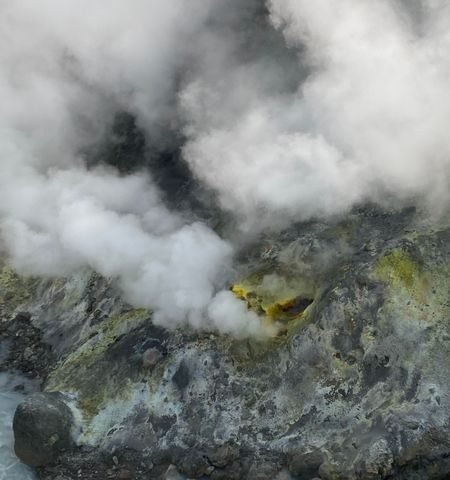
The first thing you notice at Sessho-seki is not the stone. It is the smell. Sulfur hangs over the whole basin at the foot of Mt. Chausu, thick enough that I had to remind myself, halfway along the boardwalk, that I was walking through a public park in Nasu and not some abandoned industrial site. The ground around the trail is bare and discoloured, dotted with small Jizo statues standing in for a landscape that locals have long called Sai-no-Kawara — a name borrowed from Buddhist cosmology for the riverbank where the souls of the dead gather. And then, past a short rope barrier and a fresh shimenawa, there it is: an unremarkable grey boulder that, according to legend, is the body of a fox spirit powerful enough to have almost brought down an emperor.
I have been chasing stories like this around Japan for seven years now, and Sessho-seki is one of the few with a plot twist from my own lifetime. In March 2022, the stone that had supposedly held a thousand-year-old curse in place cracked clean in two. I wanted to see it myself rather than read about it on a forum, so on a grey autumn weekday I took the train up from Tokyo and walked the short, well-marked path into Sesshogaiwa.
The Fox Who Fooled an Emperor
The story, as it is told locally and in classical sources, begins centuries before any stone existed. A nine-tailed fox spirit is said to have taken the form of an extraordinarily beautiful and clever woman named Tamamo-no-Mae, who became a favourite of the retired Emperor Toba in the twelfth century. According to the legend, she dazzled the court with her intelligence and charm until the emperor fell mysteriously ill. A court diviner, an onmyoji skilled in reading omens, is said to have detected her true fox nature during a ritual, and she fled the capital for the wild plain of Nasu with imperial soldiers in pursuit.
What happened next depends on which version you read. Most tellings have the fox cornered and killed after a long struggle, after which her body is said to have transformed into a boulder that never stopped radiating her malice. Any bird, insect, or small animal that landed on it was said to die on the spot — which is how the rock earned the name “Sessho-seki,” the Killing Stone. It is worth saying plainly that this is folklore rather than verified history: no contemporary record confirms Tamamo-no-Mae existed as described, and the tale almost certainly grew up around the very real, very noticeable phenomenon of toxic volcanic gas seeping from the ground here, which genuinely has been known to kill small animals and insects that linger too long in the wrong spot. Matsuo Basho, passing through on his famous 1689 journey later recorded in Oku no Hosomichi, wrote of finding dead bees and butterflies littering the ground around the stone — a detail that reads less like supernatural horror and more like an accurate, if eerie, field note on hydrogen sulfide.

The Monk, the Mallet, and a Word We Still Use
The second half of the legend is where I find the more interesting history. Sometime in the late fourteenth century — one widely cited date is 1385 — a Soto Zen monk named Gennō Shinshō is said to have travelled to Nasu and performed a Buddhist rite over the still-cursed stone. As the story goes, he struck it with a large mallet, and the stone split into pieces that scattered across the country, carrying fragments of the fox’s lingering spirit to other regions, where local legends about possessing spirits are sometimes still loosely tied back to this one event. One piece, the story says, simply stayed where it fell, at Nasu.
I like this part of the legend because it quietly survives in everyday Japanese. The word for a heavy-headed sledgehammer, genno, is traditionally said to derive from this very monk’s name — a small, unprovable but charming piece of linguistic folklore that turns up in dictionaries of word origins to this day. The episode was dramatised in the Noh play Sesshoseki, performed since at least the early sixteenth century, in which the monk’s prayers coax the fox’s spirit out of the rock for a kind of theatrical exorcism rather than a literal explosion. Kabuki and bunraku puppet theatre picked up the story later, and the Edo-period artist Toriyama Sekien included the fox in his illustrated bestiary of supernatural creatures in 1781. None of this tells us whether a monk truly broke a cursed rock in half six centuries ago. What it does tell us is how durable the story has been — reinterpreted by poets, playwrights, and print artists across four hundred years, long before anyone in Nasu had a phone to post about it.
When the Rock Actually Did Crack
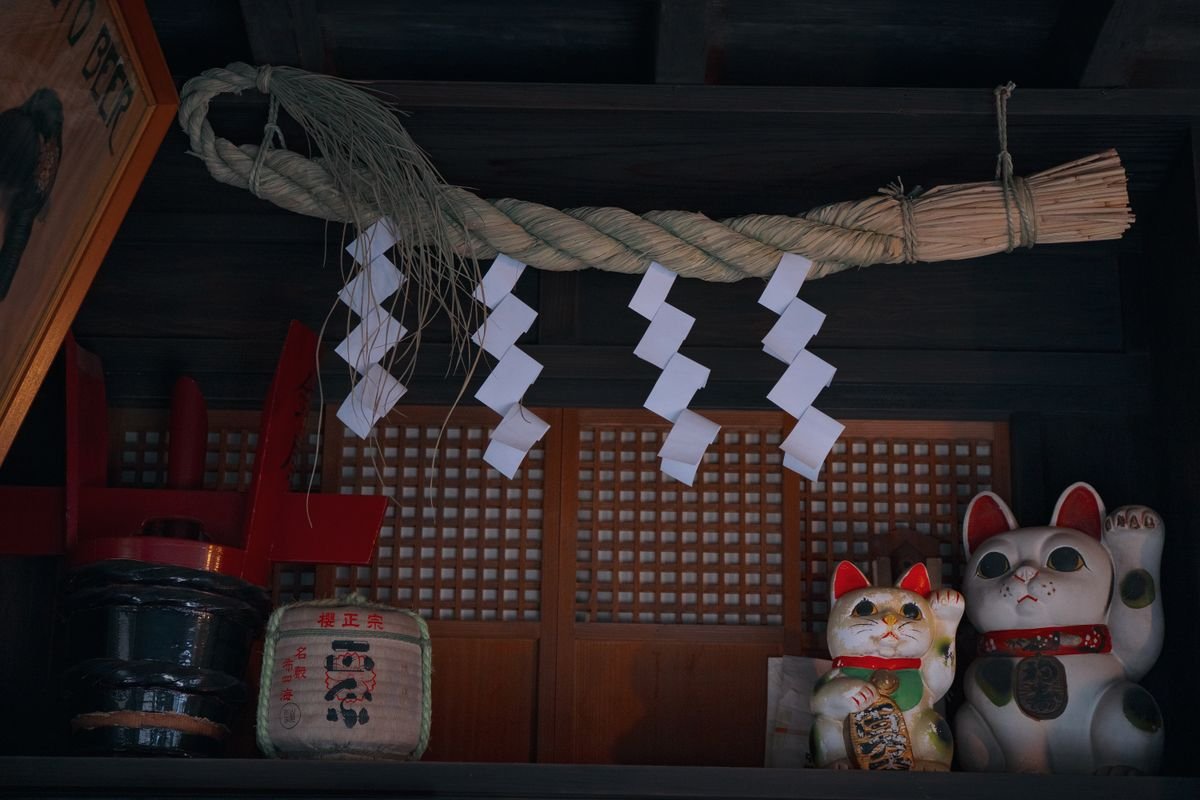
Which brings me back to 2022. On the 5th of March, a photograph began circulating online showing Sessho-seki split into two pieces, its protective shimenawa rope dangling loose. It spread quickly, with plenty of people online half-joking, half-wondering whether a thousand-year-old fox spirit had finally slipped free. The explanation local officials gave to the press was considerably less dramatic: rainwater and freezing temperatures had worked into cracks that, by some accounts, had already been visible in the stone for years, and the freeze-thaw cycle eventually finished the job. Nasu’s tourism office held a small memorial rite and hung a new rope across the two pieces, which is roughly what you see today — a stone quite visibly split along an old seam, standing exactly where it has stood for generations, slightly more photogenic than it used to be.
Standing in front of it, smelling the sulfur and watching steam drift off the hillside, it was easy to see why the crack unsettled people even though the mechanism was mundane. Some places simply feel primed for a story.
Visiting Respectfully
Sessho-seki sits inside a signposted, publicly accessible scenic area a short walk from the hot spring town of Nasu Yumoto, reachable by local bus from Nasu-Shiobara Station. Stick to the marked boardwalk: the gas venting from the ground here is real, not metaphorical, and the area is sometimes closed or rerouted when sulfur concentrations rise, so follow any posted warnings rather than wandering off the path for a closer photo. Treat the Jizo statues and the shimenawa around the stone as what they are — active objects of local devotion, not photo props to climb on or move. If you happen to visit in late May, you may catch the Gojinkasai, a torch-lit procession from the nearby Nasu Yutopia Shrine to the stone, with drummers in fox masks performing a rite that is still, after everything, meant to keep the old fox’s spirit calm. Whether or not you believe a single word of the legend, it costs nothing to leave the place a little quieter than you found it.
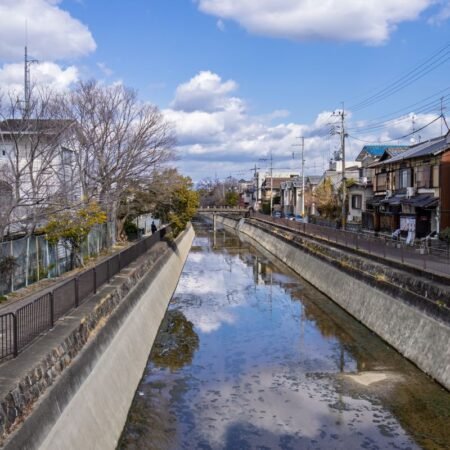
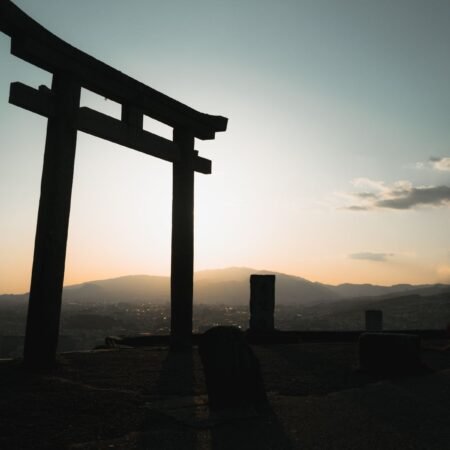
Note: images accompanying this article are illustrative stock photos and do not necessarily show the specific site discussed.


コメント