





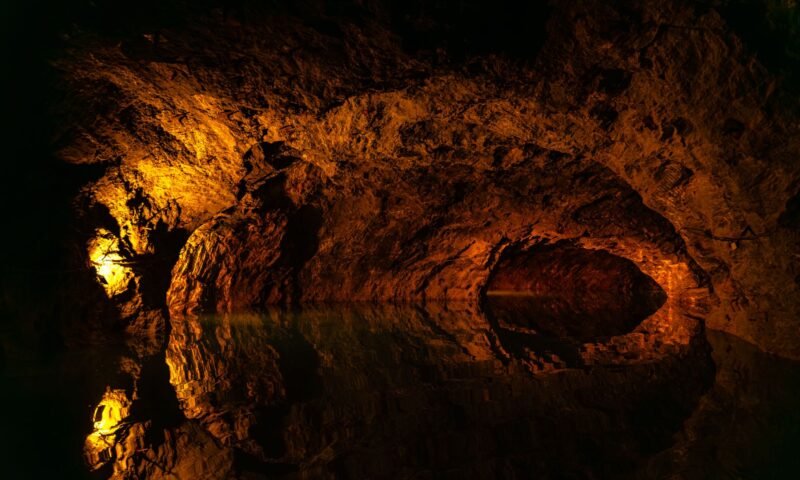
The first thing that hits you isn’t a sound or a shadow. It’s the cold. I stepped off the elevator-like staircase into the Oya Underground Quarry in Utsunomiya on a sticky August afternoon, and within thirty seconds my arms were covered in goosebumps that had nothing to do with the atmosphere the tour brochures like to promise. The air down there sits at a near-constant 8°C (about 46°F) year-round, no matter what season it is on the surface. Combine that with ceilings that vanish into darkness thirty metres overhead, stone pillars the size of apartment buildings, and an echo that turns every footstep into three, and it’s easy to see why this place shows up so often on Japanese lists of unsettling destinations. I’d come to find out how much of that reputation is really about ghosts, and how much of it is simply what several decades of hand-cut stone and hard history can do to a room.
I’ve been chasing these places around Japan for years now, and the pattern repeats itself more often than not: the location that gets called “haunted” online usually turns out to have a much more interesting true story underneath the label. Oya is one of the clearest examples of that I’ve come across.
A Cavern Carved by Hand
Ōya stone — a soft, pale green tuff formed from volcanic ash — has been quarried in this corner of Tochigi Prefecture since at least the Edo period, and used in construction going back even further. It’s easy to cut, resistant to fire and moisture, and it became one of the defining building materials of the region, showing up everywhere from local storehouses to, famously, Frank Lloyd Wright’s original Imperial Hotel in Tokyo.
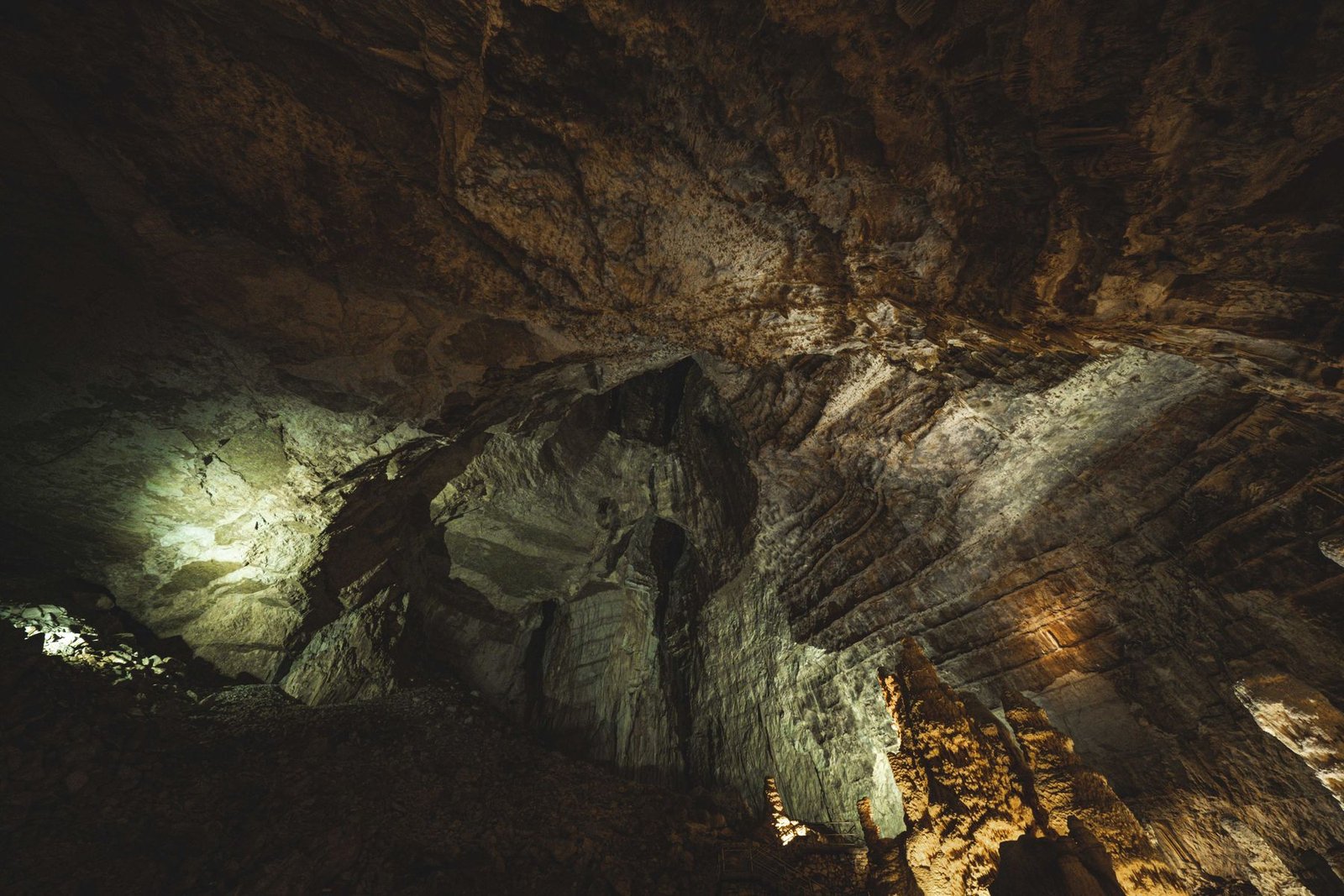
What makes the Oya site different from an ordinary quarry is scale. Generations of stonecutters worked almost entirely by hand until mechanization arrived in the 1950s, hollowing out an underground labyrinth that eventually spread across more than 20,000 square metres. Roughly 250 separate quarry sites once operated in the area. Large-scale extraction here continued until 1986, and in 1979 one of the abandoned caverns was opened to the public as what’s now called the Oya History Museum. Walking through it today, past chambers with names like the “Chapel” and the “Banquet Hall,” you’re moving through what’s essentially a man-made canyon — one cut a single block at a time, by workers who never saw it finished, because it never really was.
From Munitions to Rice: The Room’s Other Lives
Part of what gives the quarry its heavier atmosphere is what happened here between the stone-cutting. During the Second World War, sections of the underground space were converted for wartime industrial use, and in the difficult years immediately afterward the same chambers were repurposed as cold storage for rice and other supplies. It’s a detail that doesn’t get much space in the glossy tourism photos, but it’s there in the museum’s own historical displays, and it adds a layer of real, documented weight to a site that could otherwise read as pure spectacle. I try to be careful with this kind of history — the specifics of who worked here and under what conditions during the war years deserve more care than a blog post can give them, and I’d point curious readers toward the museum’s own exhibits and Japanese-language historical sources rather than secondhand internet summaries, my own included.
What I can say from standing in the space is that knowing its wartime use changes how the cold feels. It stops being atmospheric set-dressing and starts feeling like something the room actually remembers.
The Statue They Call Haunted
A short walk from the museum entrance, carved directly into a quarry cliff face, is a very different kind of landmark: the Heiwa Kannon, or Peace Kannon, a 26.93-metre-tall bodhisattva figure that local stonemasons began carving in 1948 under the direction of sculptor Tobita Asajirō. It took six years to complete and was formally consecrated in 1956 in a ceremony led by a senior priest from Nikkō’s Rinnō-ji temple. Its stated purpose has never been ambiguous: it was carved to mourn Japan’s war dead and to pray for peace, a memorial rather than a monument to anything supernatural.
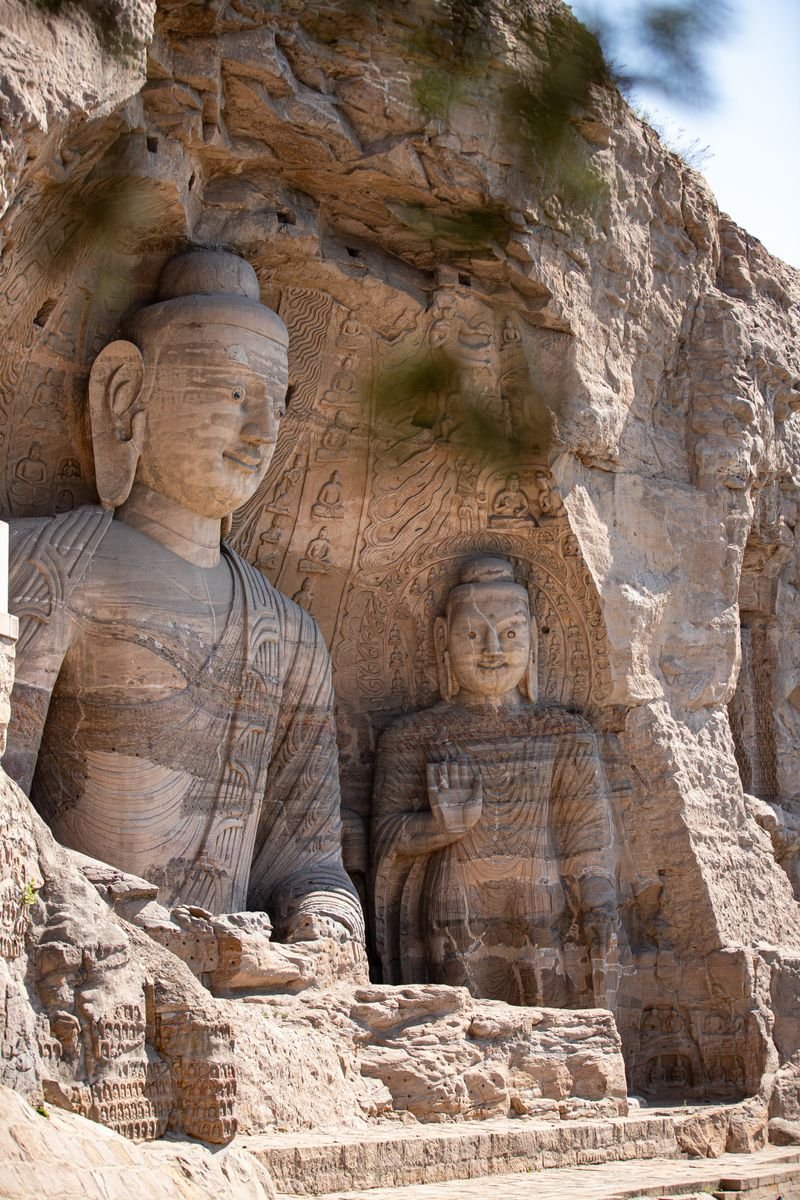
And yet, according to a handful of “haunted spot” round-ups that circulate online, the Kannon has picked up a reputation as something to be afraid of — a figure people claim to feel watched by, or associate with vague misfortune. Having now visited it myself, I understand the instinct: a nearly 27-metre stone face looming out of a quarried cliff is genuinely striking, and striking things get mythologized. But I lean toward the view I’ve seen more than one local writer express: treating a war memorial as a ghost story does a disservice to what it was actually built for. If there’s anything appropriate to do standing in front of the Kannon, it’s less about ghost-hunting and more about a quiet moment of respect for the people it was carved to honor.
Why It Feels the Way It Does
By the time I reached the far end of the main chamber, I’d mostly talked myself out of expecting anything ghostly — and I still left unsettled, in the specific way that only architecture can manage. The quarry’s reputation, I think, comes less from any single legend and more from a combination of very ordinary physical facts: the cold that never lets up, the scale that swallows your flashlight beam, the echo that makes you unsure how many people are actually in the room with you, and the knowledge that every wall was cut away, one block at a time, by people working in conditions I can only guess at. It’s the kind of place that doesn’t need an invented ghost story to feel heavy. The real history already does that work.
It’s also, I should say, a genuinely popular filming location — Japanese horror movies, music videos, and international acts (Enya has performed a concert in the main chamber) have all made use of the space, which has almost certainly fed its spooky reputation as much as anything from local folklore has.
Visiting Respectfully
The Oya History Museum is a fully legitimate, well-run tourist attraction — there is no need, and no excuse, to go looking for an “off-limits” version of this site. Stick to the marked walking route through the museum; the uneven stone floors and low light are disorienting enough without wandering off the path. Bring a jacket even in summer; that 8°C air is no joke after twenty minutes. At the Heiwa Kannon, remember that you’re standing in front of a war memorial, not a photo prop — a moment of quiet or a small bow is the appropriate response, not a ghost-hunting selfie. And if you’re visiting as part of a wider “haunted spot” itinerary, it’s worth pausing to separate what’s genuinely eerie about a place from what’s simply been repeated online until it hardened into fact. Oya doesn’t need the embellishment. The real story is strange enough on its own.
Note: images accompanying this article are illustrative stock photos and do not necessarily show the specific site discussed.

コメント