





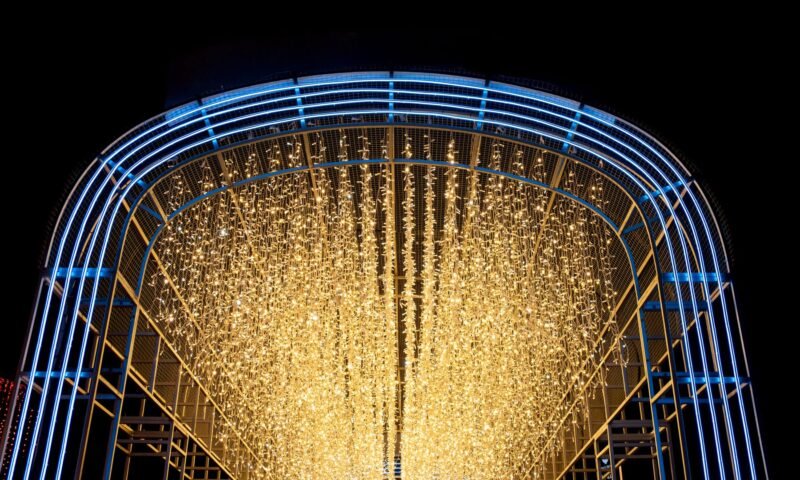
I almost didn’t go. It was cold, I’d had a long week, and a friend had texted me a grainy photo of “some light tunnel in Kobe” like it was a minor errand. But I got off at Motomachi Station on a Friday night in late January, followed the crowd funneling toward Higashi Yuenchi Park, and within about thirty seconds of turning the corner I stopped walking entirely, because everyone around me had stopped walking too. Ahead of us was a wall of gold — an arched structure of hand-painted lights glowing like something lifted out of a cathedral, with a whole park’s worth of people just standing there, phones half-raised, not quite taking the picture yet.
That’s Kobe Luminarie, and it took me embarrassingly long to learn that it isn’t actually a Christmas thing, or a generic “Japan loves illuminations” thing. It’s a memorial. And once you know what it’s commemorating, walking through it feels completely different.
The Night Kobe Decided to Light Itself Back Up
On January 17, 1995, the Great Hanshin-Awaji earthquake tore through Kobe and the surrounding area, killing more than 6,000 people and causing roughly $100 billion in damage. For weeks afterward, large parts of the city had no power, no gas, no running water. Later that same year, in December 1995, the city switched on a set of ornate light structures in the city center — donated by the Italian government and designed with Italian craftsmanship, credited to lighting designer Valerio Festi working with Hirokazu Imaoka — meant to be a one-time gesture of remembrance and, honestly, of defiance. Here is light, again, in a city that spent a winter without it.
It was never supposed to become a tradition. But residents asked for it to come back the next year, and then the year after that, and three decades later it still does — though its calendar slot has shifted. It used to run every December; since the pandemic forced its cancellation in 2020, it’s returned each year in late January and early February instead, closer to the earthquake’s actual anniversary. I went during the 31st Kobe Luminarie, which ran January 30 to February 8, 2026, under the theme “Kobe’s Heartbeat, a Story of Light.” The 32nd edition is already locked in for January 29 to February 7, 2027, themed “Un porto. Mille luci. Mille armonie.” — something like “a port, a thousand lights, a thousand harmonies.”
Walking Through the Galleria
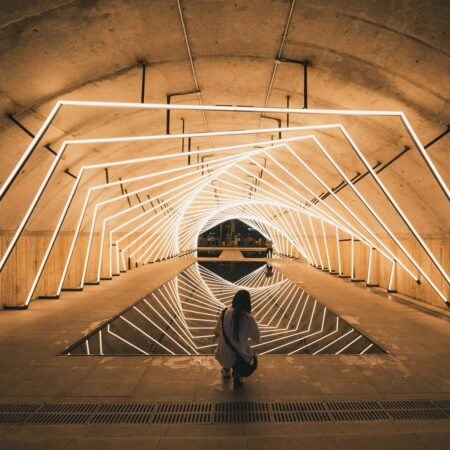
The whole route strings together three main venues, each with its own structure and its own nickname that year. When I went, the Former Foreign Settlement held the “Music Box,” an arched gazebo-style structure about eight meters high; Higashi Yuenchi Park held the “Tower of Peace,” a taller sculptural piece built up from the ground; and the real showstopper was down at Meriken Park, where a towering entrance arch, nicknamed “Eternal Sunshine” that year, opened onto the galleria — a glowing arched corridor roughly ten meters high and over eighty meters long that you walk straight through, lights curving overhead the entire way.
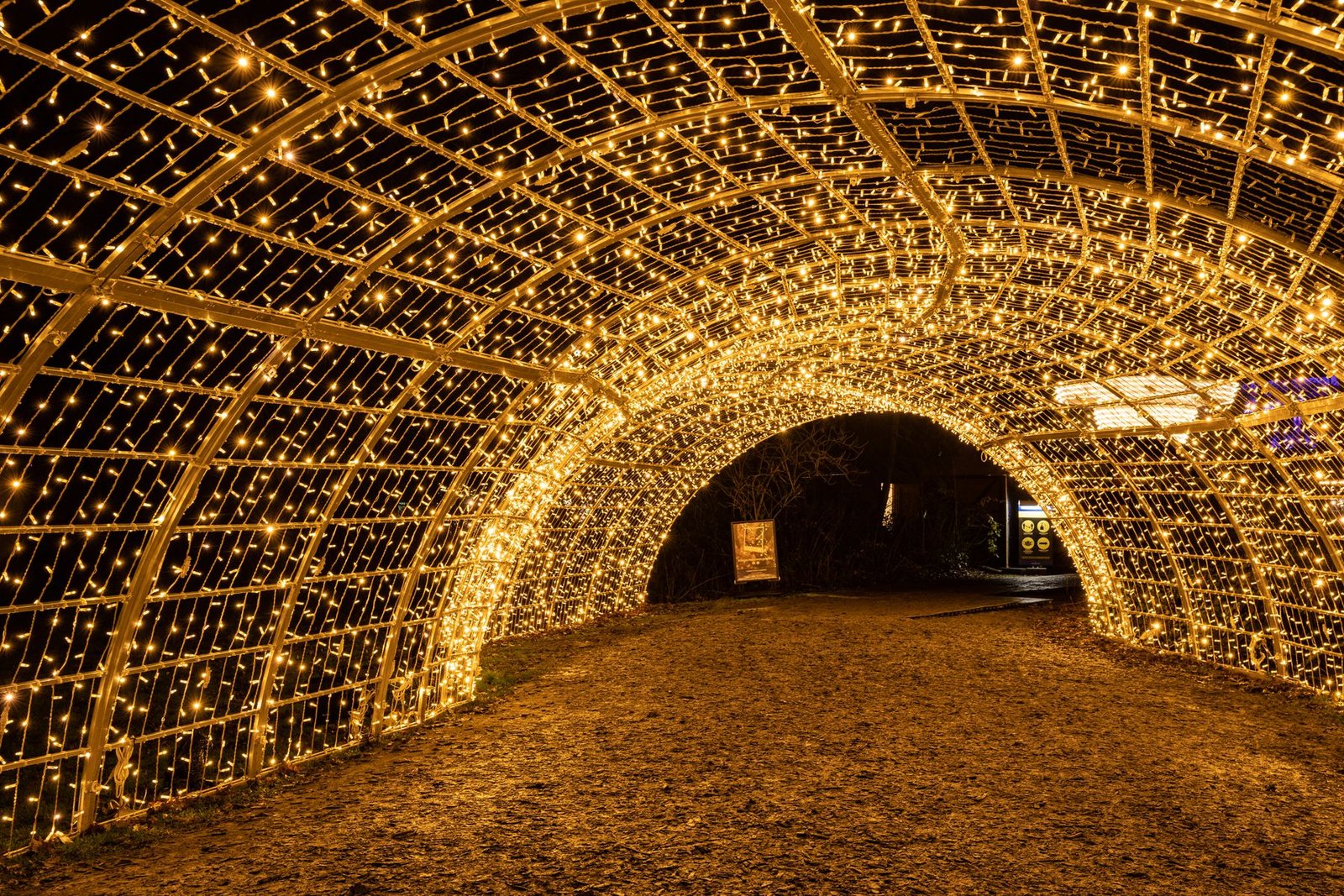
More than 200,000 individually hand-painted lights go into the whole display, these days run on biomass-generated electricity, and the structures stay lit from dusk until around 9:30 p.m. each night (the exact cutoff shifts a little year to year). I’d read that the event used to draw crowds of four or five million people over its run, and even on a regular Tuesday-feeling weeknight — mine happened to be a Friday, which in hindsight was a mistake — the crush of people moving slowly in one direction through the galleria was real. Nobody seemed to mind. You’re not exactly in a hurry when you’re looking straight up at a ceiling made of light.
More Than Pretty Lights
What got me, though, wasn’t the scale. It was the quiet moment I almost walked past. Near one end of the route, there’s a board that’s updated and posted every single night of the festival, listing the names of those who died in the earthquake. People stop in front of it. Some clearly knew someone on the list; most, like me, didn’t, and stood there anyway for a second longer than they needed to. The opening ceremony each year includes a moment of silence before the lights even come on.
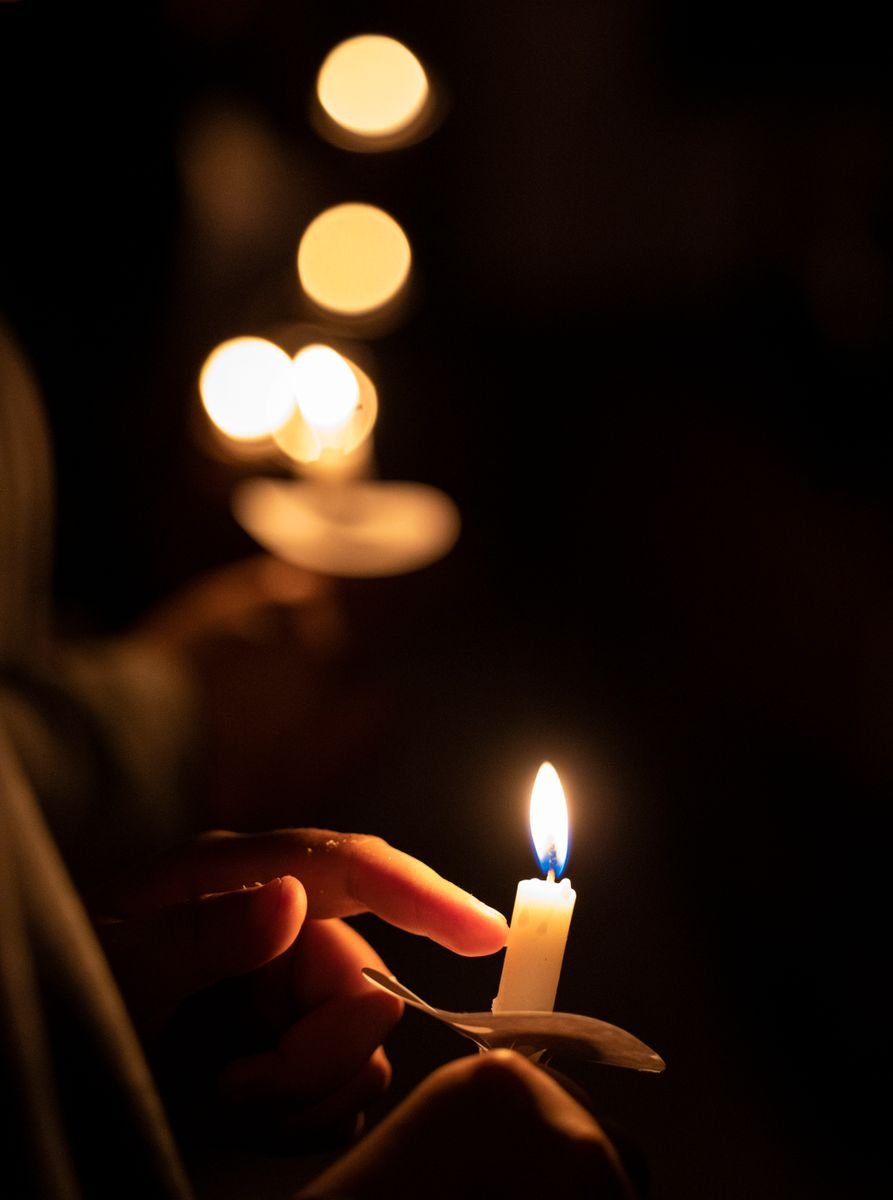
Luminarie also still functions as an active piece of disaster-memory fundraising — donations collected around the event, alongside sponsorship and merchandise sales, go toward earthquake memorial and recovery-related causes, something on the order of well over a million dollars a year at this point. Nobody’s pressuring you to give anything. But knowing the lights are tied to something that specific changes how you move through the crowd. It stops being a photo backdrop and starts being closer to a candlelight vigil that happens to be enormous, architectural, and kind of magical to look at.
If You’re Planning a Visit
The whole route sits right in central Kobe, an easy walk from Sannomiya and Motomachi stations — you can get there on JR, Hankyu, Hanshin, or the city subway, and you’ll know you’re close because the crowd density does the navigating for you. A few things I’d do differently next time:
- Go on a weeknight, not a Friday or Saturday. The crowd moves in one direction through the galleria and there’s no cutting back through — on a weekend evening you can be shuffling for a long while before you reach the good part.
- Dress warmer than you think you need to. Late January in Kobe is genuinely cold, and you’ll be standing around a lot more than you’re walking.
- Bring a little cash. Street food stalls line parts of the route, and it’s the kind of place where you’ll want a hot drink in your hands.
- Check the official dates before you book anything, since the exact run (and lighting cutoff time) gets confirmed closer to the date each year. The 32nd Kobe Luminarie is currently set for January 29 to February 7, 2027.
I went in expecting a nice photo op and left thinking about a city that decided, three decades ago, that the best response to losing its lights was to build some of the most beautiful ones in the country and give them away for free, every winter, to anyone who shows up.
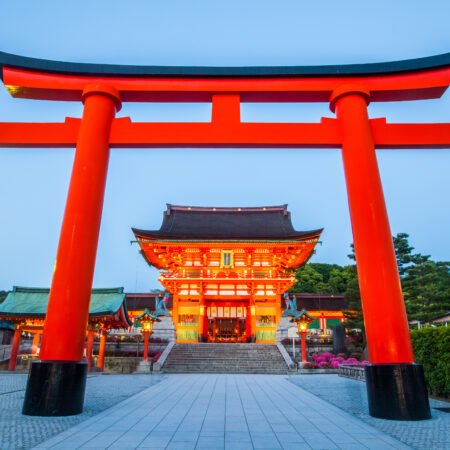
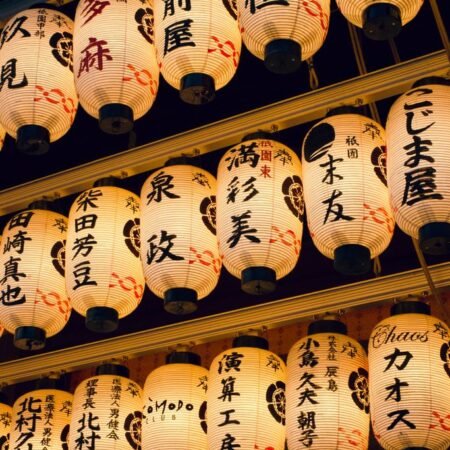
A quick note on photos: some of the images here are stock photos I’ve used to set the mood — they may not be the exact spot or moment I’m describing, just close in spirit.
コメント