






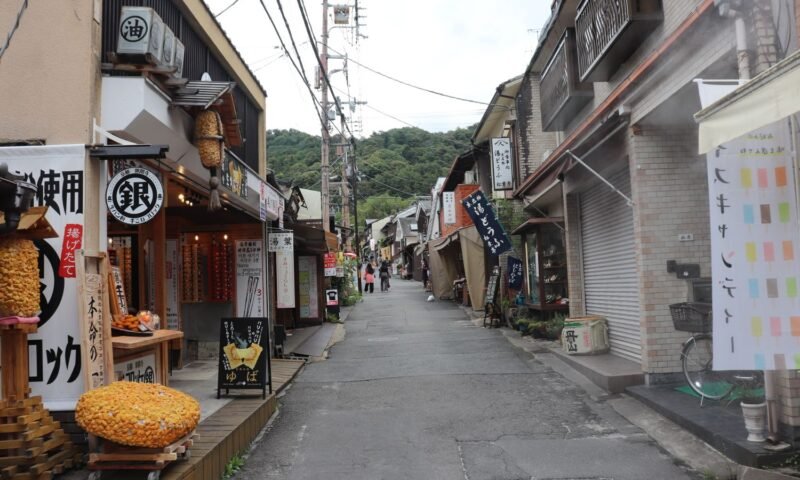
I nearly walked past it. On a quiet stretch of Ichijo-dori in northern Kyoto, between a dry cleaner and a shuttered tofu shop, a life-sized fox-faced figure in a torn kimono stood guard outside a storefront, its claws raised toward the pavement as if caught mid-stride. There was no sign explaining it, no queue of tourists photographing it. It was simply there, the way a potted plant might be there, as if everyone on the street had long ago agreed not to make a fuss about it.
That is how I found Ichijo Yokai Street, tucked inside the otherwise unremarkable Taishogun Shopping Street, a few minutes’ walk from the crowds at Kinkaku-ji but in a different world entirely. After seven years spent chasing Japan’s ghost stories into castles, caves, and mountain shrines, this was the first time one had turned up hiding in a hardware store.
The Night a Hundred Demons Marched Down This Street
According to legend, Ichijo-dori once marked the northern edge of the old capital, Heian-kyo, the line where the ordered human world was said to give way to something else. The story, preserved in later works such as the Hyakki Yagyo Emaki picture scrolls and the Tsukumo Emaki, describes the Hyakki Yagyo: literally, the Night Parade of a Hundred Demons.
The way the tale is usually told, the parade’s instigators weren’t banished spirits or vengeful ghosts at all, but household objects. Heian-era homes performed a thorough year-end cleaning known as susuharai, tossing out old brooms, umbrellas, and cooking pots to make room for the new year. According to the legend, a tool that had served faithfully for ninety-nine years and was then discarded in this way could become a tsukumogami, an object granted a spirit of its own, as if its makers wanted to leave one year of grace before the change became irreversible.
On certain nights, so the story goes, these newly animated tools, brooms with legs, lanterns with eyes, sandals that walked themselves, gathered on Ichijo-dori and marched together through the sleeping city. Anyone unlucky enough to cross their path after dark risked being swept along with them. It is a folk tale, not a police report, and nobody serious treats it as anything more. But it has had an unusually long afterlife.
From Forgotten Folklore to a Shopping Street’s Second Act
For most of the twentieth century, that afterlife was almost entirely literary, a footnote in old scrolls and classical anthologies, the kind of story academics discuss and almost nobody else remembers. The shopping street that now carries the legend’s name was, by its own organizers’ account, struggling, one more ageing Kyoto arcade competing with suburban malls for a shrinking number of customers.
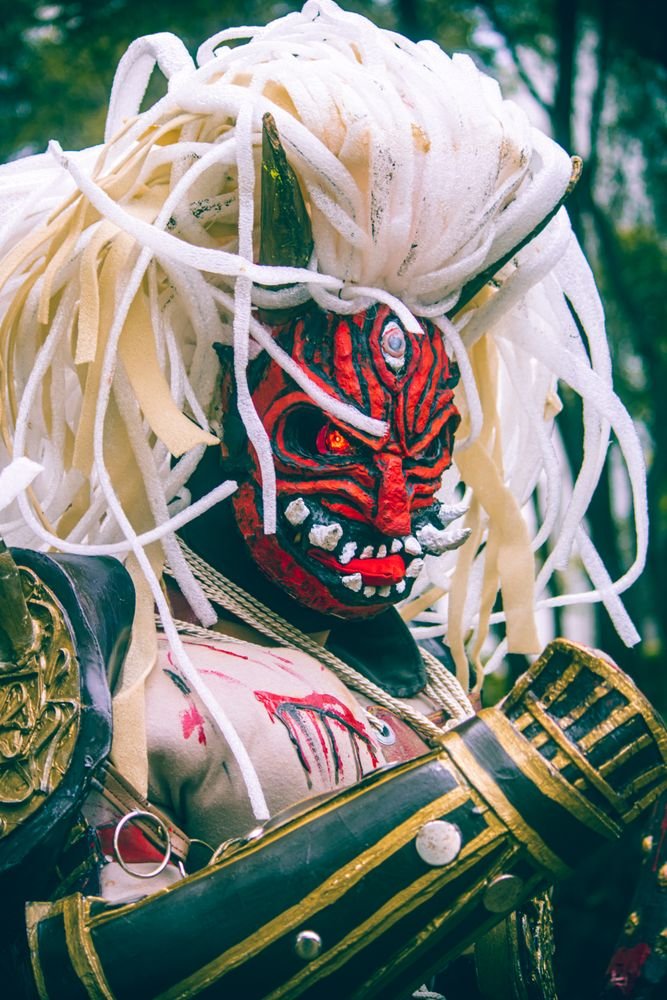
In 2005, that began to change. Students from Saga Art University, working with shop owners along the Taishogun arcade, started building and installing human-sized yokai figures outside the stores: a tsukumogami reimagined as a hardware store’s resident demon, a bakery’s friendly monster, a pharmacy’s watchful spirit. The project leaned directly on the Ichijo-dori legend, since this had long been remembered as the old parade’s route. Three years later, in 2008, the students behind the display formed a dedicated group, known as Hyakuyobako, to keep expanding it and to organize an annual event reviving the parade itself.
Today the street holds a yokai costume parade, the Ichijo Hyakki Yagyo, typically on a Saturday evening in October, timed to the season when Japan’s own ghost-story traditions feel closest to the surface. Participants, many in homemade costumes judged for their “yokai-ness” rather than resemblance to any copyrighted character, process down the same stretch of road the old tale describes. Nearby, Taishogun Hachi Shrine, from which the shopping street and surrounding neighbourhood take their name, hosts a yokai-themed flea market several times a year, timed in recent years to coincide with the parade.
Walking the Street Today
What struck me most, walking it on an ordinary afternoon with no parade in sight, was how unceremonious the whole thing felt. There is no admission gate, no gift shop selling Yokai Street merchandise, no loudspeaker narration. The figures, which outside observers have counted at around thirty scattered along the arcade, are simply part of the furniture of small businesses trying to stay open, placed there by the shopkeepers themselves rather than by any tourism board. A few look decades old and weathered; others have clearly been freshly repainted. One shop’s demon wears a surgical mask, a small, almost affectionate neighbourhood joke.
It is worth remembering that the organizers have said openly the street has struggled financially, and that the autumn parade has at times been run closer to a charity event to keep the project alive. That context changed how I thought about the figures: less a tourist attraction dressed up as folklore, and more a small, specific act of civic imagination, a shopping street deciding that if it was going to be remembered for anything, it might as well be remembered for its ghosts.
Before you go: Yokai Street is a living commercial street, not an open-air museum, so the obvious courtesies apply. The figures belong to the shops they stand in front of, so look without touching, and never climb on anything for a photo. If you visit during the October parade, expect narrow pavements and real crowds; keep to the sides, watch for small children in costume, and avoid blocking shop entrances while customers are trying to get past. Schedules, fees, and even the exact weekend can change from year to year, so check the organizers’ own listings closer to your trip rather than relying on any single article, including this one. And if a quiet side alley off the main street looks like it might hide something interesting, remember that this is still someone’s neighbourhood: the demons here are made of papier-mâché and community goodwill, not an invitation to go poking around where you have not been welcomed.
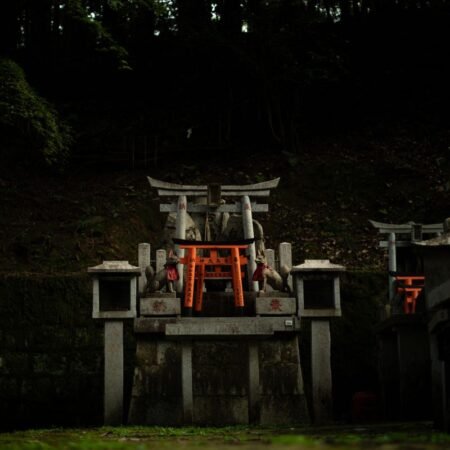
Note: images accompanying this article are illustrative stock photos and do not necessarily show the specific site discussed.


コメント