












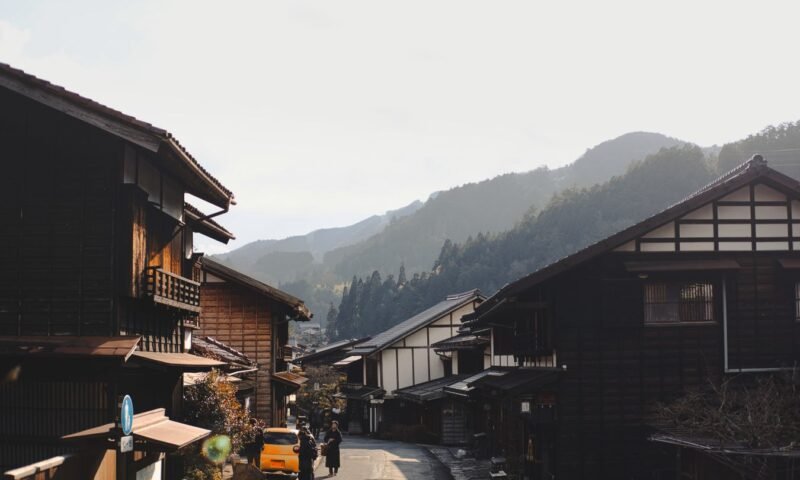
I almost said good morning to one of them before I realised my mistake. It was propped against a bus stop bench on the mountain road into Nagoro, wearing a faded sun hat and a patient, slightly tilted expression, as if it had been waiting there for a bus that stopped running years ago. By the time I had counted thirty more of them – sitting on the school steps, leaning on a fence, fishing from a bridge rail – I had stopped feeling silly about the mistake. Nagoro does that to you. It is a real village tucked into the Iya Valley of Tokushima Prefecture, on the island of Shikoku, and depending on who you ask, it is either one of the most quietly beautiful places in rural Japan or one of the eeriest. Having spent an afternoon there, I think it is both, and that the two things are more connected than most of the online write-ups give it credit for.
A Village That Refused to Fade Quietly
Nagoro’s human population has been shrinking for decades, the same story told across much of mountainous Shikoku as younger generations moved to the cities for work. According to local accounts, the village that once supported several hundred residents and a working primary school now has only a couple of dozen people left, most of them elderly. In 2002, a resident named Tsukimi Ayano, who had returned to care for her aging father after years away, made a life-sized scarecrow in the shape of her father to stand guard over a field, mostly as a joke and partly, she has said in interviews over the years, to keep the birds off the seeds she had planted.
The joke did not stay small. Neighbours asked for dolls of their own, and Ayano began making figures modelled on people who had moved away, people who had died, and eventually entire imagined scenes of village life as it used to look – farmers resting at a roadside, children waiting for a bus, old friends sharing a bench. Local and international coverage over the years has put the doll population anywhere from two to three hundred, scattered along the roadside, in gardens, and inside buildings, which by most tellings means the scarecrows have outnumbered the living residents by something like ten to one.

The School Where Class Never Quite Let Out
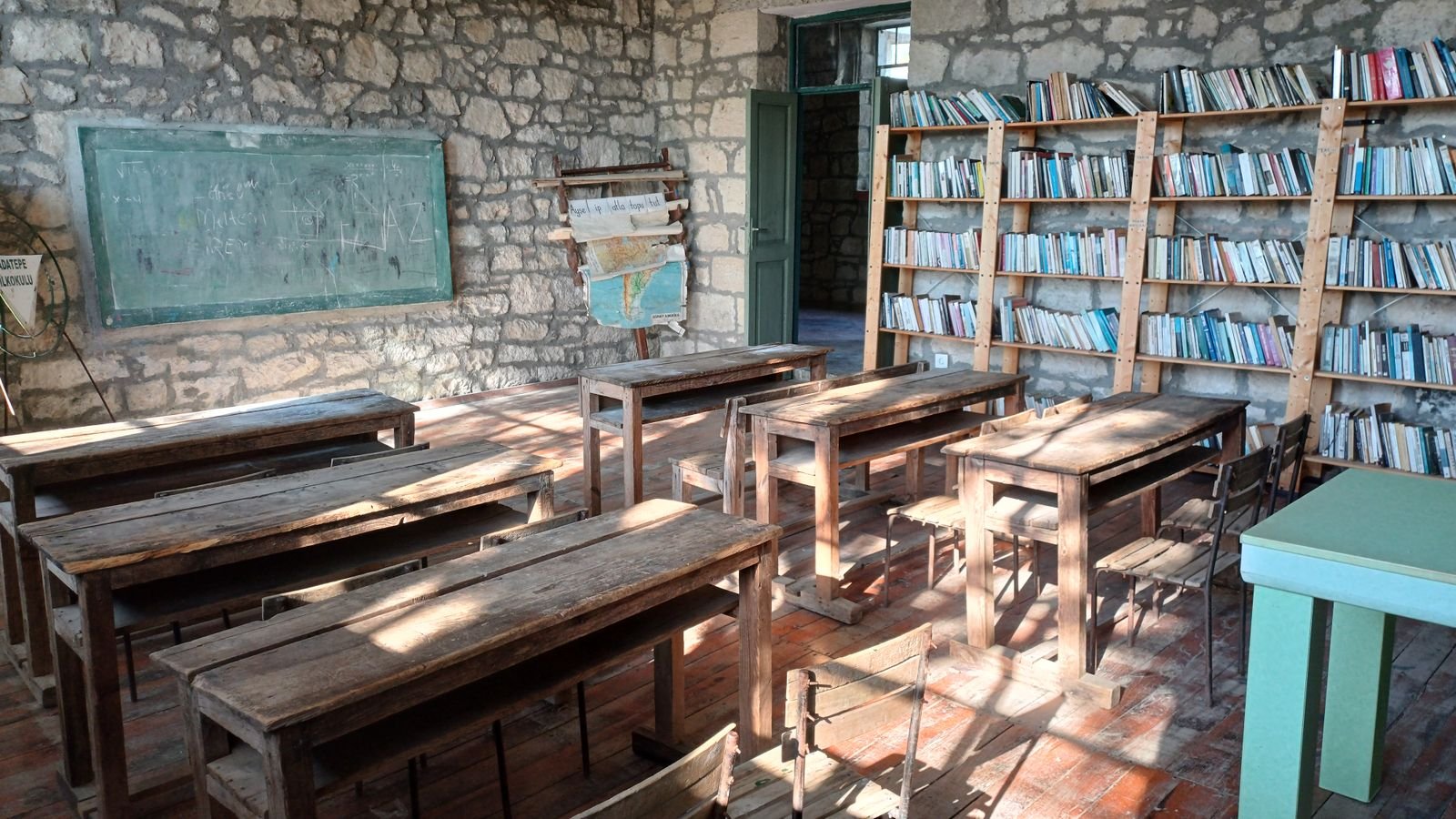
The most-photographed corner of Nagoro is its old elementary school, which closed in 2012 when there were no longer enough children in the valley to justify keeping it open. Rather than let the building sit empty, residents filled the classrooms and the schoolyard with dolls: a teacher at a chalkboard, children at their desks, a line of figures recreating a sports day that, as far as anyone living can say, will not happen again in quite the same way. Local reporting describes the scene inside as meticulous – name tags, hand-stitched uniforms, postures copied from old class photographs – which is part of why visitors describe the feeling there less as “haunted” in the ghost-story sense and more as deeply, specifically sad, the way an old yearbook can be sad.
Nagoro still gathers once a year, usually in the autumn, for a scarecrow festival that doubles as one of the few occasions the shrinking community reliably comes together, alongside visitors who make the winding drive up from the valley floor specifically for it. It is, by local description, equal parts memorial and celebration, which seems to me the most honest way to describe the whole village.
Why People Call It Haunted When No One Claims to Have Seen a Ghost
Here is the part I find most interesting as someone who spends his weekends chasing down kaidan with actual vengeful spirits attached: Nagoro has no resident yūrei, no vengeful onryō, no single story of a specific haunting I could find told by the villagers themselves. What it has instead is a feeling, and that feeling has been enough for travel writers and horror-adjacent blogs from Japan and abroad to list it among the country’s unsettling places for years, often under names like “the Scarecrow Village” or “the Doll Village.” I think the unease people report is less about any one figure and more about arithmetic: when the dolls so visibly outnumber the people, and when some of those dolls were built to represent neighbours who died or left, a village can start to feel like it is being watched by its own memory of itself.
That is a very different kind of haunting than a ghost story with a beginning, middle, and curse at the end, and I would gently push back on sites that frame Nagoro purely as a scare. What I saw read more like mono no aware, a Japanese sense of gentle sorrow at things passing, built by hand out of straw, old clothes, and cotton stuffing. The uncanny feeling is real. I felt it standing in that empty classroom. But it struck me as grief wearing a disguise, not malice.
Visiting Nagoro Respectfully
Nagoro is a living village, not an abandoned one, however it might look in photographs, and the handful of residents who remain are its actual neighbours, not an attraction. If you make the drive up through the Iya Valley, keep to the public road and the areas clearly open to visitors, and remember that many of the dolls are stand-ins for real people’s relatives, friends, and former neighbours – treat them the way you would a framed photograph in someone’s home, not a prop. Photograph the scenes rather than rearranging or handling the figures, keep your voice down near the old school, and if you pass a resident, a simple greeting goes a long way in a community this small. The mountain roads in are narrow and wind tightly along the valley wall, so drive slowly, watch for oncoming traffic on blind curves, and be considerate of the few locals who still use that road every day. Nagoro does not need visitors to feel haunted. It has already made its peace with being quiet. The least we can do is be quiet with it.
Note: images accompanying this article are illustrative stock photos and do not necessarily show the specific site discussed.


コメント