






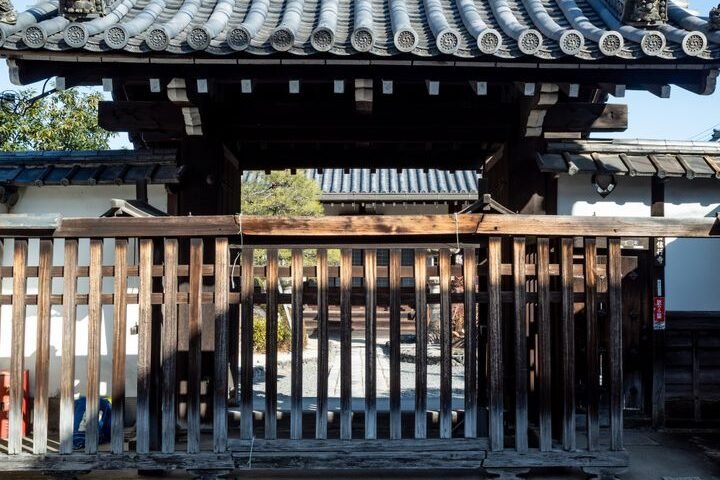
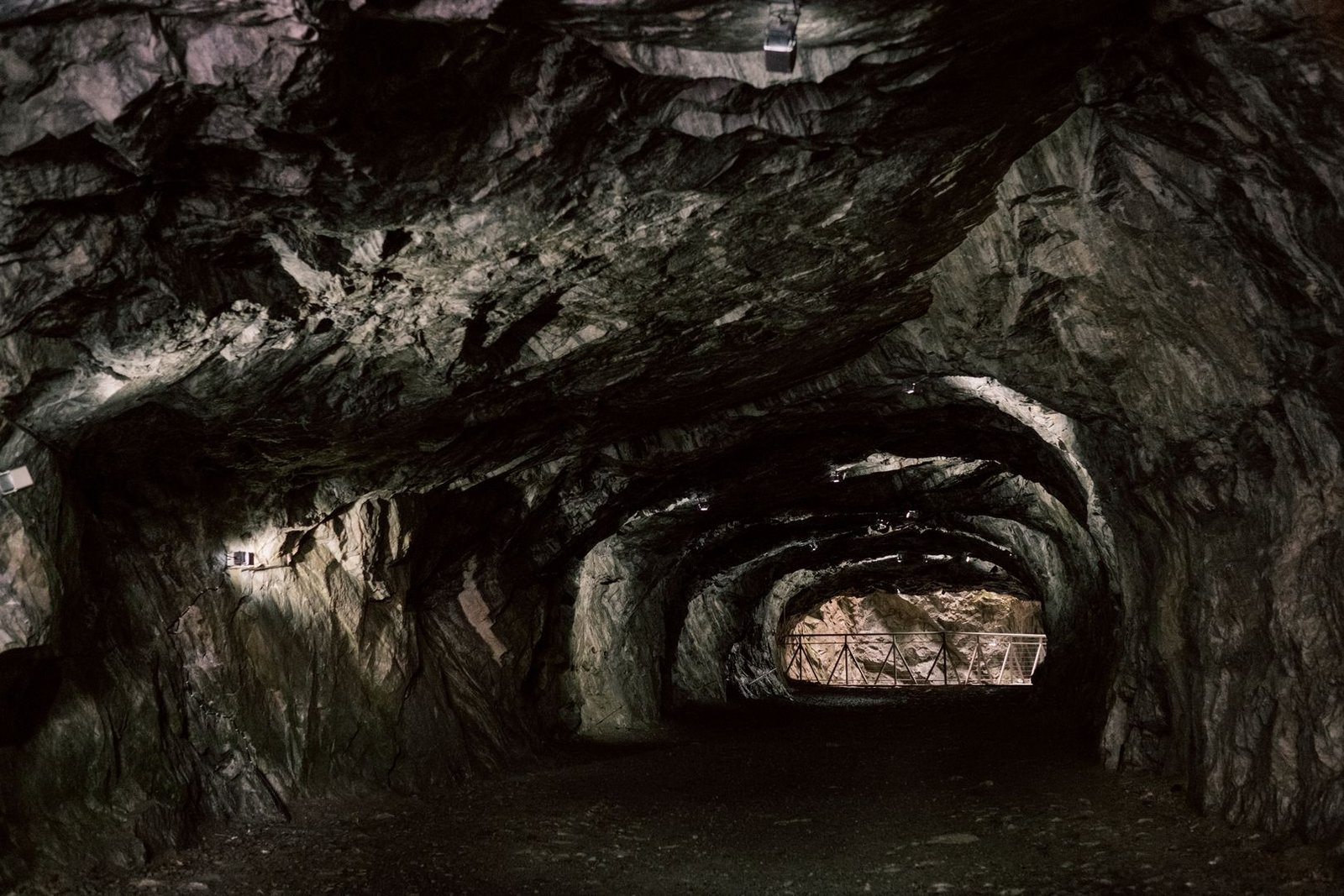
I had a torch in my pocket and still managed to lose my sense of direction. That is, I think, the point of the cave behind Ishiteji’s main hall. You step out of the grey afternoon light of Matsuyama, past a thirteenth-century gate that somehow survived seven centuries of earthquakes and fires, and within a few paces you are walking through roughly two hundred metres of black tunnel carved into the mountain, past rows of Buddhist statues draped in cobweb and the occasional offering candle. Somewhere in there I stopped being a tourist with a guidebook and started being, briefly, a pilgrim who wanted very much to see daylight again.
Ishiteji is temple number fifty-one on the Shikoku pilgrimage, the 1,200-kilometre circuit of eighty-eight temples associated with the ninth-century monk Kukai, known posthumously as Kobo Daishi. Most of the eighty-eight are quiet, orderly places. Ishiteji is not. It is, by reputation and by my own afternoon there, the strangest stop on the route — and its name comes from one of the odder ghost stories Japan has managed to fold into a UNESCO-adjacent religious institution.
The Miser, the Monk, and Eight Dead Sons
According to the legend recorded on a temple inscription dated 1567, there once lived in Shikoku a wealthy landowner named Emon Saburo, said to have been the richest man on the island. One day a travelling monk came to his gate asking for alms. By most tellings this was Kukai himself, though the story does not insist the man knew that at the time. Emon Saburo turned him away, and in one version broke the monk’s begging bowl for good measure.
What follows is the part of the story local guides tend to pass over quickly: Emon Saburo’s eight sons are said to have died one after another in the months that followed. The legend treats this as the monk’s curse, or perhaps simply karma catching up with cruelty. I will not pretend to know what, if anything, actually happened to this family more than a millennium ago — there is no way to verify it, and the story survives only as denshō, a tradition passed down rather than a historical record.
Realising who he had turned away, Emon Saburo is said to have set out to find the monk and beg forgiveness, circling the island on foot. The story goes that he walked the eighty-eight-temple route some twenty times in the usual clockwise direction without ever catching up to Kukai, so in desperation he reversed course and walked it counter-clockwise instead — and it was only then, the legend claims, that the two finally met on the path between what are now temples eleven and twelve. Kukai is said to have granted him absolution as he lay dying. His last request was to be reborn into a wealthy Matsuyama family so that he might restore a temple that had fallen into disrepair.
A Stone With a Name Already Written On It
Soon after, so the story goes, a son was born into a prominent local family — clutching, from birth, a small stone. When his hand was finally opened, the stone was found to bear characters reading “Emon Saburo is reborn.” The boy grew up, used his family’s wealth to rebuild the neglected temple as his dying predecessor had wished, and the temple was renamed Ishiteji — literally “Stone Hand Temple” — in honour of the object found in the infant’s fist.
That stone, known as the tama no ishi, is said to be kept at the temple to this day, held in a small reliquary rather than displayed for casual viewing. I did not see it myself, and I have found no independent historical confirmation that it is what tradition claims — only the temple’s own long-standing account and that sixteenth-century inscription. It remains, as far as I can tell, a matter of faith rather than forensics.
The grave traditionally identified as Emon Saburo’s sits beside the pilgrim path between temples eleven and twelve, still marked today, and near temple forty-six, eight burial mounds are pointed out to pilgrims as the resting places of his sons. Whether or not any of this reflects what actually happened centuries ago, the legend is credited with a very real practical legacy: it is said to be the origin of osettai, the custom of local people giving alms and hospitality to pilgrims, and of the “reverse route” pilgrimage some walkers still choose today in Emon Saburo’s memory.
Why the Temple Itself Feels Unsettled
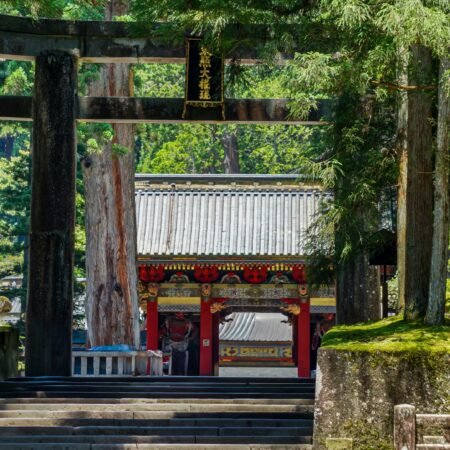
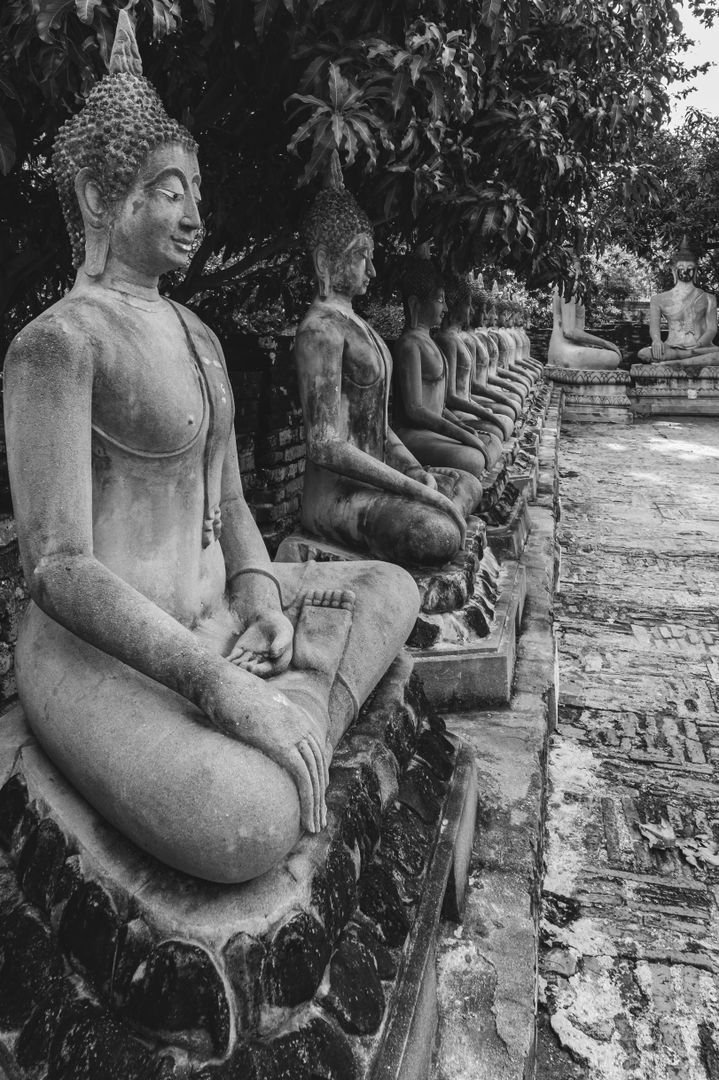
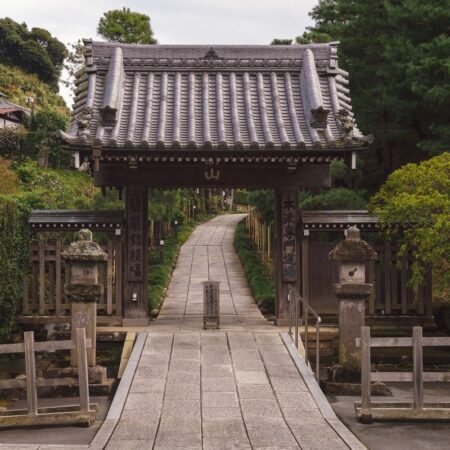
None of this quite explains why Ishiteji feels the way it does once you are actually standing in it. The Niomon gate, built in 1318 and now a national treasure, is conventional enough. Past it, though, the grounds fill up with an odd accumulation of statuary — some formal stone Buddhas lined up in neat rows, others clearly homemade, weathered plaster-and-wire figures that look like nobody has quite decided whether to repair or remove them. A large bronze incense urn near the entrance is there for pilgrims to bathe their hands and faces in the smoke, a practice that felt less like tourism and more like a small, specific request for luck.
Then there is the cave. It runs through the mountain behind the main hall, lit only intermittently, with Buddhist statues arranged like bollards along the walls and side alcoves holding figures the damp has not been kind to. It exits near a small inner shrine topped with an incongruous golden dome. None of it is staged for effect the way a haunted house might be. It simply accumulated, over roughly thirteen centuries, into something that unsettles without ever quite explaining why.
Visiting Respectfully
Ishiteji is a working temple, open to the public year-round and free to enter, and it receives a steady stream of pilgrims in white henro robes as well as ordinary visitors. If you go, bring a torch for the tunnel — the temple does not light it for your convenience — and go slowly; the footing is uneven in places and other people will be in there with you, often performing genuine devotions rather than sightseeing. Keep your voice down near the main hall and the cave shrines, do not touch the statues or the offerings left at them, and remember that the stone at the centre of this whole story is a sacred object to the temple, not a prop for a photograph. Weekday mornings are quieter if you would rather have the place, and your own thoughts, to yourself.
I came away from Ishiteji less frightened than genuinely moved, by the idea that an entire pilgrimage culture of gift-giving and forgiveness grew out of a story about a man who once refused to give anything at all. Whether the stone in the reliquary really says what tradition claims, I cannot tell you. But the eighty-eight temples around it are still full of people walking because of the story attached to it, which strikes me as its own kind of evidence.
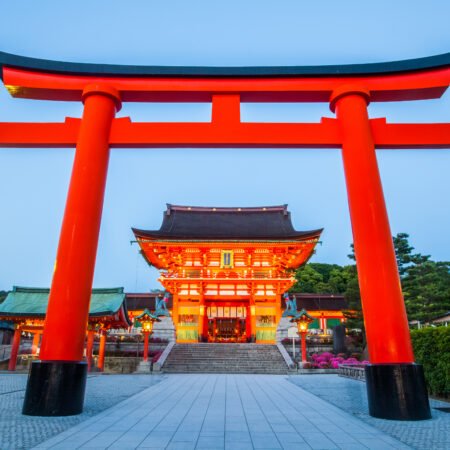
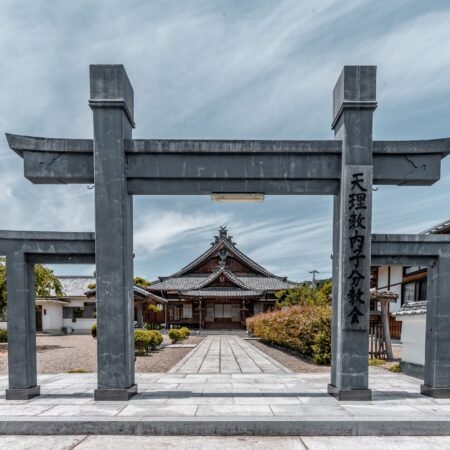
Note: images accompanying this article are illustrative stock photos and do not necessarily show the specific site discussed.
コメント