





I almost didn’t get off the train. I’d planned to just pass through Kawagoe on my way to somewhere else, but the platform smelled like roasted sweet potato and a woman next to me was adjusting her yukata like she had somewhere important to be. So I got off. Best accidental decision I’ve made in five years of living in Japan.
Kawagoe sits less than an hour from central Tokyo on the Tobu Tojo Line, and it has this nickname — Koedo, “Little Edo” — that sounds like tourist-board flattery until you actually walk the old town and realize it’s earned. This isn’t a reconstruction or a theme park. It’s a real merchant district that’s been standing since the Edo period, and spending a day there felt less like sightseeing and more like time travel with a really good snack budget.
Walking Into the Edo Period on Kurazukuri Street
The heart of Kawagoe is Kurazukuri-dori, a street lined with dark, thick-walled warehouse buildings called kura. During the Edo period, Kawagoe was a major supply hub for the shogun’s capital — rice, timber, and goods all moved down the Shingashi River toward Edo, and the merchants who controlled that trade got rich enough to build these elaborate storehouses as both showrooms and status symbols.
The kura style wasn’t just for looks, though. Edo-era towns were almost entirely wooden, which meant fire was a constant threat. The thick clay walls of a kurazukuri building were essentially fireproofing technology, and that mattered enormously — a fire that tore through Kawagoe in 1893 destroyed most of the wooden shops nearby but left many of the warehouses standing. Instead of scaring merchants off the style, it convinced even more of them to rebuild in it, which is a big part of why so many of these buildings survived into the 21st century.
Walking down the street now, you’ll find shops selling sweet-potato everything (Kawagoe is famous for its satsumaimo), pottery, and souvenirs, all tucked into buildings with heavy black tile roofs and ornamental facades. It’s touristy, sure — there were a lot of school groups and a surprising number of rickshaw pullers hustling for business — but the buildings themselves are the real thing, not a set piece.
The Bell That’s Rung Over the Town for More Than a Century
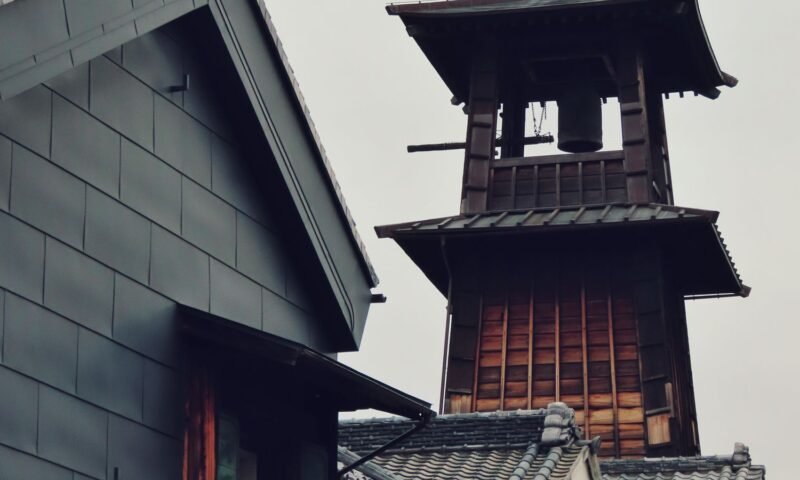
You can’t miss Toki no Kane, the wooden bell tower that pokes up above the warehouse rooftops and has become the unofficial symbol of the whole town. The tower chimes four times a day — 6:00 a.m., noon, 3:00 p.m., and 6:00 p.m. — and I happened to be standing almost directly underneath it when the 3 p.m. bell went off. It’s a deep, rolling sound, and for a second everyone on the street just stopped and looked up, which I found weirdly moving for something as ordinary as a clock chime.
The current tower dates to 1894, rebuilt after that same 1893 fire took out its wooden predecessor, so the bell tower and the surviving warehouses share an origin story. Some version of a time bell has stood on this spot since the Edo period, which means people in Kawagoe have organized their days around this exact sound for roughly 400 years.
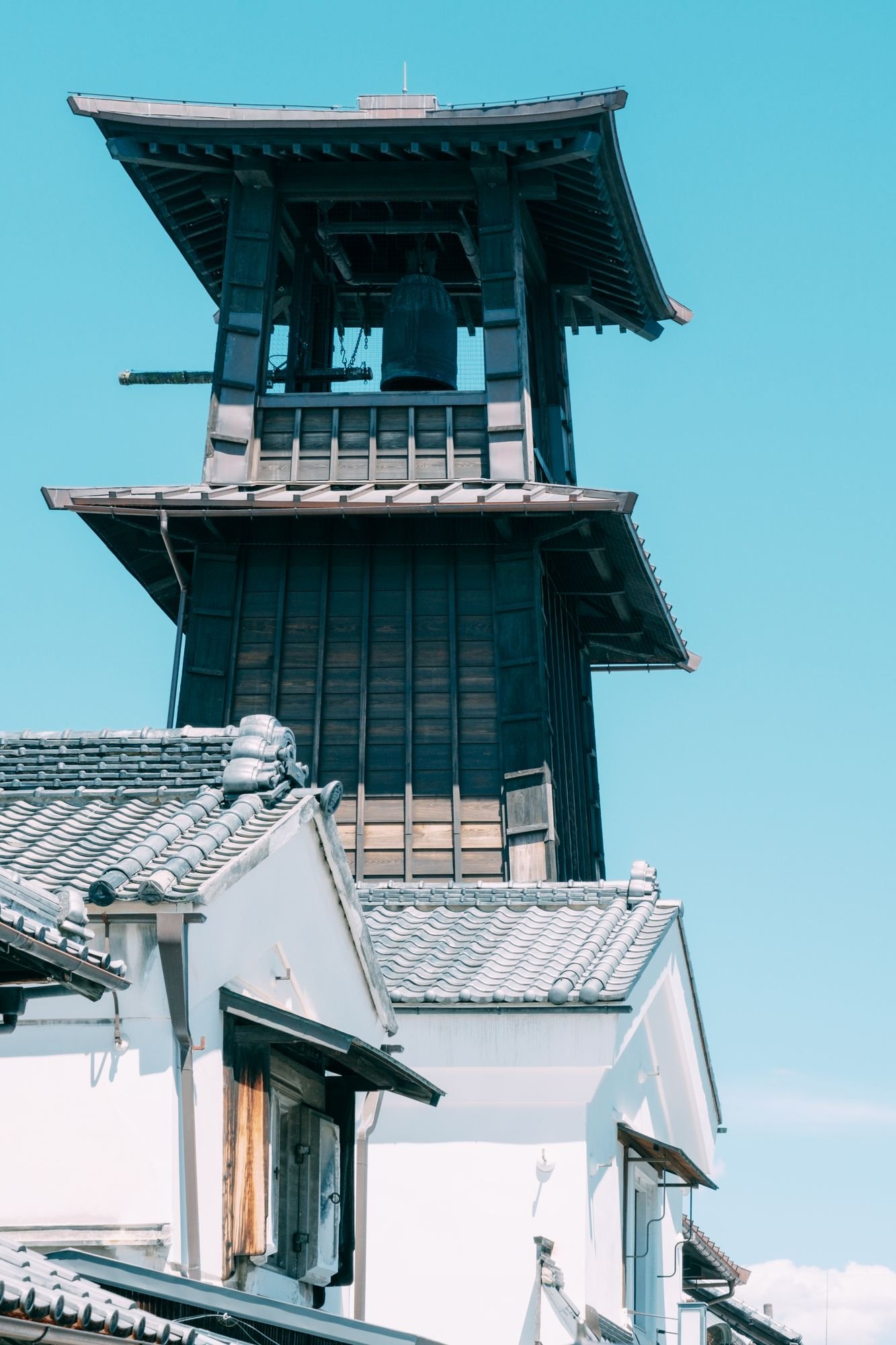
If you want a good photo without fifteen strangers in it, get there early. By late morning the little plaza around the tower was packed with people waiting for their turn to snap a picture, myself included.
Getting Sweet in Kashiya Yokocho
A few minutes’ walk from the main street, tucked down a narrow stone-paved lane, is Kashiya Yokocho — Candy Alley — and this is where I lost track of time (and a not-insignificant number of yen). The alley traces back to 1796, when a confectioner named Tozaemon Suzuki started making simple candies here for the Edo market. By the early Showa era it had grown to more than 70 candy shops; today there are roughly 20 left, but they’re still making things the old way, by hand, in tiny storefronts that smell like caramelized sugar and toasted rice.
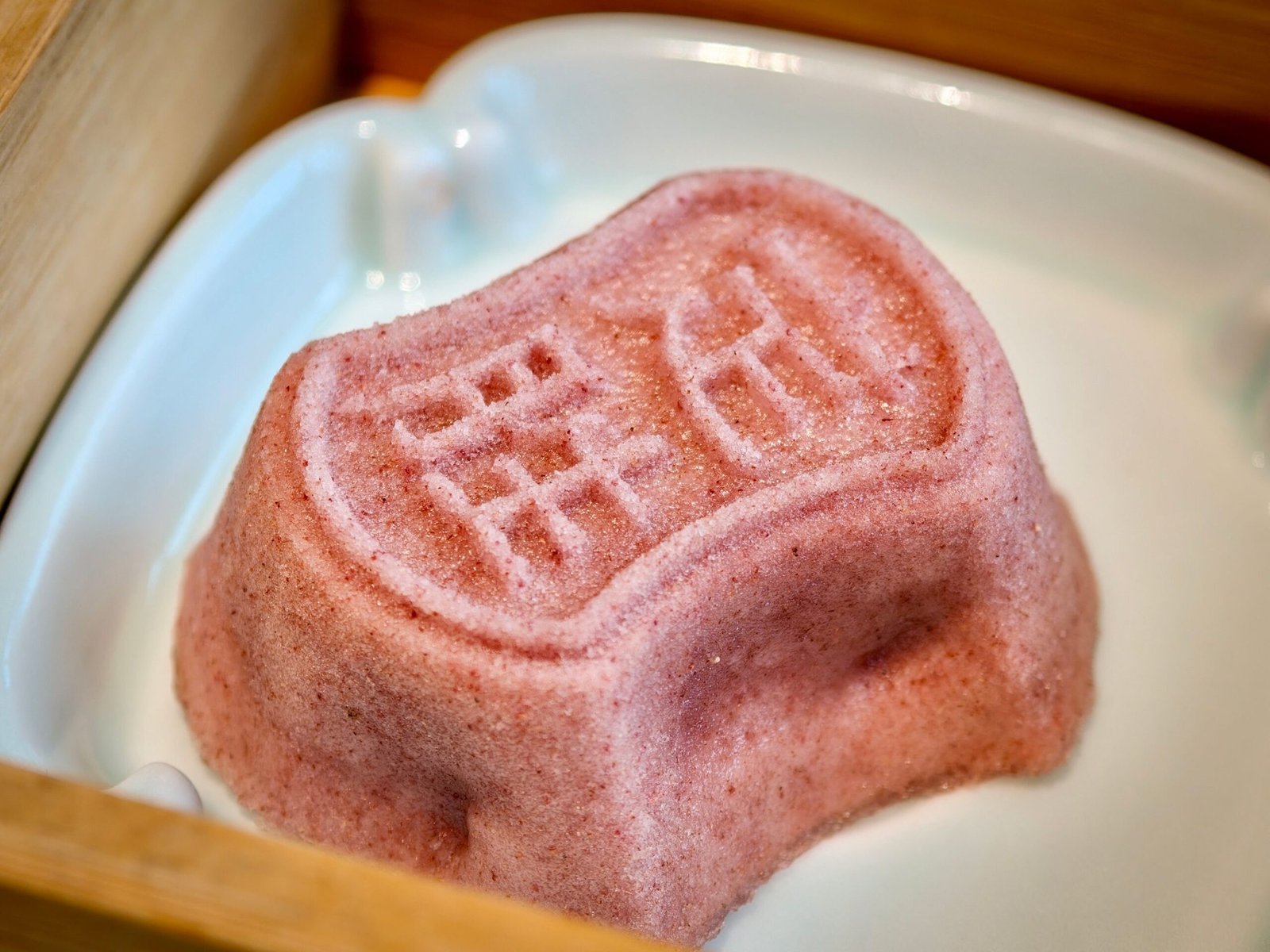
I tried chitose ame, the long striped candy traditionally given to kids during Shichi-Go-San celebrations, and kintaro ame, where every slice of the roll reveals the same little face, like edible rock candy with a mascot. There was also mizu yokan, a barely-set red bean jelly that was perfect on the humid day I visited, and karinto — fried dough coated in brown sugar that I bought “for later” and finished before leaving the alley. The whole lane smells incredible enough that Japan’s Ministry of the Environment put Kashiya Yokocho on its official list of the country’s 100 best “scent landscapes,” and now I get why.
Marking My Calendar for the Kawagoe Matsuri
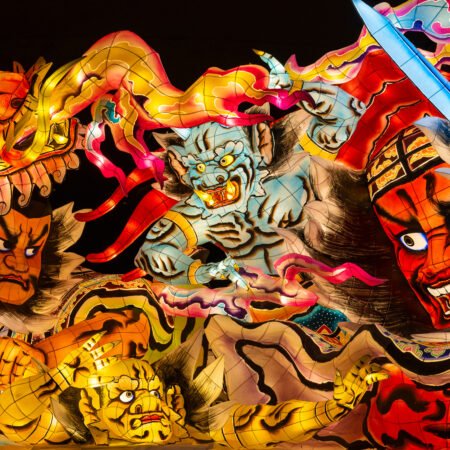
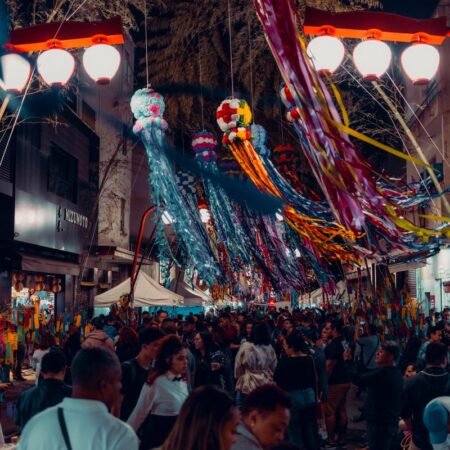
Here’s the thing that’s already got me planning a second trip: Kawagoe puts on one of the Kanto region’s biggest float festivals, the Kawagoe Matsuri, and the 2026 edition is happening October 17–18. Its roots go back to 1648, when the local lord donated a portable shrine to Hikawa Shrine, and it’s grown since then into a procession of enormous, elaborately carved dashi floats, some topped with mechanical dolls, all pulled through the old town by hand.
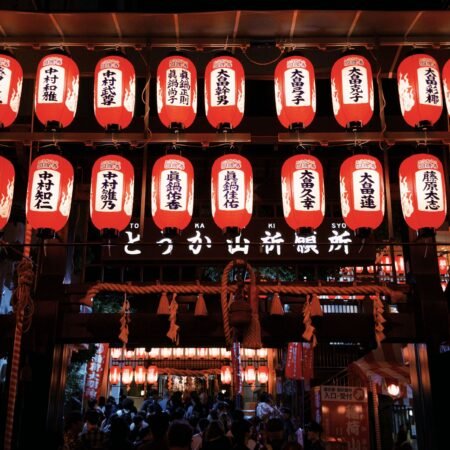
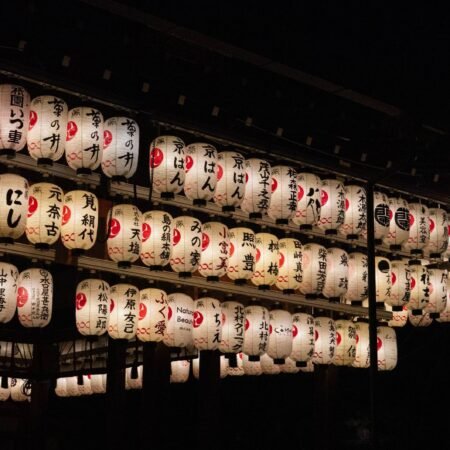
The festival’s signature moment is called hikkawase — two or more floats meet in an intersection, turn to face each other, and the crews compete with flutes, drums, bells, and dancing until one side more or less wins the crowd. It happens after dark, lanterns lit, and locals tell me it’s a far more electric atmosphere than the daytime parade. The festival is an Important Intangible Folk Cultural Property, and in 2016 it joined UNESCO’s Intangible Cultural Heritage list alongside other major float festivals around Japan. Recent editions have drawn well over half a million visitors across the two days, so book accommodation early and expect the main streets closed to traffic for most of the day.
Practical Notes for Your Own Trip
Kawagoe is an easy day trip from Tokyo — the Tobu Tojo Line runs directly from Ikebukuro to Kawagoe Station in about 30 minutes, and the Seibu Shinjuku and JR Kawagoe lines work too. From the station, it’s roughly a 20-minute walk (or a short bus ride) to the warehouse district, with Kashiya Yokocho just a few minutes further on foot. Budget a full afternoon, minimum, especially if you can’t walk past a candy shop without going in.
What struck me most wasn’t any single sight — it was how normal it all felt. People weren’t performing “Little Edo” for tourists; they were going about their day in buildings their great-great-grandparents might have shopped in, next to a bell tower that’s kept time since before Japan had trains. That’s the kind of thing I moved here hoping to stumble into, and for once, I actually did — on a train I wasn’t even supposed to get off of.
A quick note on photos: some of the images here are stock photos I’ve used to set the mood — they may not be the exact spot or moment I’m describing, just close in spirit.
コメント