








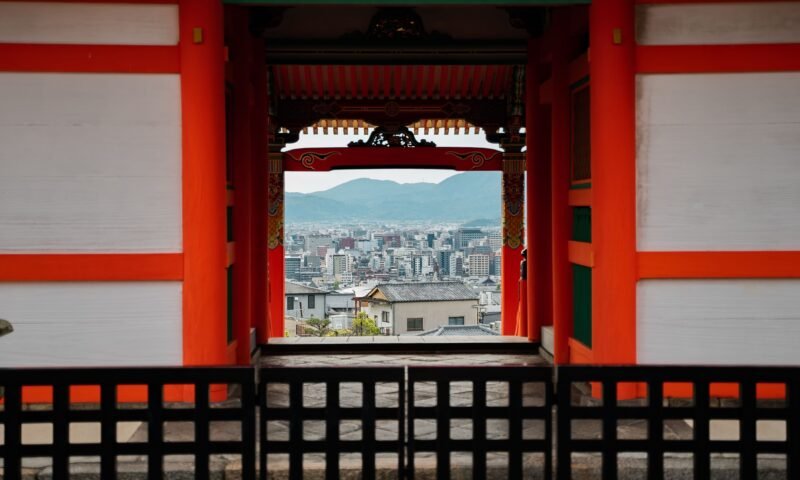
I came to Chion-in on a wet Tuesday in early autumn, mostly to get out of the rain. I left two hours later having learned that the temple’s floorboards sing, that a painted cat is said to watch you from every angle in the room, and that somewhere above the great front gate, in the dark, a pair of plain wooden coffins is supposed to have sat, unopened, since the Edo period. None of this was in the leaflet I’d picked up at the entrance. It came from a volunteer guide who clearly enjoyed watching a foreigner’s face when she got to the part about the coffins.
Seven years of chasing these stories around Japan has taught me that temples rarely advertise their own ghost stories. Chion-in is a quiet exception. Ask the right person, and the temple’s “Seven Wonders” (nazo) come out almost on cue — each one small enough to walk past without noticing, and strange enough to stay with you once you’ve heard it.
A Head Temple With Room to Spare
Chion-in, in Kyoto’s Higashiyama ward, is the head temple of Jodo-shu, the Pure Land Buddhist sect founded by the monk Honen in the twelfth century. It stands on the spot where Honen is said to have spent his final years, and was founded in 1234 by his disciple Genchi. Like most of old Kyoto, it has burned down more than once over the centuries; most of the buildings standing today date from a major reconstruction ordered by the Tokugawa shogunate in the early seventeenth century, when the temple became closely tied to the ruling family.
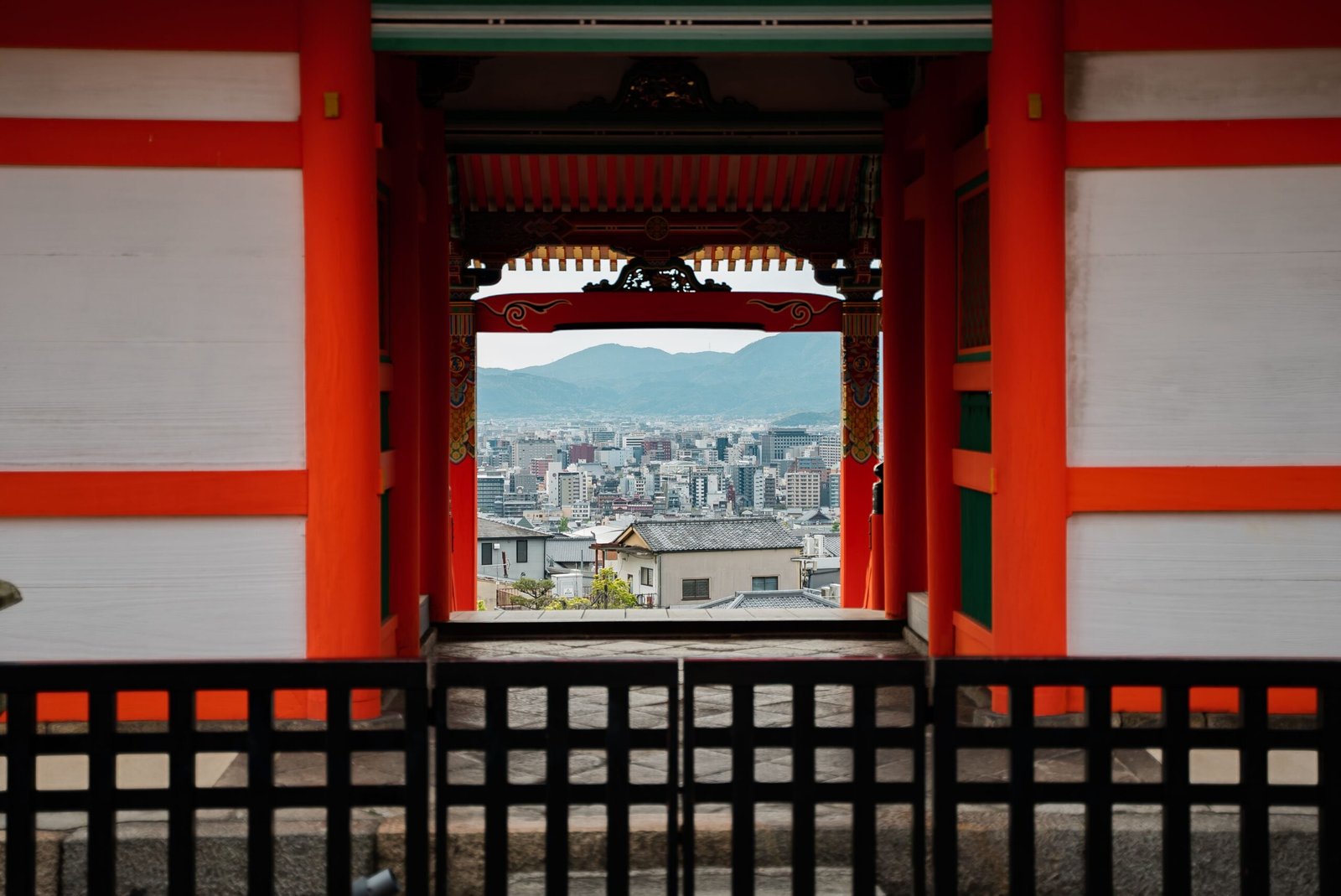
The result is a temple built on a scale that still catches first-time visitors off guard. Its Sanmon gate, completed in 1619, is said to be the largest temple gate in Japan, towering some twenty metres above the street. The Miei-do hall beyond it is large enough to seat several thousand people at once. None of that is folklore — it’s recorded, measured, and listed as an Important Cultural Property. The folklore starts once you’re inside.
The Wonders You’re Meant to Notice
Three of Chion-in’s seven wonders are things a guide will happily point out, because you’re supposed to notice them.
The first is the uguisu-bari, or “nightingale floor” — a corridor connecting several of the main halls, whose boards chirp and squeak with almost every step, however carefully you try to walk. The common explanation is practical: the floor was built this way on purpose, so that no one could cross it silently, whether an intruder, an assassin, or simply an uninvited guest of the shogunate. Whether that was the original intention, or a story added later to explain a quirk of old timber, nobody can say for certain. What isn’t in doubt is that it works. I tried walking as lightly as I could manage. It didn’t help.
The second is a single old oil-paper umbrella, tucked into the eaves on the underside of the Miei-do’s roof, visible if you know where to look up. Temple tradition holds that it was left there during the Edo-period construction — by the legendary master carpenter Hidari Jingoro as a charm against fire, in one version, or by a white fox said to have watched over the temple grounds, in another. The temple itself treats this as inherited tradition rather than documented history. Whatever its origin, it has stayed visibly in place for roughly four centuries, through fires that destroyed other buildings nearby.
The third is a sliding-door painting in one of the reception halls: a cat whose eyes are said to follow the viewer, and whose body seems to face you directly no matter which corner of the room you stand in. It belongs to a real genre of Edo-period trompe-l’œil painting built specifically around this effect. Move to three different corners and the cat still appears to be looking straight at you.
The Wonders You’re Not Meant to Find
The other four are quieter, and a couple of them can’t really be verified at all — which is presumably part of the point.
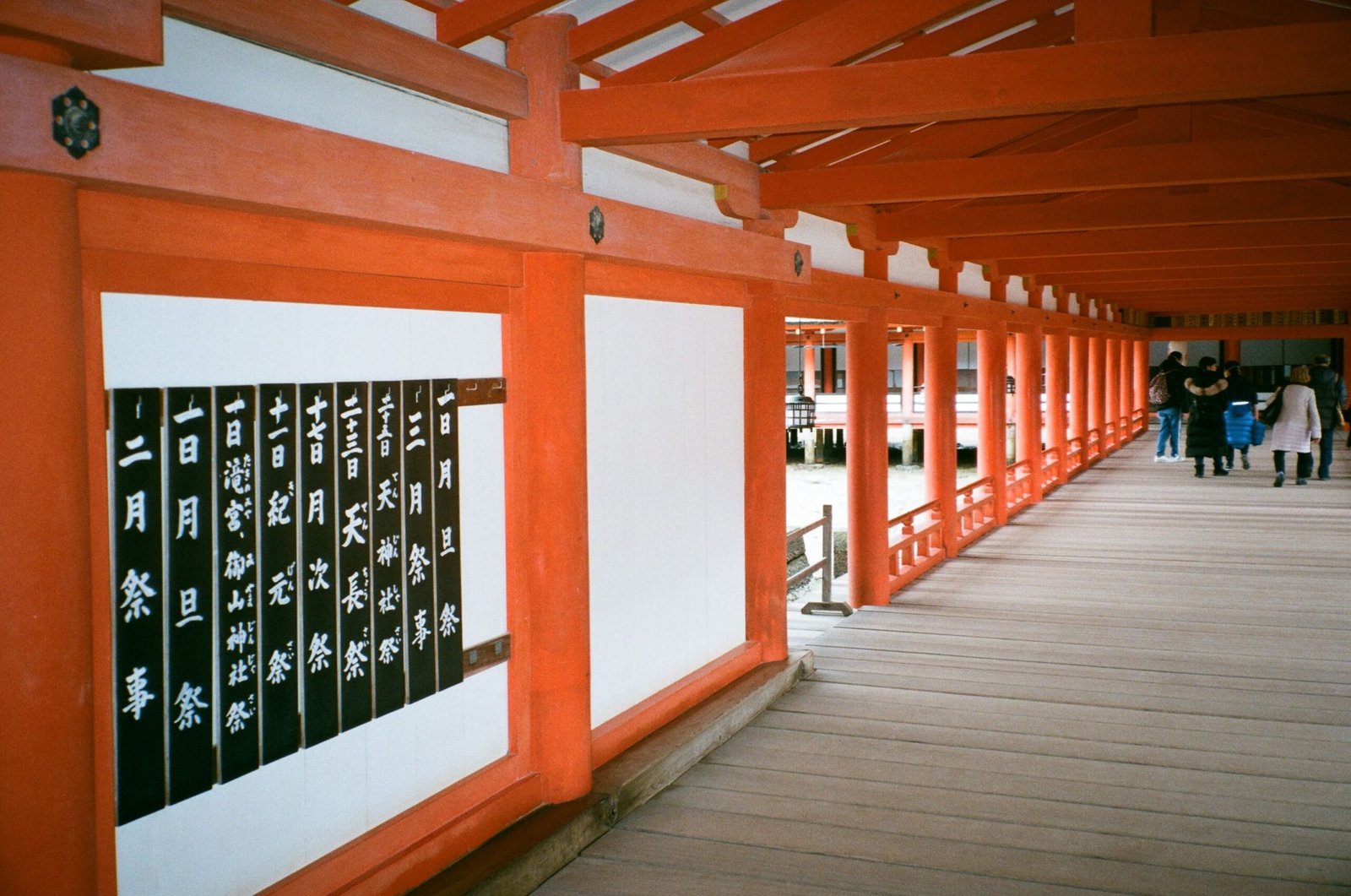
A giant rice ladle, said to measure well over two metres, hangs in one of the halls; tradition holds it once served rice to monks and pilgrims in enormous quantities. On another sliding door, a flock of painted sparrows is missing one bird — the story goes that it was painted so convincingly it simply flew out of the picture. Outside the Sanmon gate sits an unremarkable stone, half sunk into the pavement, locally said to mark some kind of boundary; one version has a melon vine sprouting from it overnight, uncultivated, and links it by an underground passage to Yasaka Shrine nearby. Like the rest of these tales, it’s told as a nazo — a mystery — not a historical claim.
The last is the one the volunteer guide clearly relished telling me. Tradition holds that somewhere in the ceiling space above the Sanmon gate, two plain wooden coffins have rested since the gate’s construction in 1619, said to represent the master carpenter and his wife, who — according to the story — took responsibility, in the gravest possible way, for construction costs that had run far over budget. I want to be careful here: this is centuries-old temple lore, not a documented historical event, and the temple itself presents it that way, as an inherited story rather than a verified account of real individuals. The coffins, if they’re there at all, aren’t opened for visitors, and I didn’t ask to see them.
What to Do With a Story Like This
None of Chion-in’s seven wonders are marketed as frightening, and the temple doesn’t lean into a haunted reputation the way some tourist spots do. They’re presented instead as nazo — unsolved puzzles handed down alongside the architecture, the kind of detail that makes an already enormous complex feel lived-in rather than simply old. Whether the nightingale floor was built for security or just happens to creak, whether the coffins exist at all, isn’t really the point. The stories are a way of paying attention to a building that has been standing, burning, and being rebuilt for nearly eight hundred years.
If you go looking for the seven wonders yourself, go as a guest of the temple rather than a ghost hunter. Chion-in is a working temple with a resident community of monks, not a theme park, and the spaces tied to its stranger legends — the gate’s upper chamber chief among them — are closed to the public, for reasons of preservation as much as mystery. Stick to the public halls and corridors, keep your voice down in the Miei-do during services, and don’t go hunting for the stone’s underground tunnel; it isn’t there to be found, and the temple would rather you simply enjoy the squeak of the floor under your own feet.
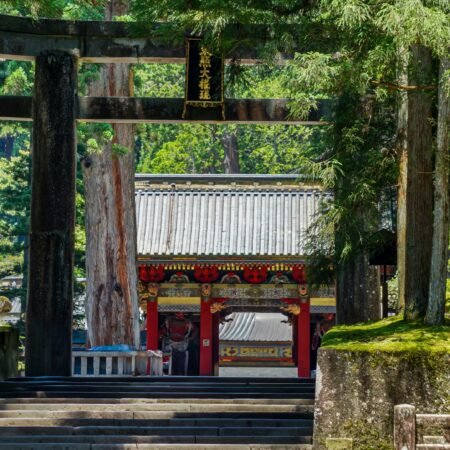
Note: images accompanying this article are illustrative stock photos and do not necessarily show the specific site discussed.

コメント