





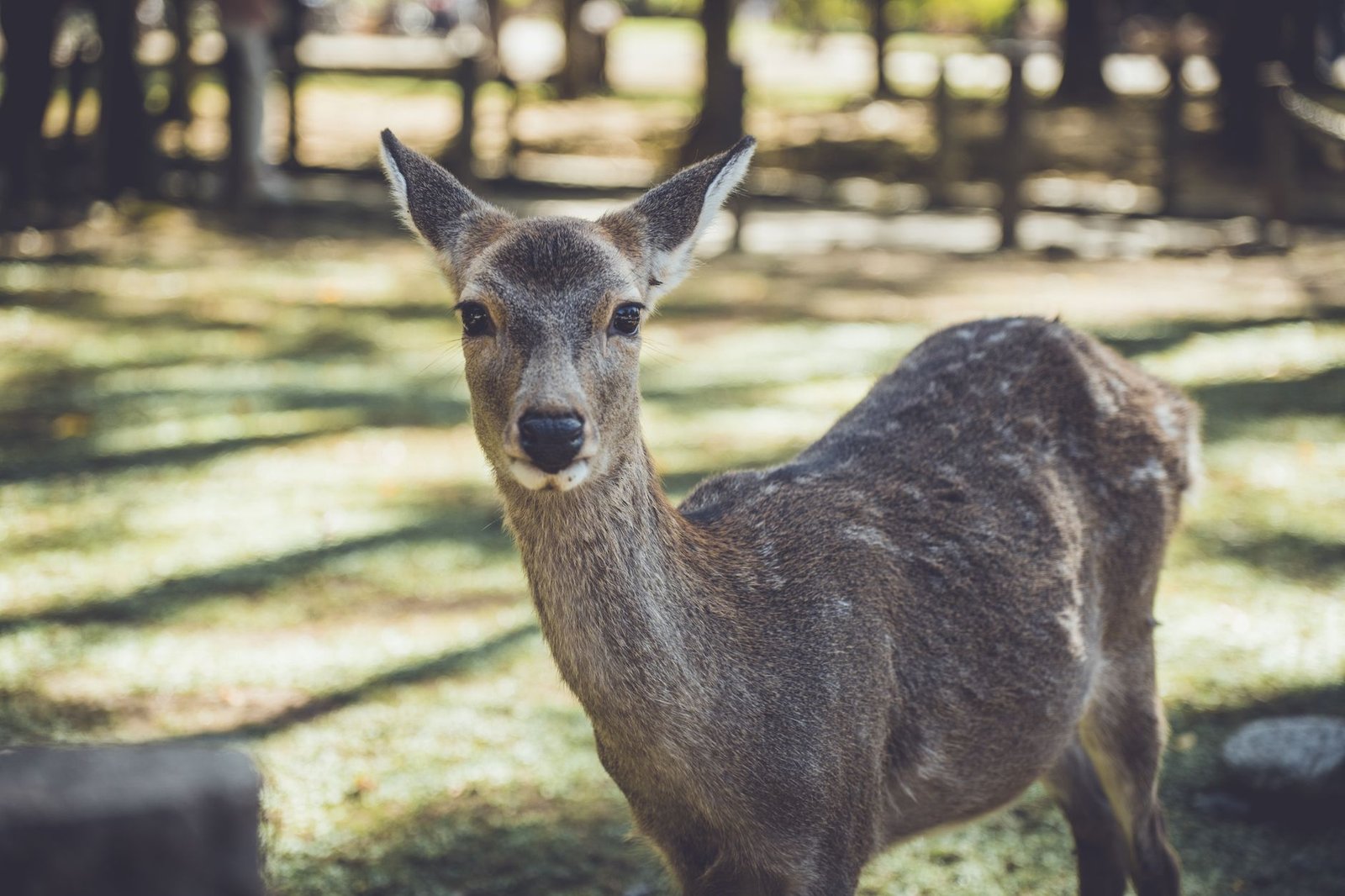
I was standing in the dark near Ukimido pavilion in Nara Park, a paper cup of convenience-store coffee long gone cold in my hand, when the whole shape of Mount Wakakusa lit up orange from base to summit, as though someone had finally lost patience with it. Around me, a few thousand people made the same small sound at once — not quite a gasp, more a collective exhale — and the deer that wander Nara Park by the hundreds barely looked up. They have seen this before. So, I would learn, has the mountain, for a very long time.
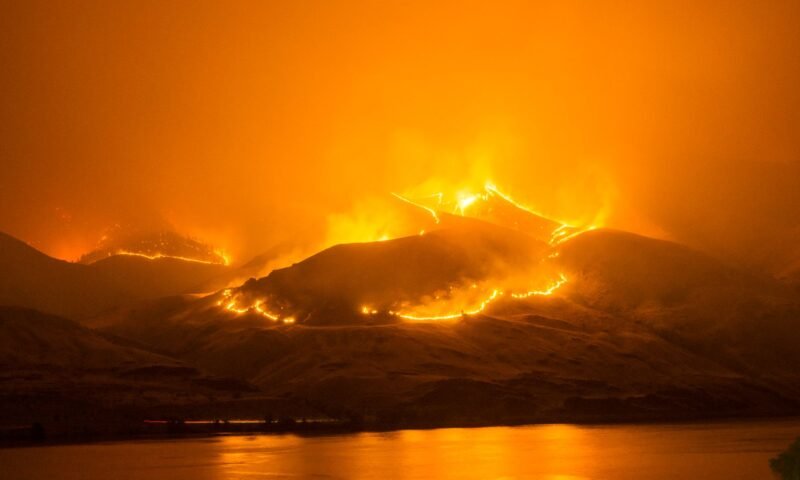
Wakakusayama sits just east of Nara Park, a smooth, grass-covered hill rising to about 342 metres, gentle enough that on an ordinary afternoon you can walk to the top in under an hour and look back over Todai-ji’s great roof and the five-storey pagoda of Kofuku-ji. On one Saturday every January, though, the mountain is deliberately set alight, all 33 hectares of dry winter grass burning in a single sheet of flame while fireworks go off behind it. It’s one of the more photogenic things I’ve watched in seven years of chasing this country’s stranger traditions. It’s also, depending on who in Nara you ask, either a six-decade-old act of civic diplomacy, a pest-control measure, or an annual apology to something buried on top of the hill.
A Boundary Dispute, or Something Older
The explanation you’ll hear most often from guidebooks is wonderfully mundane: Todai-ji and Kofuku-ji, the two great temples that have shared this patch of Nara since the eighth century, supposedly fell into a dispute over exactly where the mountain’s boundary lay. According to the traditional account, the argument dragged on until, sometime around 1760, someone simply set the whole hill on fire rather than keep arguing about it, and the temples and Kasuga Taisha shrine have burned it together ever since as a kind of standing truce. It’s the sort of story that sounds almost too tidy — mapmaking turned into a bonfire — and it’s worth saying plainly that it’s a traditional account rather than a documented one; I couldn’t find a contemporary record that nails down that date or the dispute itself.
Local tourism sources also mention a far less romantic possibility: that the burning started, or at least persisted, as a way of clearing out wild boar and other pests that liked to winter in the long grass. Burn the hill in deep winter and whatever’s living in it has to leave. It’s the kind of practical, slightly deflating explanation that so often turns out to sit quietly underneath a prettier story.
The Tomb at the Top
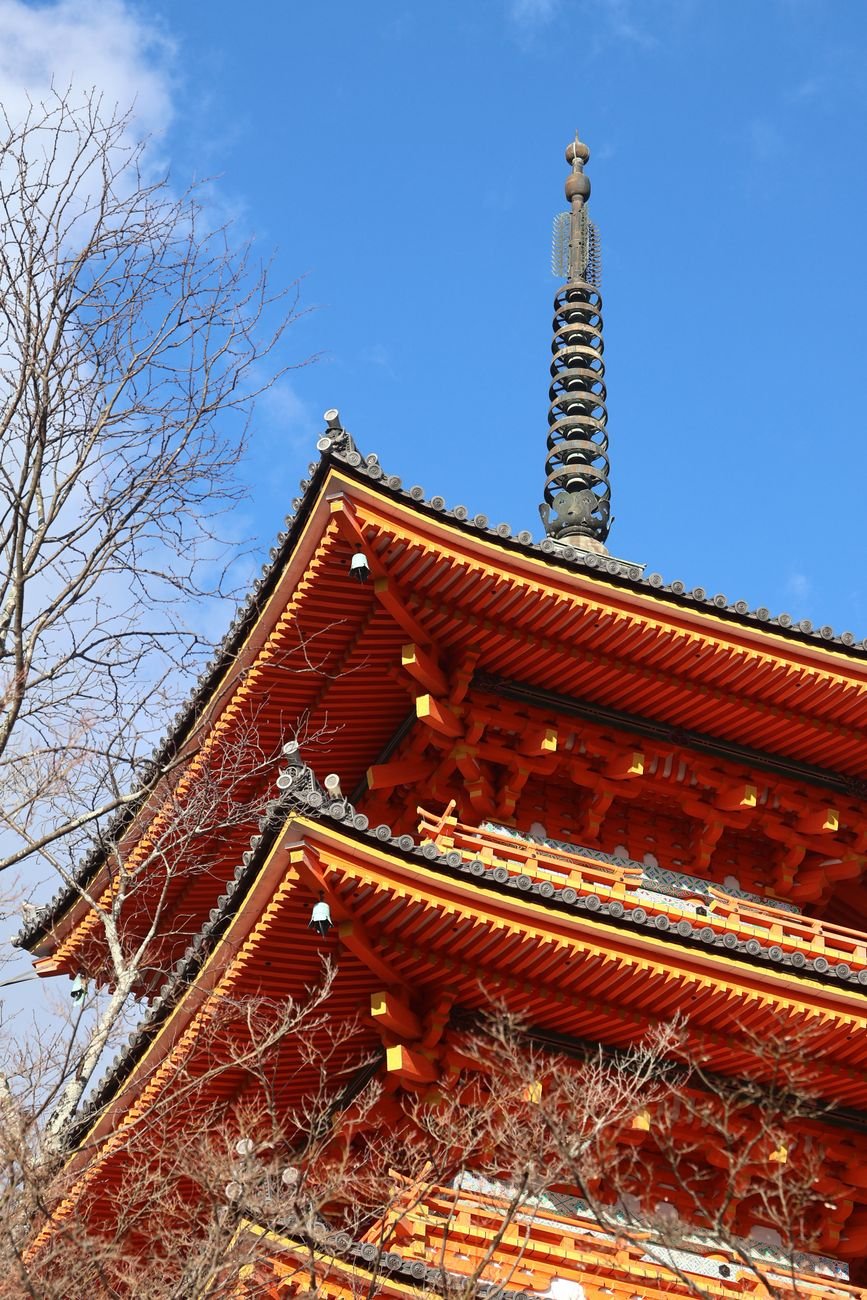
But the account that the three institutions themselves — Todai-ji, Kofuku-ji, and Kasuga Taisha — reportedly give is the one that stopped me on the path up the mountain a few days before the festival, when I went up to see what, exactly, was being burned around. At the very summit of Wakakusayama sits a keyhole-shaped burial mound, a kofun, about 107 metres long, with cylindrical haniwa figures still lining part of its front section and traces of stone cladding on its slopes. It’s a strange thing to find at the top of a hill like this — a mountain-top tomb is genuinely unusual in Japan — and nobody today can say with certainty whose it is. A stone marker reading “Uguizuka,” the Bush Warbler Mound, was set up there in 1733, apparently borrowing its name from a phrase in Sei Shonagon’s tenth-century Makura no Soshi (The Pillow Book), which lists an “uguisu no misasagi,” a bush-warbler mausoleum, among its catalogue of famous imperial tombs. Whether that phrase ever actually referred to this hill, or whether the connection is just a rumour that outlived its origin by a thousand years, nobody seems to know; the local record I found describes it candidly as a rumour that stuck. Guesses as to who actually lies inside range from Emperor Nintoku to Emperor Kotoku to Nintoku’s consort, Iwa-no-hime, and none of them, as far as I can tell, is more than a guess.
What I find genuinely interesting is less the identity of whoever’s in there and more the function the uncertainty seems to serve. According to the account attributed to the three shrines and temples, the Yamayaki is performed, among its other purposes, as a woodcutters’ rite to calm the spirit resting in that mound — a yearly reassurance, offered in fire, to something nobody can name. I want to be careful here: I found no specific tale of a haunting or a curse befalling anyone who disturbs the mound. What I found instead was quieter and, to me, more interesting — a civic ritual that has folded a nameless grave into its own explanation for why it exists, treating an anonymous burial not as a curiosity to be fenced off, but as a resident that still needs looking after.
Three Institutions, One Fire
Whichever version you prefer — property dispute, pest control, or restless spirit — Nara doesn’t seem especially interested in picking one. The modern festival keeps all three in play at once. Ten robed “Nara hoshi,” representing the old monastic tradition, carry a sacred fire down from Kasuga Taisha to the base of the mountain in the early evening; deer-cracker throwing contests and music offerings fill the afternoon; and then, after dusk, the fire goes up the slope while fireworks mark the moment. It struck me, watching it, as a very Nara solution: rather than settle the argument about why the mountain burns, the city has simply made sure it keeps burning, correctly, every year, regardless of which story turns out to be true.
For what it’s worth, the mountain itself is closed to visitors from mid-December until mid-March, so if you go looking for the Uguizuka kofun, you’ll need the warmer months — and even then, you’re looking at a grassy summit marker and a quiet, slightly eerie flatness underfoot, not an excavation site. There’s nothing to dig for and nothing that should be dug for.
If you want to see the Yamayaki itself, go early. The popular viewing spots fill up fast — the area near Kofuku-ji’s five-storey pagoda, the pond by Yakushi-ji, and the open ground near Heijo Palace a little further out all draw large crowds, and the local recommendation is to arrive by around five in the evening if you want to actually be on the mountain side rather than watching from a distance. Public transport is strongly preferred over driving; the roads around Nara Park are closed to traffic during the event, and parking fills early. However you watch it, keep some distance from the fire crews and the roped-off burn areas, be mindful of the deer, who are famously unbothered but shouldn’t be crowded, and remember that whatever you believe is actually up there under the grass, several hundred years of this city’s residents have decided it’s worth the trouble of an annual fire to keep it calm. That seems like a reasonable thing to respect, even from a safe distance down in the park.
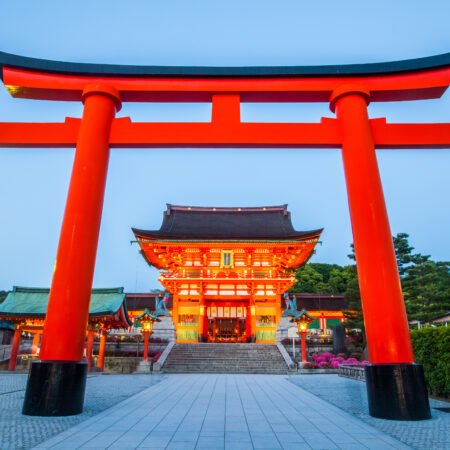
Note: images accompanying this article are illustrative stock photos and do not necessarily show the specific site discussed.

コメント