







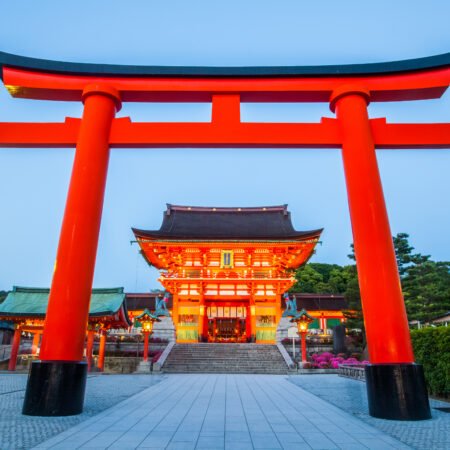



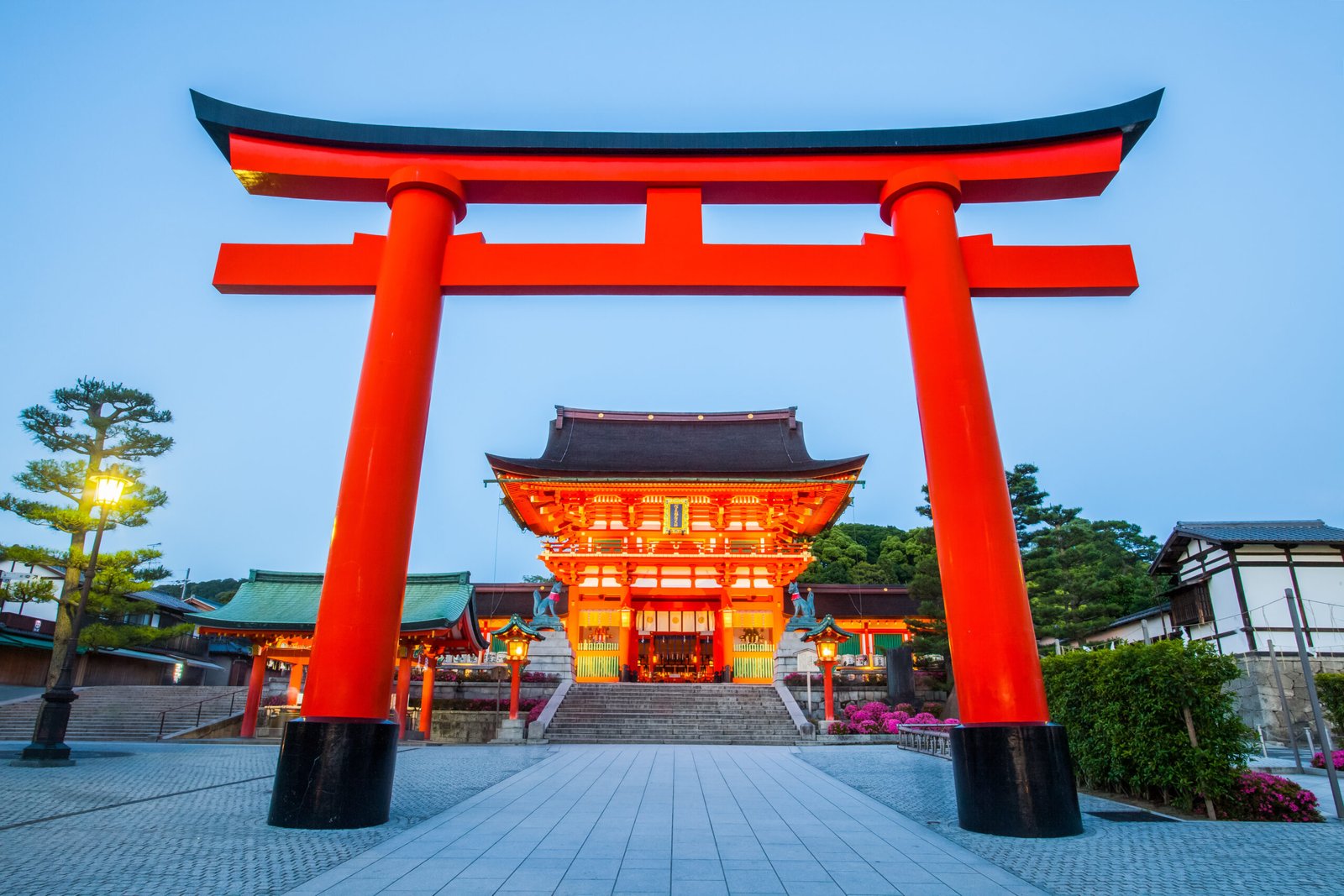
Fushimi Inari Shrine , Famous and important Shinto shrine in southern Kyoto , Japan
What Is a Shinto Shrine?
A Shinto shrine is a sacred space dedicated to kami — deities, spirits, or forces of nature. While often serene and understated, shrines are full of rituals and symbolism one should approach with respect. Visiting a shrine isn’t simply sightseeing — it’s stepping into spiritual tradition.
Step 1: Bow Before the Torii Gate
Before passing through the torii gate (the symbolic entrance), bow once lightly. This is a gesture of respect to the kami you’re about to visit.
Step 2: Purify Yourself at the Water Basin
At the temizuya (purification fountain), cleanse both hands and rinse your mouth following these steps:
-
Hold the ladle with your right hand and pour water over your left hand.
-
Switch hands and pour water over your right hand.
-
Pour some water into your left hand, rinse your mouth, and spit beside the basin (never touch the ladle directly to your mouth).
-
Rinse your left hand again.
-
Tilt the ladle to let the remaining water flow down the handle before returning it.
Step 3: Walk Respectfully
When walking along the path (sandō) to the main hall, avoid the center—it’s said to be the path for the gods. Walk along the sides.
Step 4: Worship at the Main Hall
At the main hall, follow the “Two Bows, Two Claps, One Bow” ritual:
-
Bow deeply twice
-
Clap your hands twice
-
Offer your prayer silently
-
Bow deeply once more
Step 5: When Leaving
After your prayer, when leaving the shrine, turn around and bow once more toward the main hall. This final gesture shows gratitude and respect.
Tips & Additional Notes
📷 Photography
Some shrines restrict photography, especially inside the main buildings. Always check for signs or ask politely before taking photos.
🧢 Dress Modestly
Avoid wearing revealing or overly casual clothing. Modest and respectful attire is appreciated.
🪙 Offerings
When offering money, gently drop coins into the offering box (saisenbako). Common amounts are small, but what matters is sincerity.
🎎 Ema & Omikuji
Write wishes on ema (wooden plaques) or draw omikuji (fortune slips) if available. Tie bad fortunes on the racks provided.
🤫 Keep Quiet
Shrines are places of peace and reflection. Avoid loud talking or phone use.
Closing Thoughts
Visiting a shrine connects you with Japan’s timeless spirituality. It’s not just an old custom — it’s a moment of peace within the rush of modern life. Approach with respect, and the calm of the shrine will stay with you.
#ShrineEtiquette #JapaneseCustoms #SpiritualTokyo #LearnJapan #TravelTips