








The Alleyway Where Electric Town’s Roots Still Live
1. What Is Junk Street?
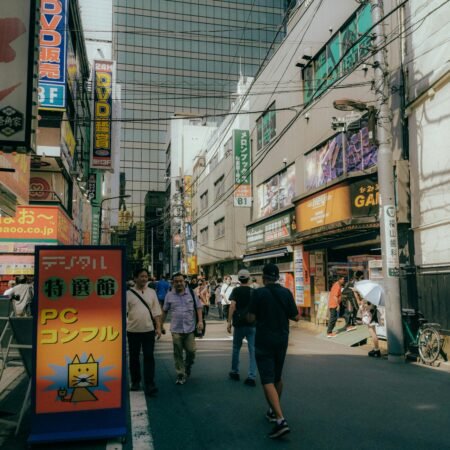
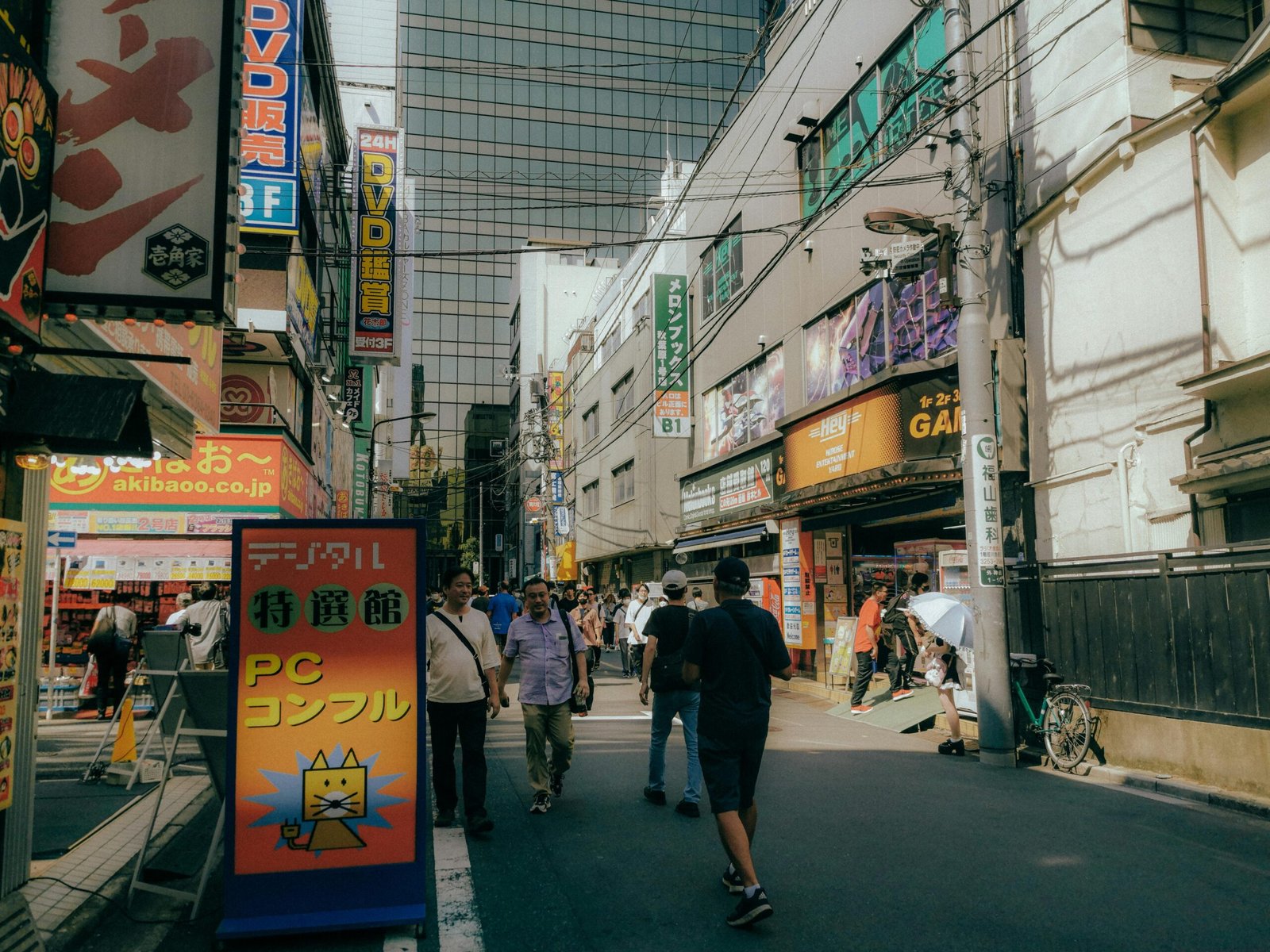
Tucked behind the main streets of Akihabara, Junk Street is a narrow alley filled with small shops selling all kinds of electronic parts — resistors, switches, circuit boards, and even mysterious gadgets from decades ago.
It’s where Akihabara’s nickname “Electric Town” was truly born.
2. What You’ll See
As you walk down the alley, you’ll find shops stacked floor-to-ceiling with circuit boards and old computer parts.
Some stores sell nothing but cables and connectors, while others look like miniature museums of retro technology.
Every shop has its own character — some are quiet and methodical, others chaotic and overflowing with treasures.
3. Experience & Vibe
There’s a faint smell of metal and dust in the air, mixed with the hum of fluorescent lights.
Most shopkeepers are older men who have been here for decades — they don’t talk much unless you ask, but their eyes light up when you show real curiosity.
It’s not just shopping here; it’s exploration, like stepping into a time capsule of Japan’s post-war creativity.
4. Tips for Visitors
-
📷 Photography: Always ask before taking photos inside a shop. Some owners prefer privacy.
-
💬 Language: Many shopkeepers speak little English, but numbers and gestures go a long way.
-
💴 Payment: Most stores are cash only.
-
🕒 Timing: Late afternoon is the best time — most shops open after noon and close around 7pm.
5. How to Get There
Junk Street runs parallel to Chuo-dori, just behind the big electronic stores like Sofmap and Yodobashi.
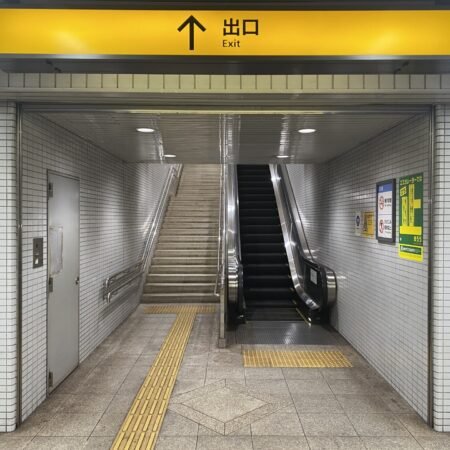
From JR Akihabara Station (Electric Town Exit), it’s about a 5-minute walk.