





Hakone Hot Springs — A Foreigner’s Honest Guide to Japan’s Most Accessible Onsen Town
Category: Travel / Onsen
Written from the perspective of a foreigner living in Japan
I moved to Japan thinking I understood hot springs. I’d done public baths in Europe, thermal pools in Iceland. How different could it be?
The answer: completely different, in ways I didn’t expect and now can’t imagine living without.
Hakone was my first real onsen experience. It was also the moment I understood why Japanese people treat bathing as something worth protecting.
What Makes Hakone Different
Hakone sits in the Fuji-Hakone-Izu National Park, about 90 minutes from Shinjuku by the Romancecar express train. It’s often called a day-trip destination, but that description undersells it. Hakone is a region — a network of valleys, mountain passes, lakes, and ryokan that rewards slowing down.
The hot springs here have been active for over a thousand years. The water comes from volcanic sources around Owakudani (literally: “Great Boiling Valley”), an active sulphur venting area on the mountain. Different parts of Hakone draw from different sources, which means the water chemistry varies — some baths are milky white, some clear, some carry a faint sulphur smell that fades as you settle in.
This isn’t just aesthetics. The minerals in the water are genuinely different depending on where you bathe, and locals will tell you each type has different effects on the body. Whether or not you buy into the health claims, the variation makes bathing in Hakone feel like an exploration rather than a routine.
The Cultural Layer Most Visitors Miss
Before anything else, there’s something worth understanding: onsen is not a spa.
In the West, we tend to associate bathing with personal wellness — something you do for yourself, at your pace, in private. Japanese onsen culture is different. It’s communal. You’re bathing alongside strangers, in shared water, in shared silence. There’s a code to it that isn’t written anywhere but is felt immediately if you get it wrong.
The basics:
- You wash your body completely before entering the bath — not as a courtesy, but as the rule
- No swimwear in traditional baths; you enter nude
- Towels stay out of the water (fold a small one on your head if you like, but don’t dip it in)
- No phones, no loud talking, no splashing
- The bath is for soaking, not swimming
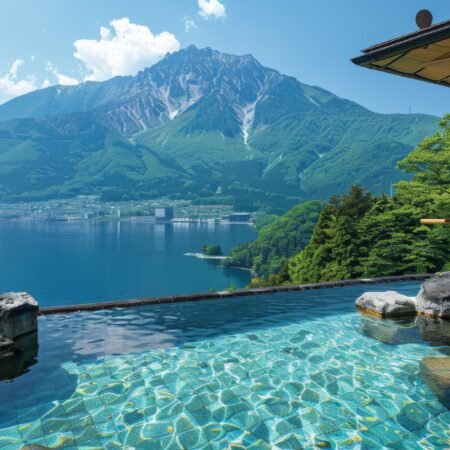
Once you’re in, the etiquette becomes invisible. You lower yourself slowly into water that is genuinely, sometimes shockingly hot. You sit. You breathe. At some point, you stop thinking about what you’re supposed to do.
That’s the point.
The Tattoo Question
If you have visible tattoos, you need to know this before you go.
Most traditional onsen in Japan — including many in Hakone — prohibit tattoos. The rule has historical roots in tattoos being associated with yakuza, and while the cultural reality is more complicated now, the policy remains in place at most public baths and ryokan facilities.
What this means practically:
- Many large public bathhouses (sento and resort-style facilities) will turn you away
- Some ryokan have private baths that you can book exclusively — these often have no tattoo policy since it’s just you
- A growing number of smaller, newer establishments have explicitly changed their policy and advertise as tattoo-friendly (tatuー可)
If you have tattoos, do the research before you book. Search for tatuー可 or “tattoo-friendly onsen Hakone” — there are good options, but the filtering matters.
Day Trip vs. Overnight: Which Is Worth It?
The honest answer: overnight, if you can.
You can do Hakone as a day trip from Tokyo, and many people do. You’ll get a soak, see the views, eat well. But the experience is compressed — you’re watching the clock, catching the last Romancecar, skipping the early morning bath when the steam is thick and the other guests are half-asleep.
Staying overnight at a ryokan is a different thing entirely. You get:
- Dinner (kaiseki — a multi-course seasonal meal) and breakfast included in most plans
- Access to the baths at night and early morning, when the crowds thin out
- A yukata to wear around the property
- The specific experience of lying in a Japanese-style room listening to nothing
Ryokan in Hakone range from budget options (around ¥10,000–¥15,000 per person) to serious luxury (¥50,000+). The price gap is real, but even a mid-range ryokan delivers something that doesn’t exist in Western hospitality. Book 1–2 months ahead for weekends; peak autumn foliage season (late October to November) books out even earlier.
Practical Guide: Getting There and Getting Around
From Tokyo:
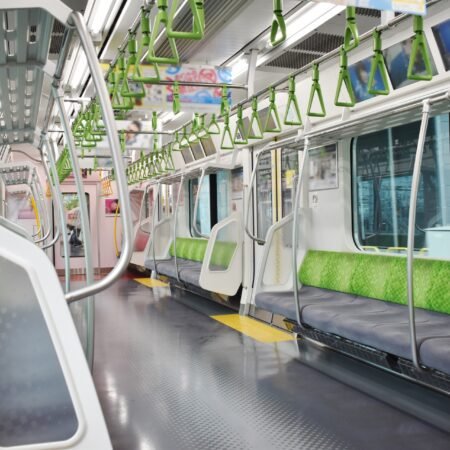
- Romancecar (Odakyu Line) from Shinjuku to Hakone-Yumoto: ~85 minutes. Reserve seats — it fills up on weekends. The large windows are worth the window seat.
- Shinkansen to Odawara + local train: slightly faster but less scenic.
The Hakone Free Pass:
Buy this. It covers round-trip from Shinjuku and unlimited use of the Hakone Tozan Train, ropeway, boats on Lake Ashi, and several buses. At roughly ¥6,100 from Shinjuku (2-day pass), it pays for itself quickly and removes all the small friction of figuring out individual fares.
Getting around within Hakone:
The Hakone Tozan Railway is a slow, winding mountain train — one of the steepest in Japan — that feels like part of the experience. The Hakone Ropeway from Sounzan to Togendai gives aerial views over the Owakudani fumaroles and, on clear days, a direct sightline to Fuji.
Weather note: Mt. Fuji is visible only about 1 in 3 days due to clouds. Check the forecast but don’t plan around it. The town is worth visiting regardless.
What to Eat
Hakone’s food scene centers on what you can find at the ryokan and around the market areas near Hakone-Yumoto station.
- Kaiseki dinner at your ryokan — don’t skip this, even if food isn’t usually a priority for you. A proper kaiseki in season is one of the most carefully considered meals you’ll have in Japan.
- Kuro tamago (black eggs) — hard-boiled eggs cooked in the sulfuric hot springs of Owakudani, which turns the shell black. They taste like regular hard-boiled eggs. The legend says eating one adds 7 years to your life. They’re sold in bags of 5 at the Owakudani station area. Worth doing once, purely for the context.
- Kaiseki lunch options — several ryokan offer day-use packages that include lunch and a bath for guests who aren’t staying overnight. A good option if you’re doing a day trip but want the full experience.
- Local sake and craft beer — the shops near Hakone-Yumoto carry regional labels. Pick up something to drink at the ryokan.
Things That Might Trip You Up
The heat of the water. Japanese onsen run hot — often 42–44°C. If you’re not used to it, don’t force yourself to stay in. Get in slowly, sit at the edge, get out if you feel dizzy. Alternating between the hot bath and a cool-down area (most facilities have this) is the standard approach.
Slipping. Wet stone and tile floors are slippery. Walk slowly. Most facilities provide rubber sandals near the bath area — use them.
Forgetting to hydrate. Soaking at high temperatures dehydrates you faster than you’d expect. Drink water before and after. Many ryokan leave small bottles in the room for exactly this reason.
The silence. First-timers sometimes find the quiet of the bath uncomfortable — the sense that you should be doing something. You’re not. Sit in it for a few minutes and it usually resolves itself.
Solo onsen anxiety. If you’re bathing alone and uncertain about anything, watch what other guests do. No one expects foreign visitors to know every nuance. If you wash before entering, keep your towel out of the water, and stay reasonably quiet, you’re doing it right.
A Few Things That Surprised Me
I expected to feel watched. The first time I undressed in a public changing room, I was braced for awkward glances. There were none. Everyone was focused on their own routine — folding their clothes, tying their hair, heading for the bath. The same indifference that can feel cold in Japan’s daily life becomes, here, a kind of respect.
The other thing that surprised me was the quiet itself. Not just the lack of noise — the quality of the silence. Steam, mineral water, the faint sound of water moving. After twenty minutes, the city I’d come from felt genuinely far away.
I’ve been to Hakone in spring, in the heat of August, and in the grey of February. Each time the water is different — or maybe I am. Either way, I keep going back.
The Short Version
- Where: Hakone, Kanagawa Prefecture — 90 minutes from Shinjuku by Romancecar
- Best for: First onsen experience, weekend escapes from Tokyo, ryokan culture
- Day trip or overnight? Overnight if possible; at least one night at a ryokan
- Tattoos: Check policies in advance; private baths and tattoo-friendly spots exist
- Don’t miss: Early morning bath, kaiseki dinner, the Owakudani ropeway views
- Buy the Hakone Free Pass — it covers almost everything and saves the mental math
Hakone doesn’t require anything from you except the willingness to be still for a while.
That turns out to be harder than it sounds. And more worth it.
Itte rashaimase.