





Nebuta Festival in Aomori — A Foreigner’s Honest Guide to Japan’s Most Electric Summer Event
Category: Festival
Written from the perspective of a foreigner living in Japan
I had seen photos of the Nebuta Festival online before I ever went. Giant illuminated floats, warriors frozen mid-battle, thousands of dancers flooding the streets. I thought: looks impressive, probably overcrowded, probably just a tourist thing.
I was wrong on every count.
Nebuta is one of the few festivals in Japan where the crowd is the festival. You’re not watching from the sidelines — you’re supposed to be in it.
What Is Nebuta, Actually?
Nebuta Matsuri (ねぶた祭り) takes place every year from August 2 to 7 in Aomori City, in the northern tip of Honshu. It’s one of Japan’s three great festivals — alongside Sendai’s Tanabata and Akita’s Kanto — and draws over 3 million visitors in a single week.
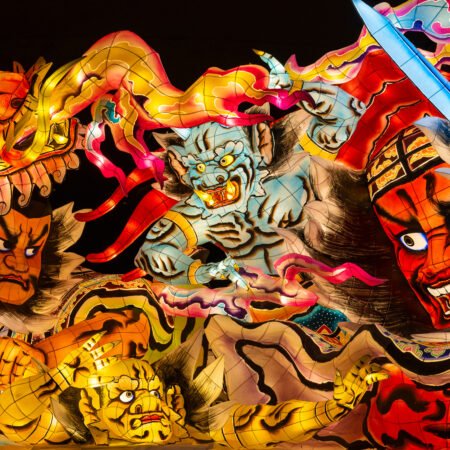
The centerpiece: enormous lantern floats called nebuta, built from wire frames covered in washi paper and painted with scenes from mythology, kabuki, and legend. Some stand over 5 meters tall and 9 meters wide. At night, lit from within, they look like they’re alive.
But Nebuta isn’t just a parade. It’s rooted in a tradition of driving away sleep and laziness before the harvest. The word nebuta comes from nemuta — sleepy. The festival is, at its core, about waking up.
The Cultural Layer Most Visitors Miss
Before you arrive, it helps to understand one thing: Nebuta is a deeply communal event.
Each float is built by a team — often a local company, neighborhood group, or school — and has been in production since spring. The dancers (haneto) belong to that team. The musicians belong to that team. The whole procession is an act of collective pride.
When you see a float, you’re not seeing a performance staged for tourists. You’re watching a community show up for something they’ve worked on for months.
This changes how you watch it. The right response isn’t just to take photos. It’s to be present — to clap, to shout “rassera!” (the traditional call-and-response chant), to feel the taiko drums in your chest.
Joining as a Haneto — Yes, You Can Dance
Here’s the thing most first-timers don’t know: anyone can join as a haneto.
Haneto are the festival dancers who skip and jump alongside the floats, chanting “rassera, rassera, rasserasse, rasserasse!” in a rhythm that gets into your head and stays there.
All you need is the costume — a short yukata-style outfit with a headband (hachimaki), special straw sandals (waraji), and bells around your waist. The whole setup costs roughly ¥5,000–¥8,000 to rent, and you can find rental shops near the festival grounds or book ahead online.
Once you’re dressed, you can join any group’s procession. There’s no audition. No reservation required. You just walk up and fall in.
Tips if you’re joining:
- Practice the rassera call before you go — it feels awkward at first, but the crowd will carry you
- Wear the waraji sandals even if they feel uncomfortable; sneakers look out of place and you’ll feel it
- Stay hydrated — the dancing is more physical than it looks
- If you’re jumping next to a float, be aware of the space around you
Practical Guide: How to Actually Get There
Getting to Aomori:
- From Tokyo: Shinkansen (Hayabusa) to Shin-Aomori takes about 3 hours. Book early — trains fill up weeks in advance during festival week.
- From Sapporo: Ferry or fly; the ferry is a fun overnight option if you’re up for it.
The parade route runs along Aomori’s waterfront, about 3km total. The procession starts around 7pm and runs until 10pm each evening.
Seating: Reserved bleacher seats (yūryō kanranseki) go on sale months in advance through the Aomori Nebuta Festival office and major convenience stores (Lawson). They sell out fast. General standing areas are free but crowded — arrive by 5pm if you want a decent spot.
August 7 — The Grand Finale: The last night features a sea procession, where the floats are loaded onto boats and lit up on the water. It ends with fireworks. If you can only go one night, make it this one.
What to Eat and Drink
Aomori in August means food stalls lining every side street. A few things worth seeking out:
- Scallops grilled on the shell (hotate) — Aomori is one of Japan’s top scallop regions; eat as many as you can
- Apple-based everything — Aomori produces more apples than anywhere in Japan; look for apple cider, apple juice, and apple sweets
- Jappa-jiru — a local miso soup with cod and vegetables, warming even in summer
- Cold nihonshu from local Aomori breweries — the region has excellent sake that rarely reaches Tokyo shelves
Avoid trying to get food from stalls right at the parade route; the side streets have shorter lines and better options.
Things That Might Trip You Up
The heat. Aomori is in northern Japan, but August is genuinely hot and humid. The crowds make it worse. Bring a handheld fan, a small towel, and more water than you think you need.
The crowds. Aomori’s population is about 280,000. Three million visitors arrive in a week. Book your accommodation in Aomori City at least 3–4 months in advance, or plan to stay in a nearby city like Hirosaki and commute by train.
Noise. The taiko drums are loud — genuinely, vibratingly loud at close range. This is a good thing. But if you’re sensitive to sound, earplugs in your pocket aren’t a bad idea for when you’re standing directly next to a float.
Photography etiquette. Taking photos is completely normal and expected. That said, if you’re in the haneto procession, you’re there to dance — not to document. Leave the DSLR with your bag and use your phone for quick shots if you need them.
A Few Things That Surprised Me
The first time I went, I expected to feel like an outsider. Japan’s festivals can feel closed to foreigners, particularly in smaller cities where you’re visibly different.
Nebuta wasn’t like that. People handed me rassera cheat sheets. An older woman adjusted my haneto headband without being asked. A group of teenagers waved me into their procession and didn’t bat an eye.
There’s something about a festival where the whole point is to be in it together that cuts through the usual social awkwardness. The chanting, the drums, the light pouring out of the floats — it leaves very little room for feeling out of place.
By the second night, I had stopped thinking about what I was supposed to do. I was just there.
The Short Version
- When: August 2–7 every year
- Where: Aomori City, Aomori Prefecture
- Highlight: August 7 sea procession and fireworks
- Can foreigners join the dancing? Yes — rent a haneto costume and jump in
- Book early: Trains, hotels, and bleacher seats all sell out months ahead
- Don’t miss: Aomori scallops, local sake, and the sound of ten thousand people chanting rassera in the dark
Nebuta doesn’t ask you to understand everything about Japan before you show up. It just asks you to show up.
Rassera.